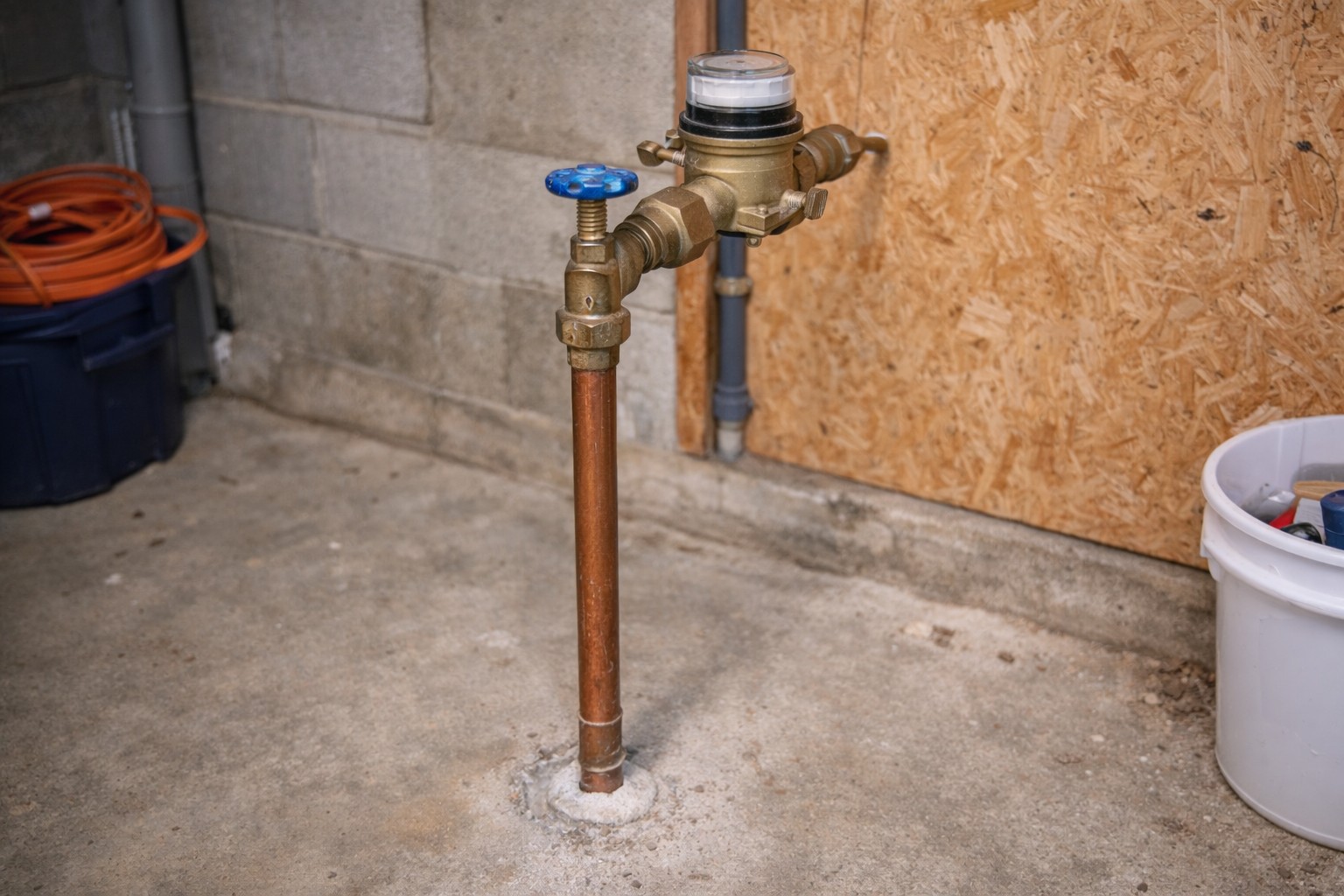
This hub covers low water pressure that affects most or all fixtures in the home. It includes sudden drops, gradual decline, and cases where pressure comes and goes or changes after city work.
Whole-house low pressure can be supply-related, tied to demand (irrigation or appliances), or triggered by a recent shutoff, inspection, or replacement. Some patterns only affect hot water or a specific floor.
Use the groups below to match your pattern and open the article title that fits best. For a broader look at how water pressure behaves and how it’s regulated, see the sub-category overview: Water Pressure Behavior & Regulation.
Sudden house-wide pressure drop
Patterns where pressure falls quickly across the whole home or collapses without warning.
-
Low water pressure everywhere suddenly
Describes common causes and initial checks when pressure in all fixtures drops suddenly, focusing on supply interruptions and valve problems.
-
Pressure fine then collapses
Explains scenarios where pressure holds briefly and then collapses, including intermittent supply restrictions and internal valve failures.
-
Whole house pressure fluctuates randomly
Covers unpredictable pressure swings, likely causes such as partial blockages, failing pressure regulators, or upstream supply variability.
Gradual or long-term decline
When pressure slowly worsens over time or stays low with no obvious event.
-
Gradual pressure decline throughout house
Outlines progressive causes like sediment buildup, corroded pipes, or slowly restricting shutoffs and how to narrow them down.
-
Pressure loss after long vacation
Discusses issues that can appear after extended vacancy, including mineral deposits, air in the lines, or changes in supply settings.
-
Low pressure with no visible leaks
Focuses on hidden restrictions and supply-side losses that produce low pressure without obvious leaks inside the home.
After city work or supply changes
Pressure problems tied to maintenance, repairs, or changes in the public water system.
-
Low pressure after city maintenance
Explains why pressure can drop following utility work, including closed valves, air in mains, or temporary supply throttling.
-
Pressure changes with weather
Describes how seasonal demand, freezing conditions, or storm-related supply issues can alter pressure at the house connection.
After a home change, shutoff, or replacement
Issues that start after turning water off/on, replacing equipment, or having plumbing work done.
-
Low pressure after new appliance install
Looks at installation mistakes and appliance valves or filters that can restrict flow after a new device is added.
-
Low pressure after main valve replacement
Notes potential problems from improper valve sizing, debris left in the line, or partially open new valves following replacement.
-
Low pressure after plumbing inspection
Suggests what to check when pressure falls after an inspection, such as valves left partly closed or reassembled fittings causing restriction.
-
Pressure loss after water heater replacement
Covers hot-side specific and system-wide effects from water heater changes, including trapped debris or closed isolation valves.
-
Low pressure after turning water off and back on
Explains common follow-up issues like air pockets, dislodged sediment, and partially reopened valves that reduce flow.
Demand-related pressure drop
Pressure changes that occur only when high-demand devices or irrigation systems run.
-
Pressure drops when irrigation runs
Discusses how irrigation demand can lower household pressure and ways to check for shared-supply limits or backflow issues.
-
Pressure drops when washing machine fills
Examines localized demand effects from appliances and how valve sizing or supply routing can amplify drops.
-
Pressure improves when multiple taps open
Explores counterintuitive cases where opening several fixtures changes flow balance and reveals regulator or pipe layout issues.
Hot-only or zone-specific low pressure
When low pressure affects only hot water or a particular floor or area.
-
House pressure low only on hot water
Focuses on hot-side restrictions such as heater bypasses, mixing valves, or hot-only shutoffs causing reduced flow.
-
Low pressure only upstairs
Lists likely causes for upper-floor pressure loss, including elevation-related supply limits, diverters, or partial blockages.
-
Low pressure only downstairs
Examines scenarios where lower-level fixtures see reduced flow due to localized pipe problems or shutoffs on that zone.
Pressure regulator involvement
Problems associated with a pressure regulator being present or recently adjusted.
-
Pressure low after installing pressure regulator
Explains installation and adjustment issues that can leave downstream pressure lower than expected after a regulator is added.
-
House pressure slowly recovers after use
Describes recovery patterns where pressure drops during use but slowly returns, often due to regulator behavior or trapped air.
Time-of-day pattern
When pressure consistently varies at certain times, often tied to neighborhood demand.
-
Whole house pressure low in mornings
Discusses morning peak demand effects and how municipal supply cycles or shared lines can reduce pressure at predictable times.
All Articles in This Cluster
- Low water pressure everywhere suddenly
- Pressure fine then collapses
- Whole house pressure fluctuates randomly
- Gradual pressure decline throughout house
- Pressure loss after long vacation
- Low pressure with no visible leaks
- Low pressure after city maintenance
- Pressure changes with weather
- Low pressure after new appliance install
- Low pressure after main valve replacement
- Low pressure after plumbing inspection
- Pressure loss after water heater replacement
- Low pressure after turning water off and back on
- Pressure drops when irrigation runs
- Pressure drops when washing machine fills
- Pressure improves when multiple taps open
- House pressure low only on hot water
- Low pressure only upstairs
- Low pressure only downstairs
- Pressure low after installing pressure regulator
- House pressure slowly recovers after use
- Whole house pressure low in mornings