Quick Answer:
If your water pressure falls noticeably when the washing machine fills, the supply is being overwhelmed or restricted. Measure pressure at an outdoor hose bib to confirm, isolate the washer and nearby components to find the weak point, and flush suspect sections of pipe. These checks often show whether the problem is inside your home (valve, filter, softener, PRV) or with the service line from the street.
Why This Happens
- High demand at the washer draws a lot of water quickly. If the line, shutoff valve, pressure regulator (PRV), or service entry is restricted, pressure drops during the fill cycle.
- Debris, corrosion, or a failing PRV can cause the pressure to be fine at rest and then collapse under flow. See Pressure fine then collapses for related behavior to watch for.
- Sometimes the problem is intermittent and tied to time of day—neighbors using water or the municipal supply can mean lower pressure in the mornings. Consider the pattern; read more on household timing in Whole house pressure low in mornings.
Step-by-Step What to Do
Step 1 — Measure pressure at a hose bib (static and dynamic)
- Get a simple threaded pressure gauge that fits an outdoor hose spigot.
- With all inside faucets off, attach the gauge and note the static pressure (no flow). Typical municipal systems are often 40–60 psi; check your local normal.
- Start the washing machine fill cycle or open the washer supply and watch the gauge for the dynamic pressure while the machine is drawing water. A drop larger than 10–15 psi or a collapse to a very low reading shows a supply or restriction problem.
Step 2 — Isolate main components
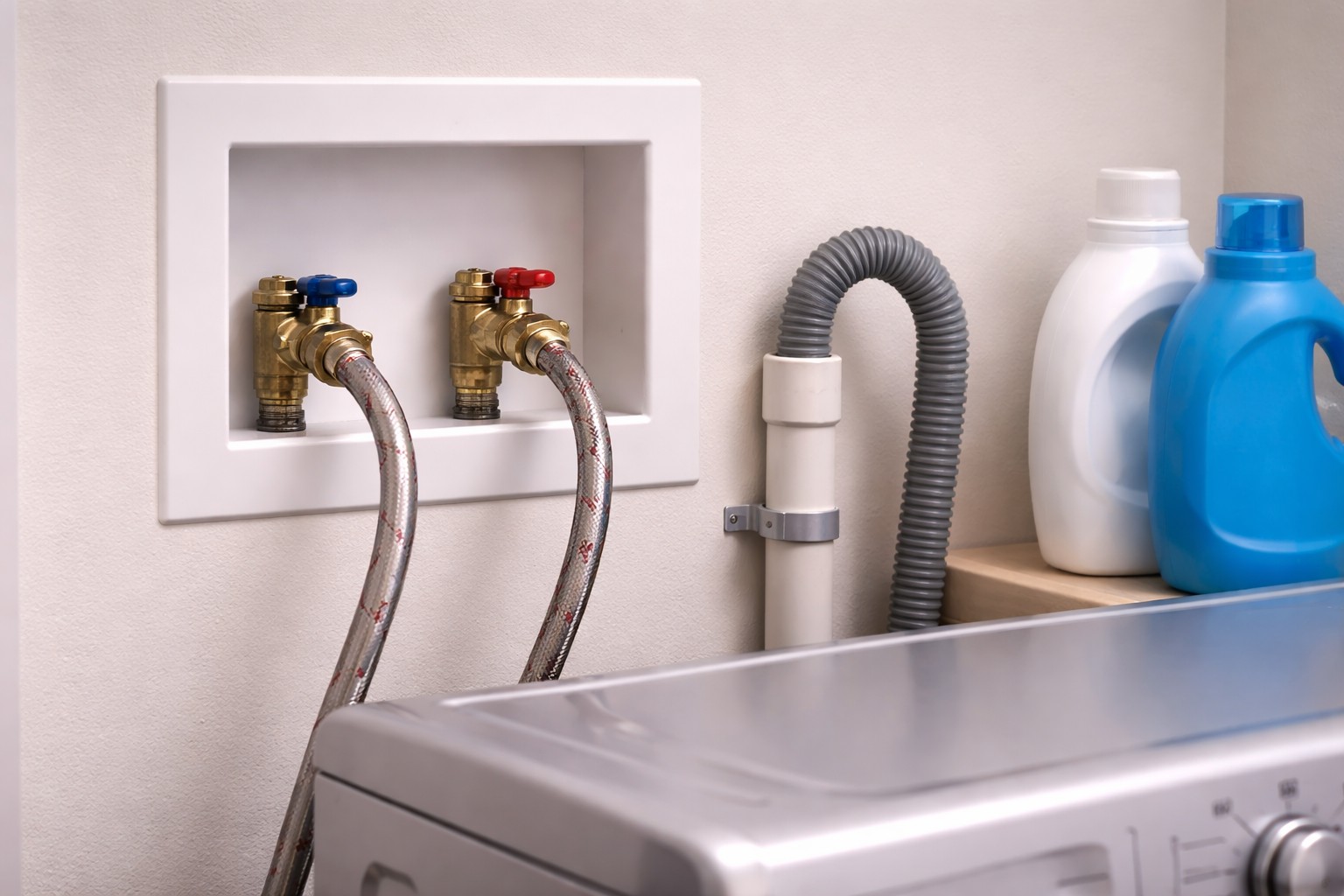
- Turn off the washer supply valves and disconnect the washer hoses if needed. Run the hot and cold feed directly to a bucket (or open a nearby faucet) to compare flow and pressure without the washer connected.
- Close or bypass inline devices one at a time: whole-house filter, water softener, PRV, and any shutoff valves. Test pressure/flow after each change to see if one component restores normal pressure.
- If possible, isolate upstream (service entry) from downstream (house plumbing) by closing the house main shutoff and testing pressure on the house side versus the street side—note that testing the street side may require the water company or a licensed plumber.
Step 3 — Flush the supply lines appropriately
- If you find the issue is reduced flow rather than a failed regulator, flush the supply lines to clear debris: shut off appliances, open an outside hose bib or the highest faucet, then open the main and let water run for several minutes until it runs clear.
- When flushing, do one side at a time (hot and cold) and collect water to avoid basement flooding. Sediment can clog screens at the washer inlet, shutoff valves, and filters—clean these after flushing.
- After flushing, re-measure static and dynamic pressure to see if the collapse reduces or disappears.
Step 4 — Re-test the washing machine fill
- Reconnect hoses and test a normal fill cycle. Watch for a repeat collapse and note whether a particular step (e.g., first 30 seconds) triggers the worst drop.
- Document your static and dynamic readings and which components you isolated or flushed. This information helps a technician if you call one.
Step 5 — Next steps if the problem persists
- If isolating and flushing don’t fix it, the likely causes are a failing PRV, a partially closed or corroded service valve, or a restriction in the service line. These often require a plumber or the water utility to check the service entry and meter.
What Not to Do
- Do not immediately replace fixtures (valves, washer inlet, PRV) without verifying whether the service entry or a system component upstream is the real cause. Replacing parts inside the house can be wasted money if the restriction is at the meter or main supply.
- Do not remove or alter the water meter or service connection yourself—contact the water company or a licensed plumber for that work.
When to Call a Professional
- Call a licensed plumber if you find: the pressure collapses even after flushing; the PRV appears to be failing; the issue looks like a service-line restriction; or any work requires cutting copper or changing the meter/service valve.
- Contact your water utility if multiple houses on the street show similar drops or if you suspect a problem at the meter or main.
Safety Notes
- Turn off and unplug the washing machine before disconnecting hoses. Electrical safety matters when working on appliances near water.
- Relieve pressure by closing valves and opening a nearby faucet before disconnecting lines to avoid spray and possible hot-water burns.
- Wear eye protection and gloves when flushing lines or removing sediment-filled filters. If you are uncomfortable with any step, stop and call a professional.
Common Homeowner Questions
- Why does the pressure drop only when the washer fills? The washer creates a high flow demand; if the supply, valve, or PRV is restricted, pressure will fall under that load.
- Can I fix this myself? You can do basic checks: measure pressure, disconnect the washer, isolate components, and flush lines. If the issue persists or involves the service line, get a plumber or your water utility.
- Is a failing pressure regulator likely? It can be. A PRV that works at rest but collapses under flow is a common suspect, but debris in the service line or a partially closed service valve can cause the same symptoms.
For more related articles, see the Whole-House Low Water Pressure hub.