Quick Answer:
If your house water pressure rises and falls unpredictably all day, start by measuring water pressure at an outdoor hose bib with a pressure gauge, then isolate major components (main shutoff, pressure regulator, water softener, irrigation, well pump or pressure tank) to find where the fluctuation starts. Flush suspect sections to clear debris and retest. Often the cause is a failing pressure regulator, a cycling well system, or supply-side issues from the utility, not the fixtures themselves.
Why This Happens
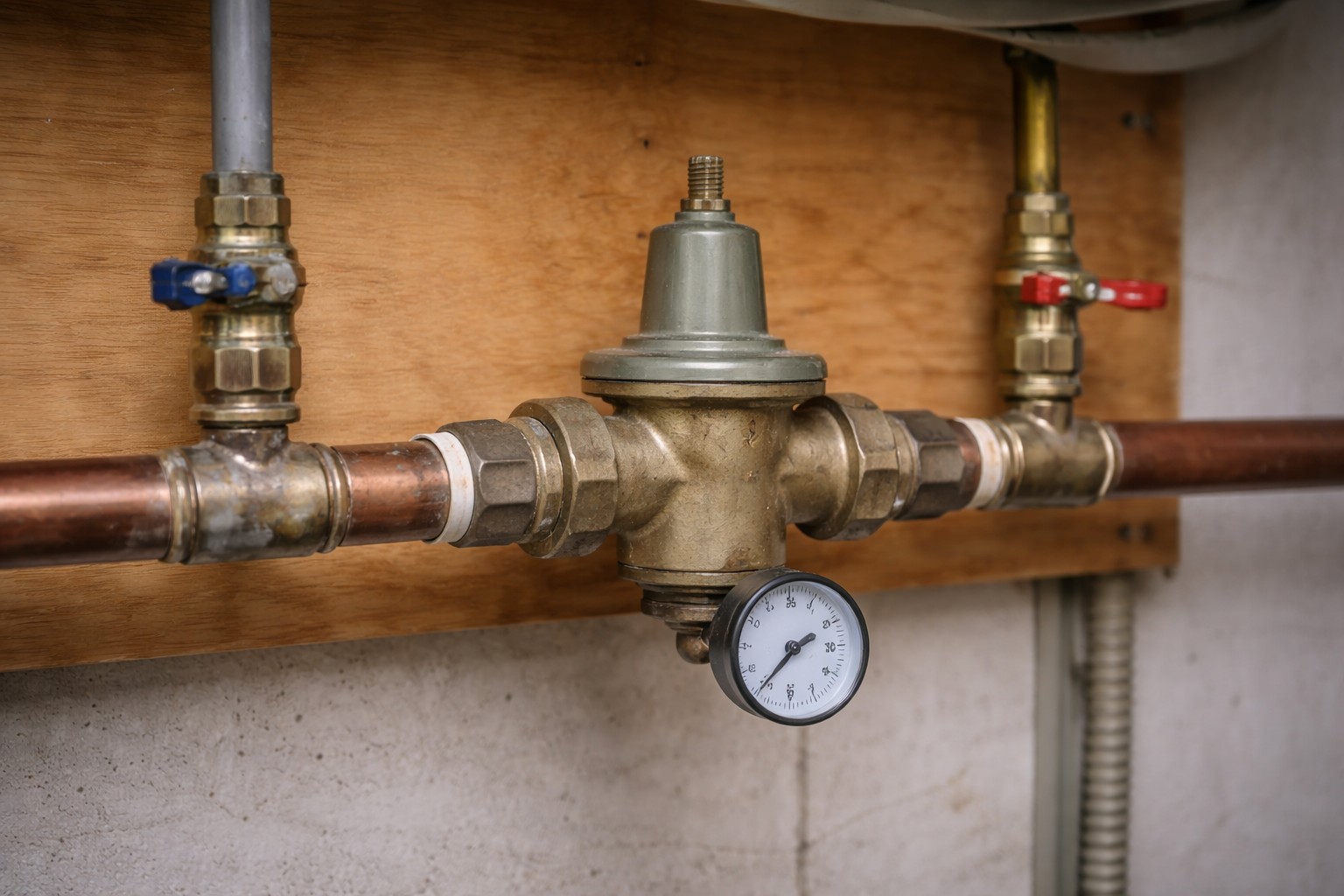
- Pressure regulator (PRV) failure or internal debris that lets the valve stick open or closed intermittently.
- Well system cycling: a short-cycling pump or waterlogged pressure tank will cause repeated swings.
- Municipal supply issues: the utility can have varying pressure during hydrant flushing, leaks, or demand peaks.
- Isolated equipment cycling: a booster pump, irrigation system, or softener regenerating can change pressure at times.
- Partial blockages at the service entry, like a clog or failing check valve, that move and briefly open then reseat.
Step-by-Step What to Do
1. Gather basic tools and prepare
- Tool suggestions: hose-bib pressure gauge, adjustable wrench, flashlight, pen and paper to log times.
- Turn off major appliances that use water (dishwasher, washing machine) so their cycles don’t confuse your observations.
2. Measure pressure at the hose bib
- Attach a pressure gauge to an outdoor hose bib. Record the static pressure (all inside taps off) and the running pressure (open a faucet inside and note the change).
- Take readings several times through the day when you notice a fluctuation. If the gauge also swings, the problem is upstream of the house plumbing.
- If you have a well, also check the pressure at the pressure tank connection or the pump tank fitting.
3. Isolate main components
- Close the main shutoff to the house briefly and watch the gauge at the hose bib. If pressure still changes while main is closed, the issue is inside the house.
- One at a time, bypass or shut off these systems and retest: pressure regulator (if bypass available), water softener, irrigation controller, booster pump, individual appliance shutoffs.
- For a well, observe the pump cycle and pressure switch: fast cycling or irregular on/off cycles point to pump, tank bladder, or switch issues.
4. Flush system appropriately
- Start by opening several outside hose bibs and the lowest and highest fixtures to flush lines—this can clear debris that causes a valve to stick.
- If you suspect PRV debris, slowly relieve pressure at the PRV (if you know how) to let small particles wash out; do not disassemble without isolating the line and relieving pressure.
- After flushing, retake pressure readings at the hose bib and during typical demand to see if fluctuations stop.
5. Test and log
- Keep a log of times and what was happening (sprinklers running, washing machine on, morning peak). Patterns often show the source.
- If you narrowed the problem to one component, leave it isolated and observe for a day to confirm the behavior stops when that component is out of the circuit.
What Not to Do
- Do not immediately replace fixtures without verifying service entry issues.
- Do not remove or work on the main without shutting off and relieving pressure first.
- Do not try to test or repair backflow prevention devices unless you are certified—improper handling can create contamination risks.
- Do not assume a single fixture is the cause before measuring pressure at the hose bib and isolating components.
When to Call a Professional
- If pressure swings continue after isolation and flushing, call a plumber—especially if the PRV, service line, or pressure tank appears involved.
- Call a licensed well contractor if the pump is short-cycling or the pressure tank seems waterlogged.
- Contact your water utility if you see wide-area low or fluctuating pressure that coincides with neighbor reports or occurs at the street main.
Safety Notes
- Always shut off the main and relieve system pressure before disconnecting fittings or removing valves.
- Turn off electrical power to well pumps before working on pump wiring or control boxes.
- Wear eye protection and gloves when flushing lines—sudden bursts can spray debris.
- If you are unsure about working on pressure tanks, pressure switches, or backflow devices, hire a pro rather than risking injury or contamination.
Common Homeowner Questions
- Why does pressure dip only sometimes? Short answer: a cycling device or supply fluctuation—log times to find the pattern.
- Can I test this myself? Yes—start with a hose-bib gauge, isolate components, and flush lines as described.
- Will replacing fixtures fix it? No—if the issue is at the service entry, fixtures won’t solve the underlying pressure swings.
If your tests show sustained low pressure rather than swings, consider reading about Low water pressure everywhere suddenly or situations like Low pressure after main valve replacement for related troubleshooting steps.
For more related articles, see the Whole-House Low Water Pressure hub.