Quick Answer:
If your home loses usable water pressure whenever the irrigation system runs, start by measuring pressure at an outdoor hose bib with a simple gauge, then isolate the irrigation from the house and test components one at a time. For related diagnostics after appliance changes, see Low pressure after new appliance install.
Why This Happens
When irrigation runs it can draw a lot of water at once. That extra demand can lower the incoming pressure or reveal weaknesses in the service entry, pressure regulator, or a shared supply pipe. Common causes:
- High flow demand from multiple irrigation zones running at once.
- Pressure regulator or pressure-reducing valve set too low or failing.
- Partially closed valves, clogged filters, or a backflow preventer restricting flow.
- Undersized service line or a leak on the supply line.
- Pump or irrigation controller issues causing rapid cycling or high draw.
If this problem appears after time away, also consider checking for issues that develop while systems are idle. See notes on Pressure loss after long vacation for related checks.
Step-by-Step What to Do
1. Prepare and measure pressure at a hose bib
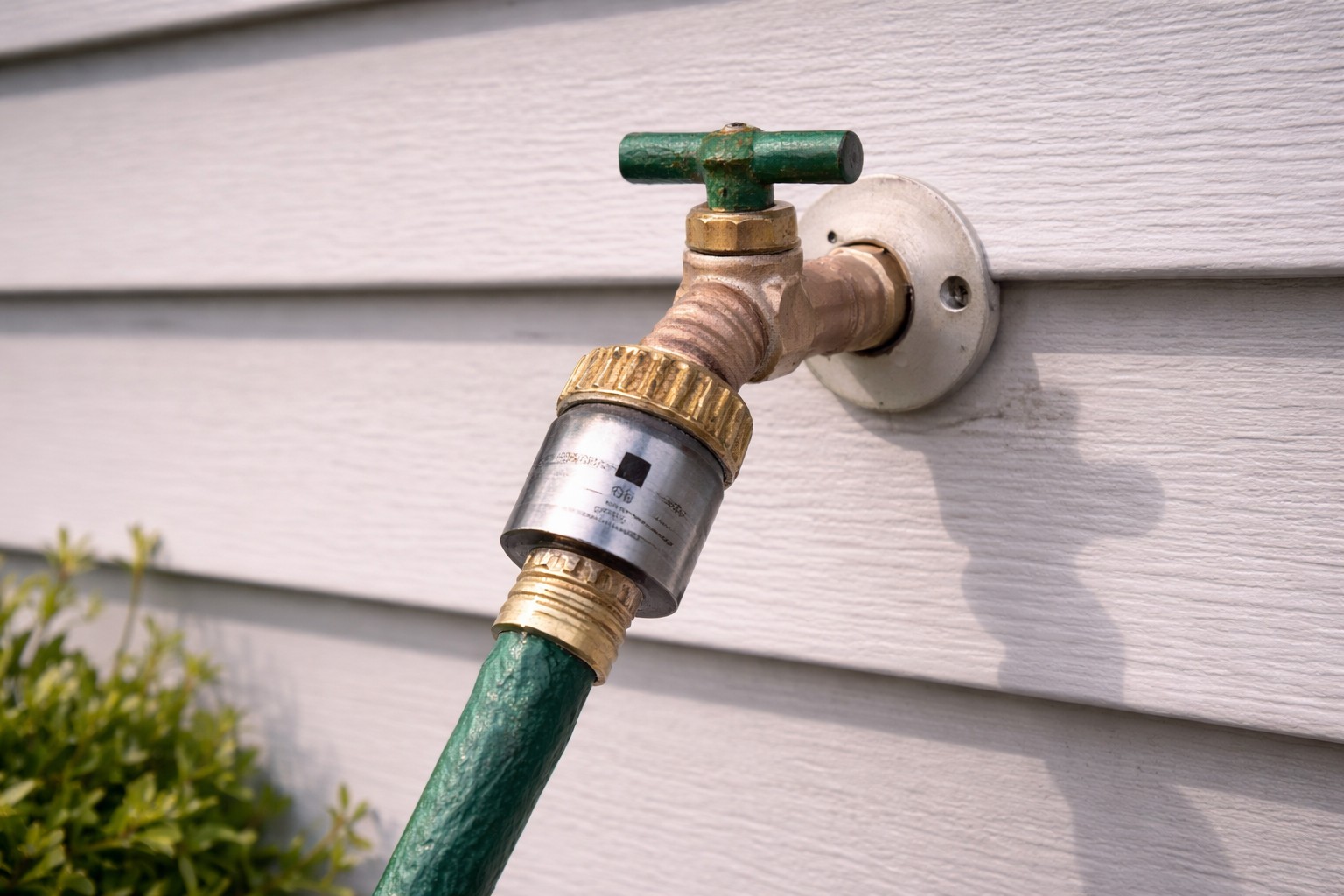
- Get a screw-on pressure gauge (inexpensive and common at hardware stores).
- Measure static pressure: with no water running inside or irrigation off, screw the gauge onto a hose bib near the main supply and note the reading.
- Measure running pressure: start a typical indoor tap and note the pressure, then start the irrigation and note the pressure again at the same hose bib. Record both numbers.
- Typical household range is about 50–60 psi; consistent drops below ~40 psi under irrigation load indicate a supply or regulator issue.
2. Isolate main components
- Close the irrigation shutoff (often a dedicated valve near the backflow device or where the irrigation ties into the main). Re-measure house pressure to see if it returns.
- If closing the irrigation restores pressure, open the backflow preventer’s test cocks briefly to check for blockages, then close them.
- Isolate the pressure regulator (if your house has one) by temporarily bypassing or adjusting it per manufacturer instructions, then re-check pressure.
- If you have a pump for irrigation, turn it off and test house pressure—pumps that short-cycle or draw from the same line can cause a drop.
3. Run zones one at a time and observe
- Activate a single irrigation zone and watch the pressure at the hose bib. If several zones together cause the drop but one zone does not, the issue is likely demand-related rather than a service failure.
- Take notes on which zones cause the biggest pressure loss; that can point to large leaks, clogged emitters, or undersized plumbing in a zone.
4. Flush system appropriately
- Flush irrigation mains and laterals to clear sediment that can restrict flow. Open the main drain or a hose connection at the irrigation tie-in and run water until it’s clear.
- Flush the house-side meter/hose bib briefly if you suspect debris after a repair or when testing changes.
- After flushing, repeat pressure measurements to see if flow improves.
5. Check valves, filters, and fittings
- Inspect the backflow preventer, any inline filters, and the main shutoff for partial closures or sediment build-up.
- Verify hose bibs, outdoor valves, and quick-connect fittings are fully open and not leaking.
6. Document results and test again
- Keep a simple log: static pressure, running pressure with house taps, running pressure with irrigation, and which isolation steps changed those numbers.
- This documentation helps you or a pro diagnose whether the issue is demand-related, a failing regulator, a service-line problem, or something else.
What Not to Do
- Do not immediately replace fixtures without verifying service entry issues.
- Do not start digging near the meter or visible pipes without confirming the location and checking with local utilities.
- Do not bypass backflow prevention devices unless you fully understand local rules and risks—these protect drinking water.
When to Call a Professional
- Pressure stays low after isolating the irrigation and checking valves and filters.
- You suspect a leak in the service line or see wet areas near the supply line, meter, or irrigation trenches.
- The pressure regulator or main shutoff seems to be failing and you’re not comfortable servicing it.
- An irrigation pump is involved and you can’t safely test electrical components or pump performance.
Safety Notes
- Turn off electrical power before working on any irrigation pump. Water plus electricity is dangerous.
- If you shut off the main water, open a downstairs tap to relieve pressure before working on piping.
- Wear eye protection when flushing lines—sediment and debris can eject at speed.
- Follow local codes for backflow testing and repairs; improper handling can risk contamination of the potable supply.
Common Homeowner Questions
- Why does pressure return when I turn irrigation off? It means the irrigation demand exceeds what the supply or regulator can deliver, or a component in the irrigation is restricting flow.
- Can a dirty backflow preventer cause this? Yes—sediment or internal damage in the backflow device can reduce flow and cause pressure drops.
- Is this something I can fix myself? Basic tests and valve checks are DIY-friendly, but persistent issues with service lines, regulators, or pumps should be handled by a licensed pro.
For more related articles, see the Whole-House Low Water Pressure hub.