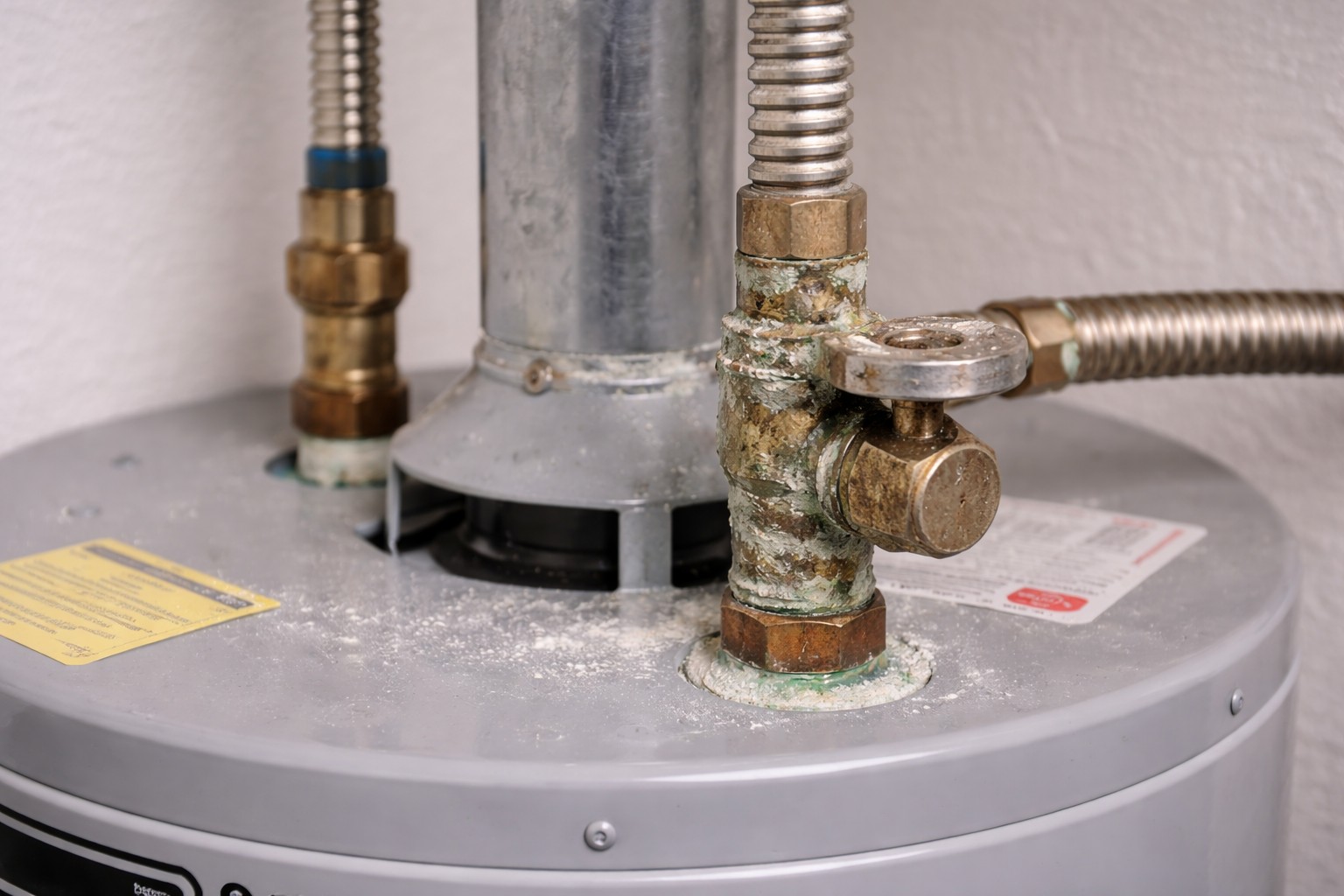
Quick Answer:
If water pressure dropped right after a water heater was replaced, start by measuring the pressure at an outdoor hose bib with a pressure gauge. Low pressure at the hose bib points to a house-wide supply issue or a service entry restriction; normal household pressure is typically 40–60 psi. If the hose bib pressure is normal but taps are weak, isolate the new water heater and its valves, then flush the heater and lines to remove trapped debris or air. If steps below don’t restore pressure, call a plumber.
Why This Happens
- Debris or solder flux from installation can clog screens, in-line filters or the pressure-reducing valve.
- Air trapped in the system after work can reduce flow until it’s vented or flushed out.
- A closed or partially closed shutoff, mixing valve, or a misadjusted pressure regulator can reduce pressure to fixtures.
- If the municipal service was interrupted or a curb stop was only partially opened during the job, pressure can be limited at the service entry.
- Sometimes a check valve or thermal expansion device installed incorrectly will restrict flow after a new heater is connected.
Step-by-Step What to Do
1. Measure pressure at a hose bib
- Attach a simple water pressure gauge to an outdoor hose bib or laundry faucet. Read the static pressure with no water running. Normal is about 40–60 psi for most homes.
- If pressure is low here, the issue is upstream (service entry, regulator, curb stop). If pressure is normal, the problem is internal to the hot water system or fixtures.
2. Isolate the main components
- Close the cold-water shutoff to the water heater to isolate it. Check pressure at the hose bib again; if it improves, the heater or its connections are likely causing the restriction.
- Check any pressure-reducing valve (PRV) near the main supply and the main shutoff valve. Make sure valves are fully open. If the PRV has an adjustment screw, don’t force it—note its position and consult a pro if uncertain.
- Inspect any inline filters, screens on faucets, or appliance inlet filters that may have trapped debris from the installation.
3. Flush the water heater and lines appropriately
- Follow the manufacturer’s procedure to flush the heater. Typically this means attaching a hose to the drain, opening the drain valve, and flushing until the water runs clear. For electrical heaters, turn power off first; for gas heaters, set to pilot or follow manufacturer guidance.
- Open a couple of hot water faucets while flushing to help push air and debris out of the lines. After flushing, close faucets one at a time and check pressure and flow.
- If you find particulate debris in the drain water, clean inlet strainers, faucet aerators, and any inline screens on appliances.
What Not to Do
- Do not immediately replace fixtures without verifying service entry issues.
- Do not open gas supply valves or attempt burner adjustments if you are not qualified—turn off the gas supply and call a professional for gas appliances.
- Do not run the heater dry or open the drain valve without ensuring the cold supply is off when required by the manufacturer.
When to Call a Professional
- If pressure is low at the hose bib after confirming the main shutoff is fully open, contact a plumber to inspect the service entry, curb stop, or PRV.
- Call a professional if flushing and basic isolation don’t restore flow, if you find persistent sediment, or if valves and fittings appear damaged or corroded.
- For gas water heaters, gas-line work, or if you smell gas, stop work immediately and call an expert.
Safety Notes
- Turn off electricity to an electric heater at the breaker before working on it. For gas units, follow manufacturer shutdown steps or call a pro.
- Hot water can scald. Run water carefully during venting and flushing, and let the heater cool if you need to work on inlet or outlet fittings.
- Wear gloves and eye protection when flushing lines. Be mindful of where drain water goes—use a hose to direct it to a safe drain or outside.
Common Homeowner Questions
- What if pressure is normal at the hose bib but low at faucets? — Likely a localized blockage: flush the heater, check faucet aerators and shutoffs, and isolate the heater to test.
- Can sediment clog the new heater right away? — Yes, debris from installation or existing scale can block screens and valves; flushing usually helps.
- Should I adjust my pressure-reducing valve myself? — If you’re unsure, don’t. Incorrect adjustment can create other problems; call a plumber if in doubt.
If you want more reading on related situations, see the article about Low pressure after turning water off and back on and the one about Low pressure after new appliance install.
For more related articles, see the Whole-House Low Water Pressure hub.