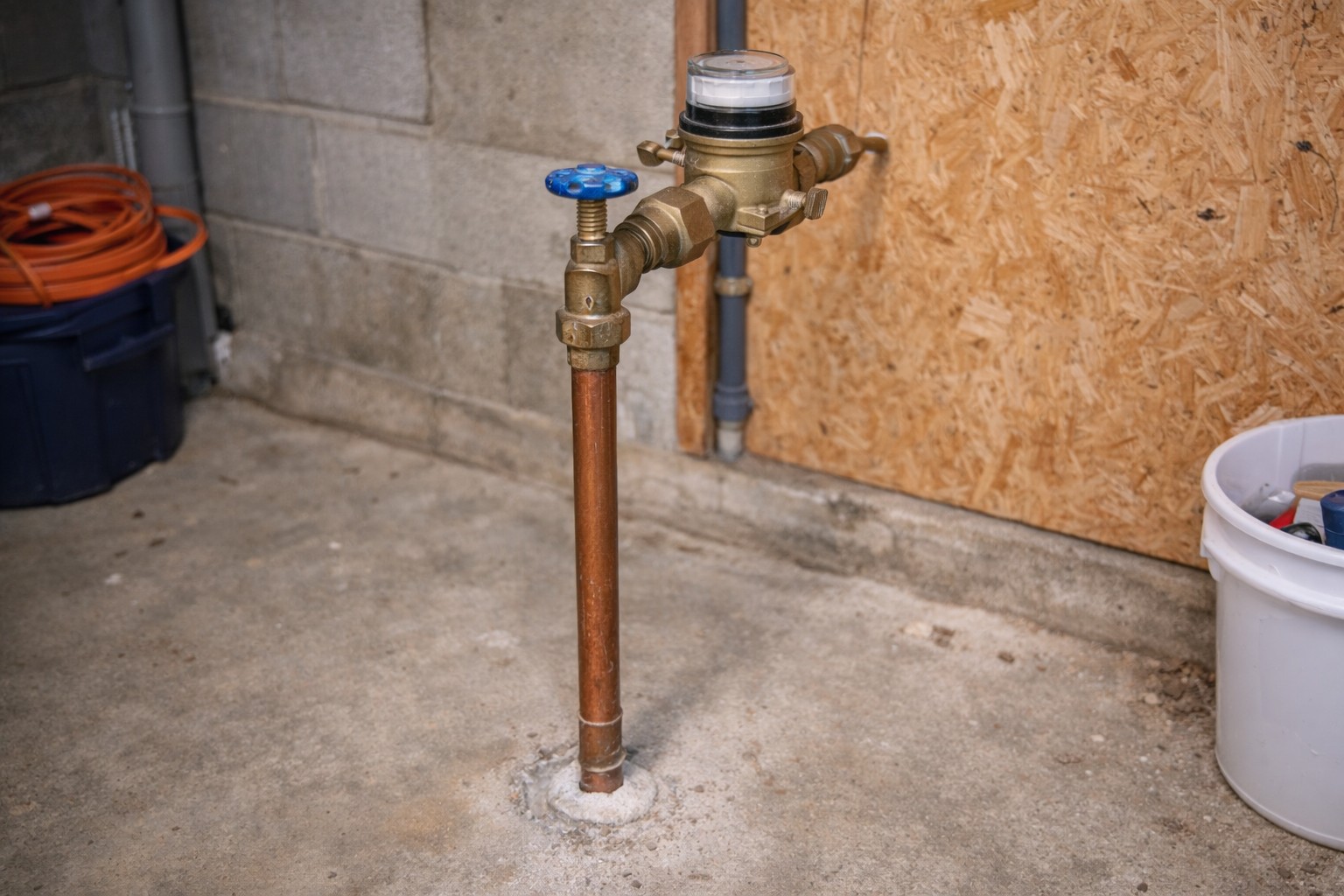
Quick Answer:
If the house water pressure is noticeably worst first thing in the morning, start by measuring pressure at an exterior hose bib with a simple pressure gauge. Morning low-pressure most often points to utility or service-entry issues (scheduled flow, main recharge, or a worn pressure-reducing valve), or to systems that run overnight like irrigation or softeners. Follow a short set of isolation and flushing checks before replacing fixtures or parts.
Why This Happens
- Municipal crews or main recharging can reduce available pressure at certain times, often early morning when usage patterns change.
- A pressure-reducing valve (PRV) on the service line can stick or creep when temperatures or flows change after long idle periods.
- Nighttime systems — for example irrigation or water treatment equipment — can draw water early or leave deposits that affect morning delivery. See Pressure drops when irrigation runs as a related symptom.
- Debris or mineral buildup near the service entry or inside a main filter can block flow overnight and clear up later.
Step-by-Step What to Do
1. Measure pressure at the hose bib
- Buy or borrow a threaded pressure gauge and attach it to an outdoor hose bib on the side of the house closest to the street.
- With all indoor taps and appliances off, note the static pressure on the gauge. Typical household static pressure is commonly between about 40–80 psi; check your local recommendation if unsure.
- Open a tap inside to get a dynamic reading. If static is normal but dynamic collapses well below the expected range, that shows a flow restriction under load.
2. Isolate main components
- Turn off or bypass systems that run overnight: put the water softener on bypass and shut off the irrigation controller or main station valve.
- Close individual zone valves (irrigation) and any whole-house filters temporarily to test if pressure returns.
- If you have a PRV, note its location. If the PRV has an adjustment screw, do not force it — only check whether pressure changes when you momentarily bypass or isolate it.
- Measure pressure again at the hose bib with these components isolated to see which item is affecting morning pressure.
3. Flush the system appropriately
- Open the hose bib with the pressure gauge and let water flow freely for a few minutes to clear any loose debris near the service entry.
- Run several indoor faucets (cold only) for a minute each to clear interior lines; do this one fixture at a time when testing dynamic pressure.
- If you have a whole-house filter or sediment trap, replace or backflush it according to the manufacturer’s instructions before retesting.
- After flushing and isolating suspect equipment, re-measure pressure. If readings improve only after flushing, the problem is likely particulate or a clogged filter rather than fixtures or piping.
4. Compare patterns and recent work
- Note whether the low-pressure pattern is daily, only on weekends, or after certain events (like a utility inspection). Low pressure shortly after service work can indicate a partially closed valve or debris in the line — similar to situations described under Low pressure after plumbing inspection.
- Keep a simple log: time of day, static/dynamic readings, and which components were on or off.
What Not to Do
- Do not immediately replace fixtures or faucets without verifying service entry issues. Do not immediately replace fixtures without verifying service entry issues.
- Do not force or disassemble the municipal service shutoff — contact your water utility if you suspect the main or meter valve.
- Do not make permanent changes to the service line or PRV without confirming the cause; replacing parts before proper testing can waste time and money.
When to Call a Professional
- If static pressure measured at the hose bib is consistently below the local recommended minimum (commonly under about 40 psi) after isolation and flushing.
- If you find signs of a leak, water pooling, or a sudden, large drop in pressure that doesn’t respond to isolation steps.
- If the PRV appears to be failing, or if you’re unable to isolate the problem between your equipment and the utility service entry.
Safety Notes
- Shut off the main water valve before working on any pressurized piping and release pressure at a downstream faucet first.
- When in doubt about the service line or meter, call the utility — they have the right to operate mains and meter valves safely.
- Wear eye protection and gloves if you’re handling older filters or flushing sediment; avoid inhaling dust or mildew when opening filter housings.
Common Homeowner Questions
- Why do I get low pressure only in the morning? — Early morning usage patterns, utility operations, or overnight-running systems often reduce pressure at that time.
- Will flushing my pipes fix it permanently? — Flushing can clear debris and help diagnose the issue, but it won’t fix a failing PRV, a broken service line, or utility-side problems.
- Can I test everything myself? — You can perform the basic pressure measurements, isolation, and flushing. Call a plumber or the utility if readings stay abnormal, if you find leaks, or if the service entry appears to be the issue.
For more related articles, see the Whole-House Low Water Pressure hub.