Quick Answer:
When water pressure is normal for a moment and then falls sharply, it usually means something is intermittently restricting flow or the supply can’t keep up with demand. Start by measuring pressure at an outdoor hose bib to see if the problem is at the service entry or inside the house. Then isolate main components and run simple flushes to clear air or sediment. Those steps narrow the cause quickly and safely.
Why This Happens
Common causes include:
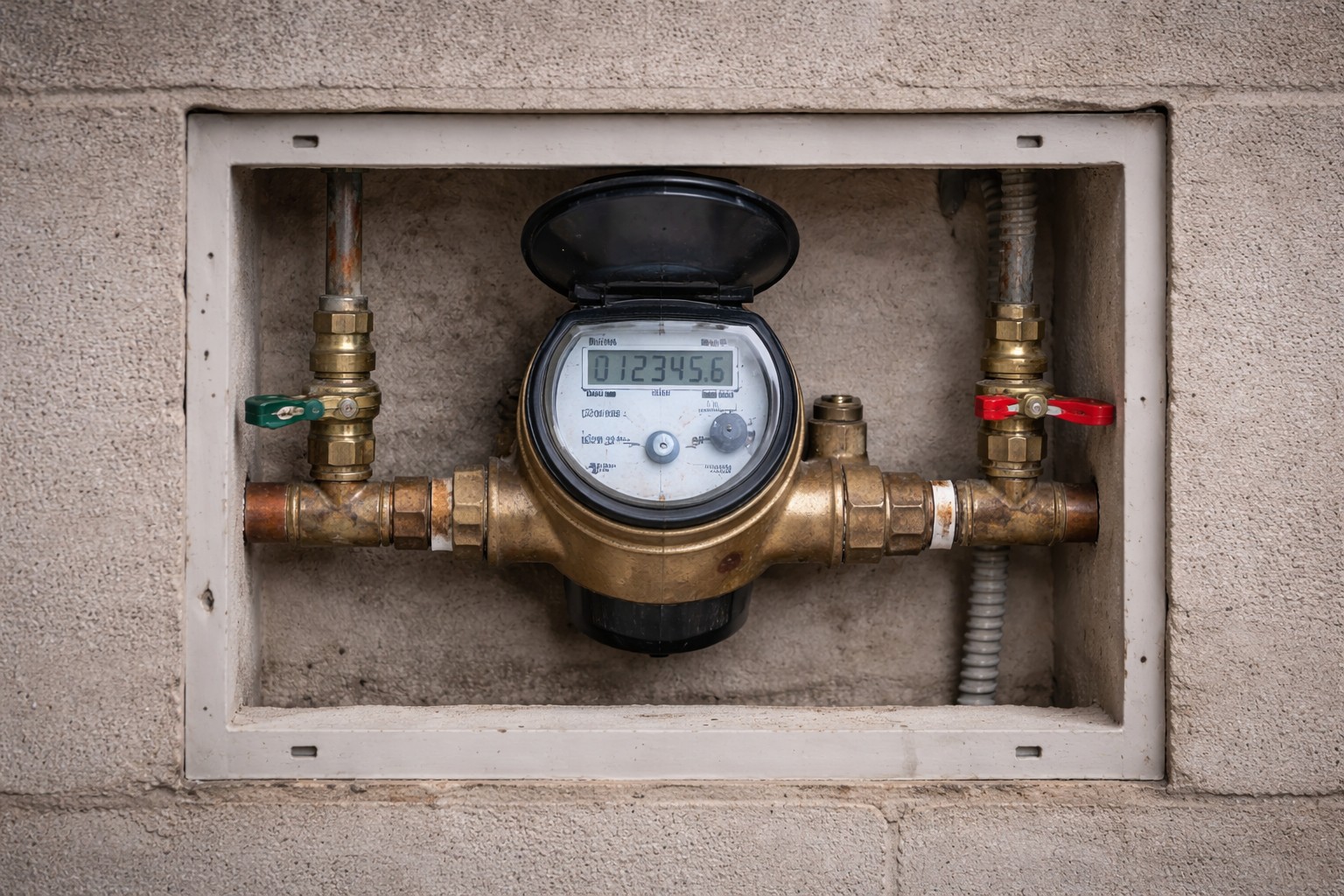
- Partial blockage at the service entry, water meter, or pressure-reducing valve (PRV) that briefly lets pressure through then clogs.
- Failing PRV or a stuck check valve that opens then closes under flow, causing a collapse.
- Intermittent demand elsewhere (pump starts, irrigation zones) that drops household pressure — see Pressure drops when irrigation runs.
- Fresh work on plumbing or appliances that introduces sediment or air into the system — for example, issues after a heater swap described in Pressure loss after water heater replacement.
- A leak or valve that only opens under certain conditions, or a pressure tank/pump problem on a well system.
Step-by-Step What to Do
1. Measure pressure at a hose bib
Attach a simple water pressure gauge to an outdoor hose bib (or use a faucet adapter). Check:
- Static pressure: with all fixtures off, note the reading.
- Running pressure: open a faucet or hose and compare the pressure while flowing.
- Observe whether pressure stays steady, dips immediately, or drops after a few seconds.
Recording static vs running helps tell if the service supply holds pressure or the drop happens inside the home.
2. Isolate main components
Systematically shut off or isolate parts to find where the collapse begins:
- Shut the main house shutoff and measure pressure at the hose bib again. If pressure drops at the service side, the issue is upstream (service, meter, or municipal line).
- Turn off the PRV if accessible and safe to do so, then test pressure. If pressure stabilizes, the PRV may be failing.
- Turn off irrigation, water softener, and any appliance isolation valves one at a time and retest. This shows whether an appliance or irrigation demand is causing the collapse.
- On well systems, check the pressure tank and pump cycling. Rapid cycling or tank failure can cause temporary pressure loss.
3. Flush system appropriately
Use controlled flushing to clear air and sediment that can cause intermittent drops:
- Open a low-level hose bib and a high indoor faucet to purge air and loosen sediment. Run until the flow is steady.
- Flush the PRV per manufacturer guidance (some have a relief screw or require a plumber) to remove lodged debris.
- If you recently had work done, briefly run hot and cold taps at several fixtures to flush lines of air or debris.
After flushing, re-measure pressure at the hose bib to see if the collapse persists.
What Not to Do
- Do not immediately replace fixtures without verifying service entry issues. Replacing a faucet won’t fix a downstream service restriction.
- Do not force or remove the water meter or municipal valves yourself — tampering can be illegal or dangerous.
- Do not keep a suspected leaking or failing pump running while you troubleshoot; that can cause further damage.
When to Call a Professional
- If the main shutoff or PRV is stuck or unsafe to operate.
- If pressure drops at the service side and your water utility or meter inspection is needed.
- If you find evidence of a leak you cannot safely isolate, or if it’s a well pump/pressure tank issue.
- If you’re unable to identify the source after isolating fixtures and flushing.
Safety Notes
- Turn off electrical power before working near pumps or electrical controls.
- Relieve system pressure before opening lines: open a tap after shutting off the main to drain pressure.
- Be cautious of hot water when flushing a system after the heater—run cold first if unsure.
- Do not attempt gas connections, meter work, or municipal valve changes yourself; call the utility or a licensed plumber.
Common Homeowner Questions
- Why did pressure suddenly get worse after I ran the washing machine?
Short answer: The washer created a demand or exposed a weak spot (PRV, valve, or leak) that can’t keep up under flow. - Can air in the lines cause these drops?
Short answer: Yes—air pockets can temporarily block flow; flushing can remove them. - Is a failing PRV an emergency?
Short answer: Not usually immediate danger, but it can cause inconsistent pressure and should be repaired or replaced promptly.
For more related articles, see the Whole-House Low Water Pressure hub.