Quick Answer:
If water pressure fell right after the city worked on the street, start by measuring pressure at an outdoor hose bib, isolate the main components (main shutoff, pressure regulator, major appliances) and flush the service lines to clear air and debris. If those checks don’t restore normal pressure, contact your water utility or a plumber.
Why This Happens
When crews work on the main or hydrants they often close valves, open lines, or blow air through the system. That can leave air pockets, dislodge sediment, or partially close a service valve. A stuck or misadjusted pressure-reducing valve at the meter can also show up right after service work.
If the pressure change follows a pattern, it can point to different causes — for time-based drops see Whole house pressure low in mornings, and if problems are limited to one level of the home consider Low pressure only downstairs.
Step-by-Step What to Do
1. Measure pressure at an outdoor hose bib
- Attach a simple threaded pressure gauge to an outdoor hose bib and turn the spigot fully on. Note the steady reading in psi (typical homes are often 40–60 psi).
- Measure before and after any household fixtures are opened to see if the system loses pressure under flow.
2. Isolate main components
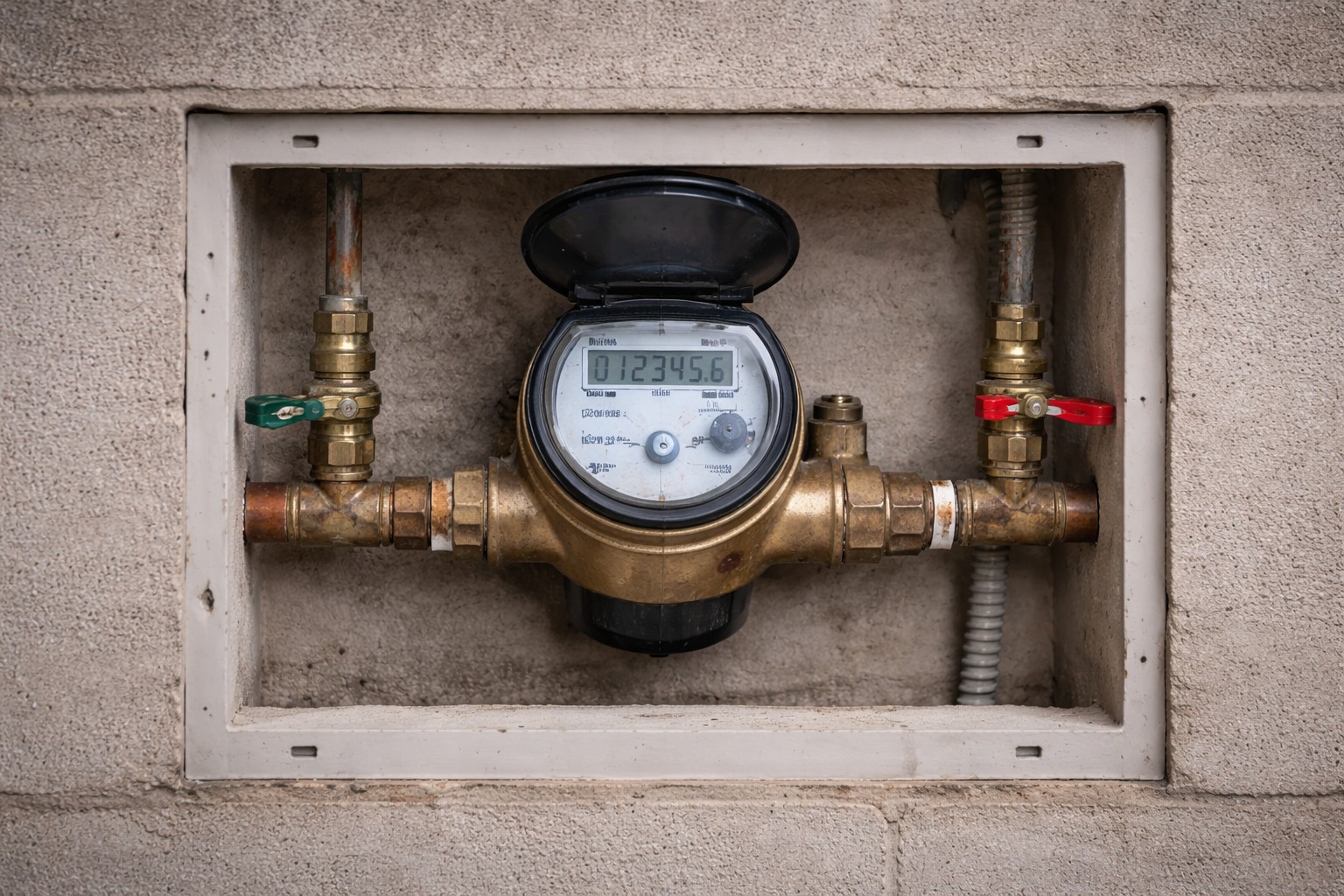
- Find your main shutoff near the meter and the house shutoff where the service enters. Turn off nonessential branches (irrigation, water heater isolation valves, etc.) and re-check pressure at the hose bib.
- Locate the pressure-reducing valve (PRV) or regulator if you have one. If you can safely access it, note its setting and watch whether pressure changes when you bypass or isolate it.
- Isolating helps tell you whether the loss is at the service entry, the regulator, or inside the house plumbing.
3. Flush the service and lines appropriately
- With the main plumbing isolated as needed, open the outdoor hose bib at full flow for a few minutes to flush air and loosened sediment from the service line.
- Open a few cold taps inside the house (lowest and highest points) and let them run briefly to clear trapped air. If water is discolored, run until it clears.
- Do this in stages and check pressure after each stage; flushing can improve flow if debris or air was the cause.
4. Recheck and record results
- Measure pressure again at the hose bib and at an indoor faucet if possible. Compare readings to your initial measurement and note any changes.
- If pressure is still low and you isolated components without change, the issue is likely at the service, meter, or city main.
5. Contact the water utility if the problem persists
- If pressure is low at the meter or you suspect the city’s work damaged the main or left a valve partly closed, call the water utility. They can confirm system status and reopen or flush mains if needed.
What Not to Do
- Do not immediately replace faucets, showerheads, or other fixtures without first verifying whether the issue is at the service entry or regulator. Replacing fixtures wastes time and money when the root cause is upstream.
- Do not attempt to alter or remove the service meter or municipal valves yourself; these are the utility’s responsibility.
- Do not open or disassemble a pressure-reducing valve unless you know what you’re doing; improper handling can cause large pressure swings or damage.
When to Call a Professional
- Call the water utility first if the low pressure started right after their crews worked nearby or if multiple homes are affected.
- Call a licensed plumber if pressure is low only in your house after the utility confirms the main is fine, if you find a leak, or if the PRV or meter appears damaged.
- If measured pressure is under about 30 psi, or pressure fluctuates wildly, get professional help to avoid damage to appliances and piping.
Safety Notes
- Shut off the main before doing any work on plumbing to avoid flooding.
- Beware of water that is discolored after flushing; it can stain laundry or fixtures—run flushing water to a safe drain location.
- Do not work on service-side components that belong to the utility. Leave those to the water company.
Common Homeowner Questions
- Why did pressure drop right after the city worked on the street?
Air pockets, sediment, or a partly closed valve at the public main or service line are the usual causes. - Can I fix low pressure by replacing a faucet cartridge?
Not if the problem is at the service, meter, or regulator; measure pressure at a hose bib first to check. - Will running all my taps flush out debris?
Yes, flushing taps and an outdoor spigot often clears air and loose sediment and can restore normal pressure if debris was the issue.
For more related articles, see the Whole-House Low Water Pressure hub.