Quick Answer:
If only fixtures on the lower level have weak water flow, start by checking supply pressure at an outdoor hose bib, then isolate upstairs vs. downstairs supplies and flush the downstairs lines. These checks usually find a stuck pressure regulator, a partially closed valve, or sediment buildup near the service entry.
Why This Happens
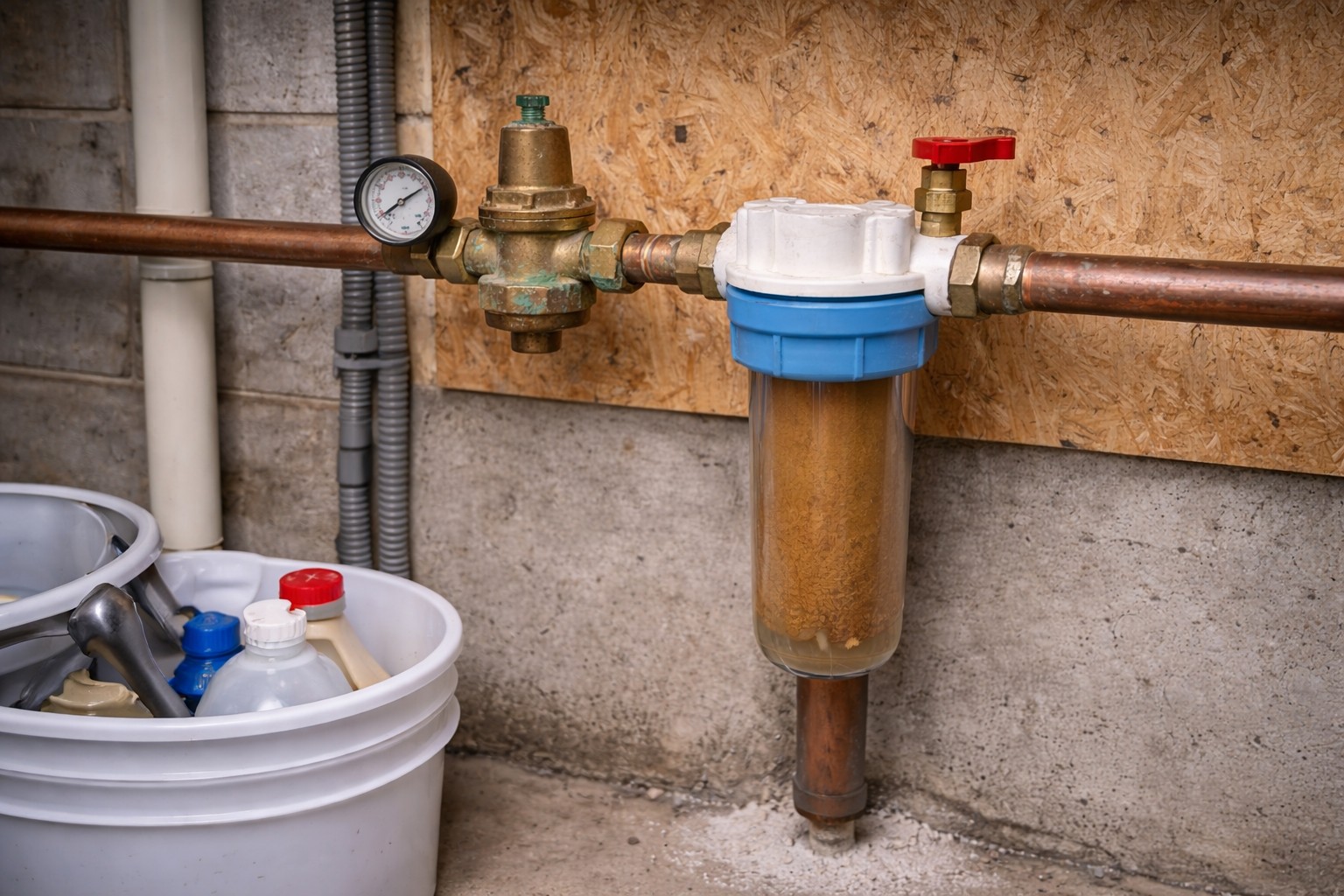
- Pressure-reducing valve (PRV) or pressure regulator at the service entry can fail or stick, dropping pressure to one zone while another remains normal.
- Partially closed isolation valves or a separate downstairs manifold can restrict flow specifically to the lower level.
- Debris or mineral buildup in the service pipe or downstairs branch can block flow after the meter.
- Intermittent problems where pressure is fine for a short time and then falls often point to a failing regulator or a leak under load — think of situations like Pressure fine then collapses.
- If any recent work or inspection was done, compare symptoms to posts about Low pressure after plumbing inspection to rule out accidental valve changes or debris introduced during service.
Step-by-Step What to Do
1. Measure pressure at the hose bib
- Attach a pressure gauge to an accessible outdoor hose bib or a threaded faucet. Record the static (no-flow) pressure and then turn a tap on nearby to get running pressure.
- Normal residential pressure is often 40–60 psi. If static and running pressures are both low at the hose bib, the problem is upstream of the downstairs fixtures.
- If the hose bib shows normal pressure but downstairs taps are weak, the issue is likely on a local branch or valve serving the lower level.
2. Isolate main components
- Locate and note the position of the main shutoff, any PRV/pressure regulator, and the upstairs/downstairs isolation valves or manifolds.
- Close the downstairs isolation (if there is one) and check pressure at the hose bib and at an upstairs tap. Then reverse: close upstairs supply and test downstairs. This tells you whether the problem is isolated to a branch or the shared service entry.
- Check the pressure at the service meter or where the supply enters the house. If pressure is low there, contact the supplier or investigate the PRV.
3. Flush the system appropriately
- Open the outdoor hose bib and run for several minutes to clear sediment from the service line; debris often settles at lower branches and causes restricted flow.
- Open all downstairs faucets and flush toilets and showers one at a time to move debris out. After flushing, re-check pressure at the hose bib and a downstairs tap.
- If you suspect a clogged PRV or aerator, remove and inspect aerators and screen-type fixtures. Flush lines before replacing parts to avoid installing new fixtures into a dirty line.
What Not to Do
- Do not immediately replace fixtures without verifying service entry issues.
- Do not shut the main off or remove the pressure regulator while appliances (water heater, irrigation systems) are running—turn those off first.
- Avoid random cutting or re-routing of pipes without confirming where the restriction or failure is located; that can make a simple repair much bigger and more costly.
When to Call a Professional
- Call a licensed plumber if pressure is low at the service entry or pressure fluctuates wildly under load—these are signs of PRV failure or a hidden leak.
- Hire a pro if you find a significant leak, need PRV replacement, or if isolating valves are corroded and won’t operate safely.
- Bring in a technician if flushing and valve checks don’t restore normal pressure; they can perform pressure tests, valve replacement, or pipe inspection tools safely.
Safety Notes
- Know the location of the main shutoff and any individual zone valves before you start.
- Turn off water-using appliances before shutting off or working on the main to avoid damage (hot water heater, irrigation controller).
- Wear eye protection when flushing lines or removing aerators—debris can eject under pressure.
Common Homeowner Questions
- Why is only the lower level weak when outdoor hose pressure is fine? Short answer: The restriction is likely on the downstairs branch or at a downstream valve, not at the service entry.
- Will flushing the hose bib always fix the problem? Short answer: Not always, but flushing can remove sediment; if pressure stays low afterward, further isolation and testing are needed.
- Can I replace a pressure regulator myself? Short answer: You can if you’re comfortable shutting off the main and following instructions, but call a plumber if you suspect complex piping or if local code requires licensed work.
For more related articles, see the Whole-House Low Water Pressure hub.