Quick Answer:
When water pressure seems to improve only after several taps are opened, the most common causes are a partial restriction in the service line or a pressure-regulating device behaving oddly. Start by measuring pressure at an outdoor hose connection, then isolate main components and flush lines to narrow the cause.
Why This Happens
A few plumbing behaviors create the symptom of “better pressure when more taps are open”:
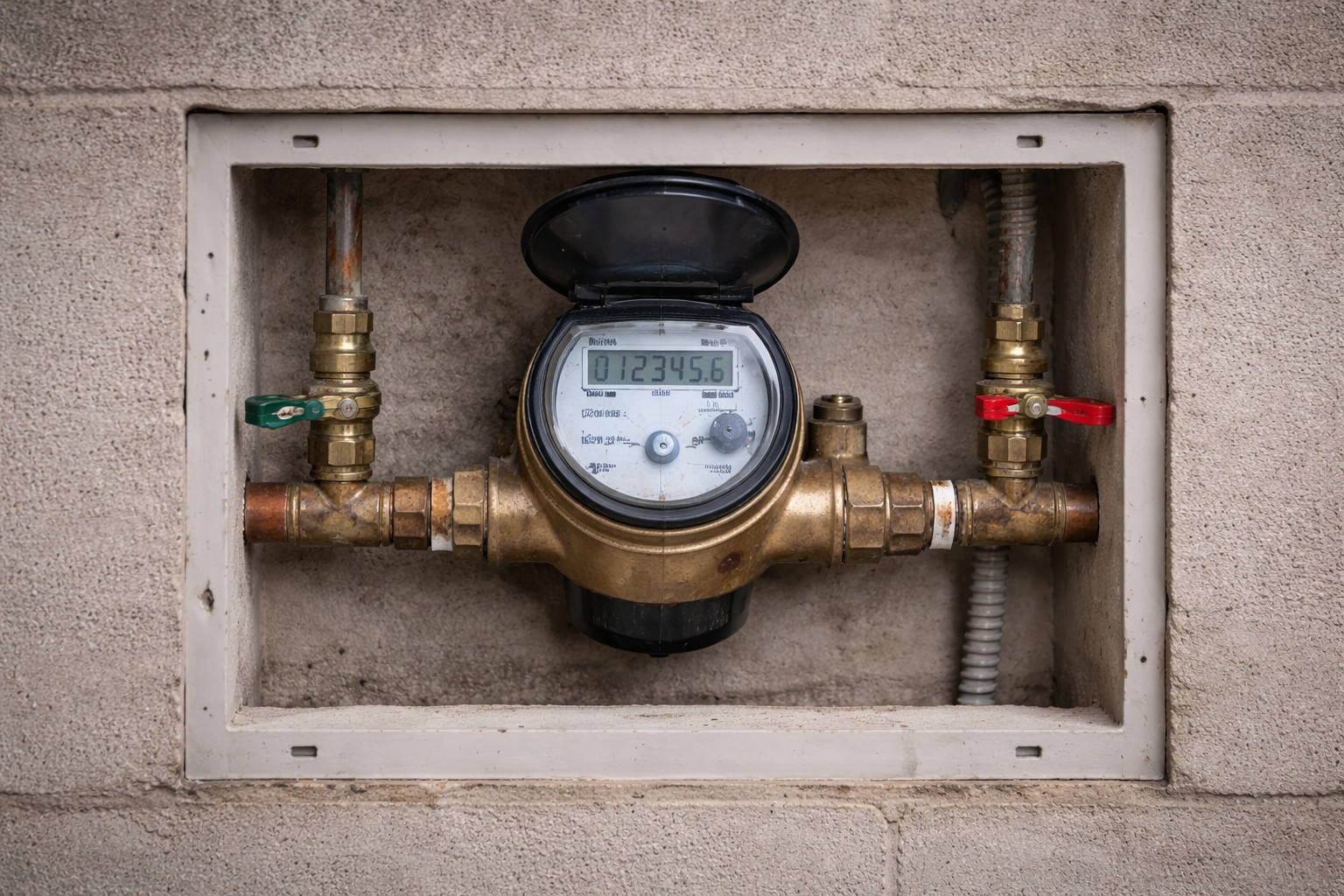
- Partial blockage or buildup in the service line or meter reduces flow at low demand but can temporarily move debris when multiple outlets draw water.
- A pressure-reducing valve (PRV) or regulator that is sticking can change output under different flow conditions.
- For well systems, a failing pressure tank or pump control can produce odd pressure changes as demand fluctuates.
If the pattern is limited to one story, see Low pressure only upstairs. If you can’t find wet spots or leaks, check Low pressure with no visible leaks.
Step-by-Step What to Do
1. Measure pressure at the hose bib
Use a standard water pressure gauge on an outdoor hose bib or laundry spigot. Read two values:
- Static pressure: with all taps closed.
- Working pressure: open one fixture fully and observe the change.
If static pressure is low, the issue is upstream (service line, meter, or supply). If static is normal but drops with flow, you may have a restriction or a failing pressure regulator.
2. Isolate main components
Systematically narrow the problem by isolating parts of the plumbing:
- Shut off the main shutoff valve at the house and note pressure at the hose bib—this separates house piping from the service line.
- If you have a PRV, locate its shutoff and test pressure before and after it.
- Turn off the water to major appliances (water heater, irrigation, softener) to see if any component causes the drop.
Isolation helps determine whether the restriction is inside the house or at the service entry.
3. Flush the system appropriately
Gentle flushing often clears loose sediment and reveals a stuck regulator:
- Attach a hose to the lowest outdoor bib and open it fully for a minute to flush out the service line.
- Open a few indoor taps (cold only) at the same time to increase flow; observe whether pressure steadies or fluctuates.
- If you suspect the water heater, follow manufacturer instructions to flush the tank—only if you are comfortable doing so and after shutting off power or gas and letting water cool.
4. Compare results and decide next steps
Use your pressure readings and tests:
- If pressure is low at the hose bib with the main shutoff open, contact the water utility or a plumber for a service-line check.
- If isolating the PRV stops the problem, the regulator may need adjustment or replacement.
- If flushing clears the issue temporarily, there may be ongoing sediment or corrosion that needs professional attention.
What Not to Do
- Do not immediately replace fixtures without verifying service entry issues.
- Do not open or modify the water meter or the utility side of the service line yourself—contact the utility for meter or municipal-side checks.
- Do not apply excessive force to valves or fittings; you can break them and create leaks.
When to Call a Professional
- If static pressure at the hose bib is low after basic checks—this often requires a licensed plumber or the water utility.
- When you cannot isolate the problem or if pressure regulator replacement appears necessary.
- If you find a hidden leak, repeated clogs, or persistent sediment that flushing does not solve.
Safety Notes
- Turn off power or gas to the water heater before attempting to flush it; hot water can scald.
- Wear gloves and eye protection when working with older pipes or when draining lines that may contain debris.
- Do not attempt to work on the supply side past the shutoff meter—this may be the utility’s responsibility and could be dangerous.
Common Homeowner Questions
- Why does opening multiple taps help? It can temporarily increase or redistribute flow enough to move debris or change regulator behavior, masking an underlying restriction.
- Can I test pressure myself? Yes — a simple gauge at an outdoor bib gives useful static and working pressure readings.
- Is this an emergency? Not usually, unless you have no water at all or notice leaks; otherwise follow the steps above and call a plumber if needed.
For more related articles, see the Whole-House Low Water Pressure hub.