Quick Answer:
If you come home to low water pressure throughout the house, start by checking the outdoor hose bib pressure, then isolate the main components (main shutoff, pressure regulator, water heater) and flush the system. These checks usually reveal whether the issue is with your plumbing inside the property or with the municipal/service entry.
Why This Happens
- Municipal work or a closed valve at the street can reduce supply pressure after downtime.
- Sediment or mineral buildup can settle while the system sits and then restrict flow when you return.
- Pressure regulators can stick or fail after long idle periods, altering household pressure.
- Air in the lines or partial blockages from insect nests or small debris at the service entry can cause system-wide pressure drop.
- Seasonal and supply factors also play a role — in some places Pressure changes with weather and system behavior after a gap in use.
Step-by-Step What to Do
1. Measure pressure at the hose bib
- Attach a garden hose pressure gauge to an outdoor hose bib and read the static pressure. Typical municipal pressure is 40–60 psi; any significant drop here points to a supply issue, not an internal faucet problem.
- If you don’t have a gauge, note whether a full-flow hose stream is weak compared with neighbors or your previous experience.
2. Isolate main components
- Close the house main shutoff and then reopen it to see if pressure returns or if you hear unusual noises. Record any change in pressure.
- Turn off the water heater or set its breaker off before draining or working near it. Check hot and cold pressure separately to see if the problem is isolated to hot water.
- Locate and check the pressure-reducing valve (PRV) if you have one. A stuck PRV can cause low house pressure even when the street supply is normal.
- Check with neighbors to confirm whether the supply is affected area-wide.
3. Check the service entry and meter
- Inspect the visible section of the service pipe for damage or recent digging.
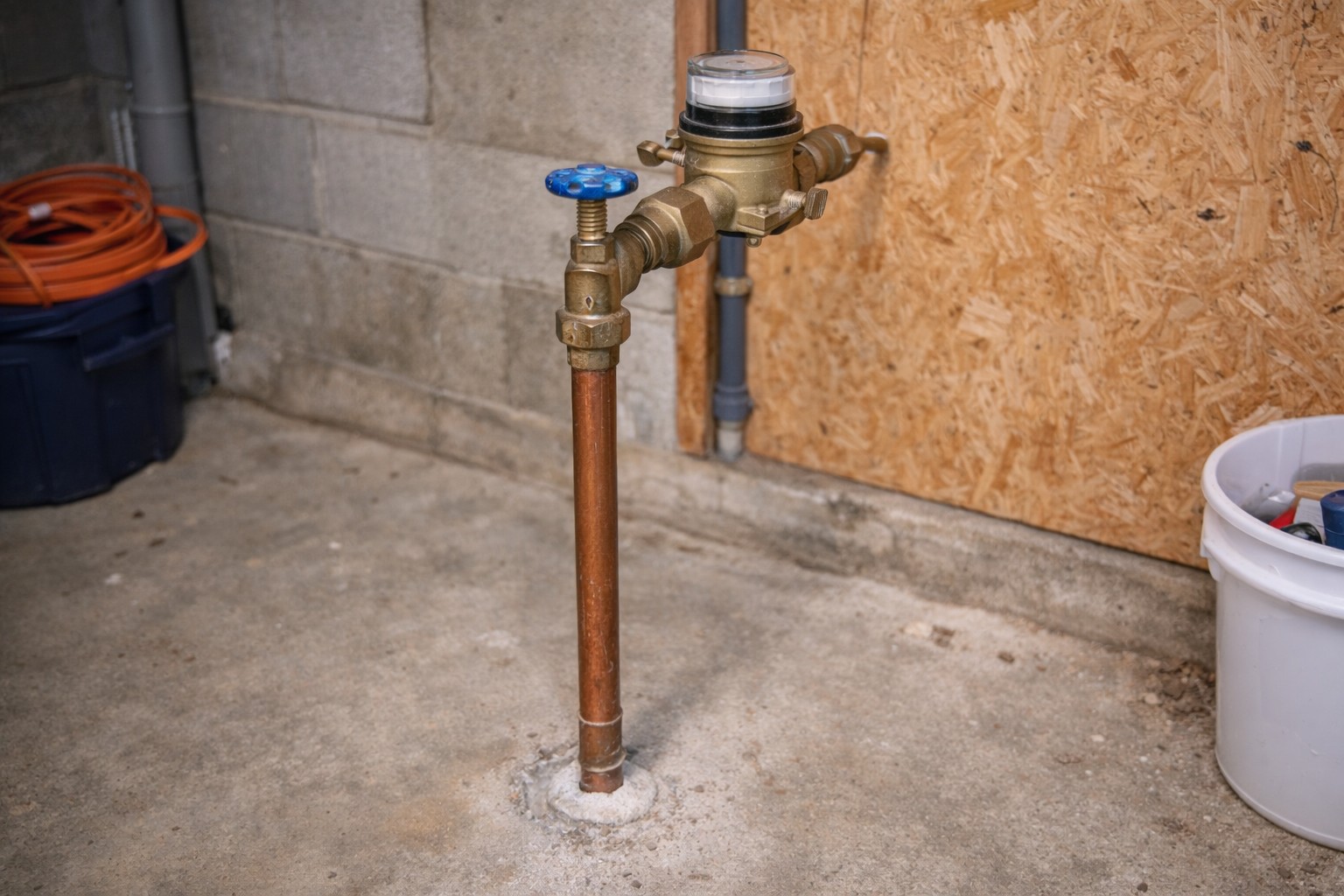
- Look at the water meter and any shutoff at the property line. A partially closed service valve will lower whole-house pressure.
4. Flush the system appropriately
- Open the highest and lowest faucets in the house to allow air and settled debris to move through the lines. Let them run until water flows clear and pressure stabilizes.
- Run the outdoor hose bib at full flow for a minute to help flush the main line into the house.
- If you need to flush the water heater, follow the manufacturer instructions: turn off power/gas, attach a hose to the drain valve, and drain a few gallons into a safe area to remove sediment. Do not open the temperature‑pressure relief valve unless you understand its operation.
- After flushing, re-measure the hose bib pressure and test faucets inside for improvement.
5. Re-test and document
- Compare pressure readings and note where pressure is still low (whole house, only hot, only some fixtures).
- Document any leaks, sounds, or visible problems to tell a plumber if you need professional help.
What Not to Do
- Do not immediately replace fixtures without verifying service entry issues. Replacing faucets or showerheads before checking supply pressure wastes time and money.
- Don’t open the water heater or gas controls without shutting off power and gas first and without knowing the safe procedure.
- Avoid using strong chemical cleaners to “clear” an assumed blockage in the main supply—they won’t fix a supply-side pressure issue and can damage plumbing.
When to Call a Professional
- If pressure at the hose bib is low and neighbors report the same issue, call your water supplier or a plumber to verify the service entry and meter valves.
- Call a plumber if you find no supply-side issue but pressure remains low inside the house, especially if it affects only hot water or a whole zone of fixtures.
- Call immediately for visible leaks, water pooling, or when you can’t locate or operate the main shutoff safely.
Safety Notes
- Turn off electrical power to the water heater before draining it. For gas heaters, turn off the gas and follow the manufacturer’s safe-draining steps.
- Be cautious with hot water — drain a small amount first to avoid scalding.
- If you’re uncertain how to isolate or operate valves, stop and call a professional. Incorrect actions can make leaks or damage worse.
Common Homeowner Questions
-
Q: Why does my pressure come back after running a faucet for a while?
A: Running the system can push air and settled debris out of lines, temporarily restoring flow. -
Q: Could a stuck pressure regulator cause this after a vacation?
A: Yes. Regulators can stick after inactivity and need adjustment or replacement by a plumber. -
Q: Should I check with the water company first?
A: Yes—if the hose bib shows low pressure or neighbors have the same problem, contact the supplier before changing household plumbing.
For related issues, review information about Low pressure after turning water off and back on when you suspect recent shutoffs or municipal work affected your supply.
For more related articles, see the Whole-House Low Water Pressure hub.