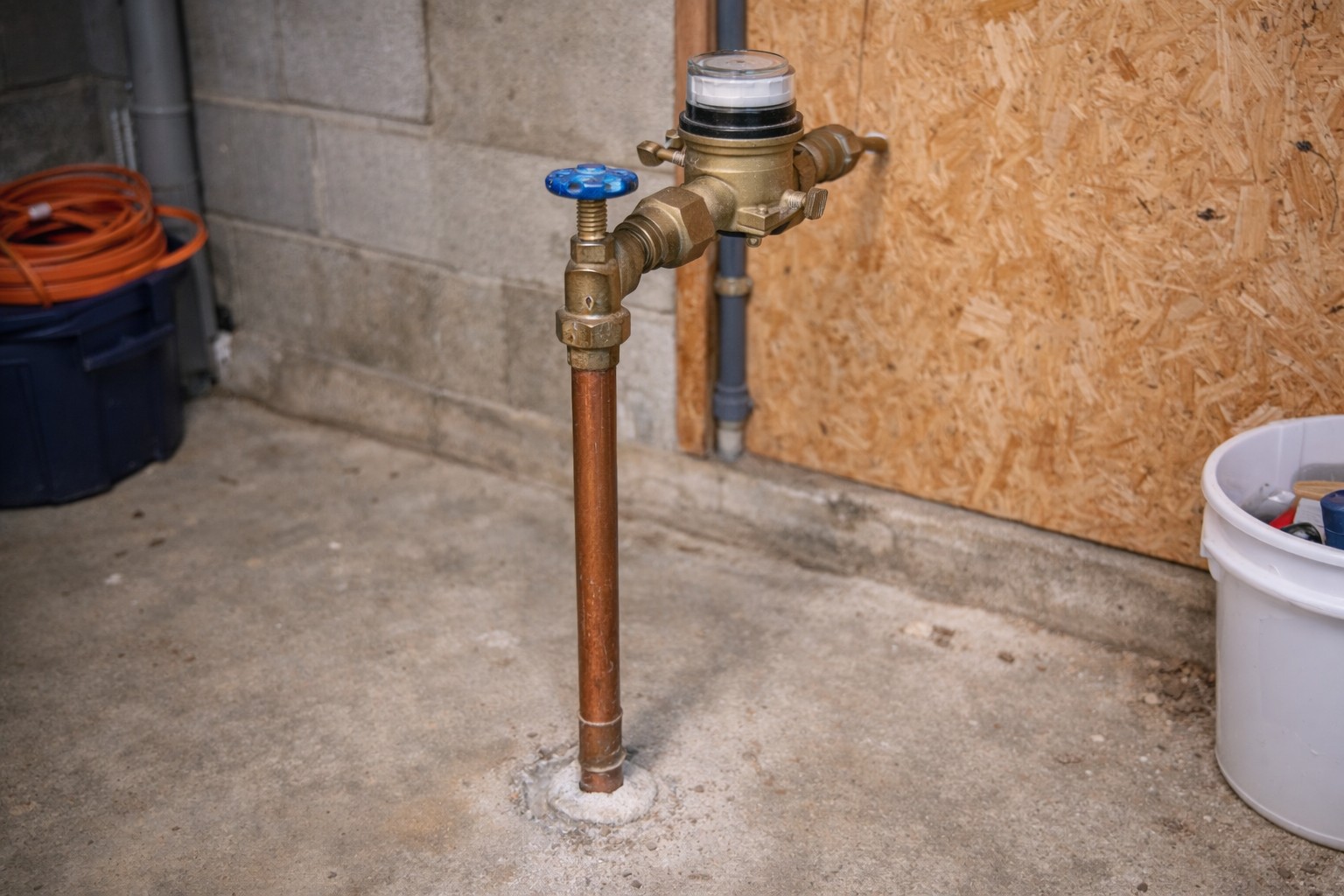
Quick Answer:
If pressure is low everywhere and there are no visible leaks, start by measuring system pressure at an outdoor hose bib, then isolate major parts of the system to locate the source and flush lines that may be clogged. These steps will tell you whether the problem is inside your house or at the service entry from the street.
Why This Happens
- Partially closed main shutoff or a failing pressure-reducing valve (PRV) at the service entry can lower pressure throughout the house.
- Sediment or mineral build-up in the main line, water heater, or internal piping can restrict flow.
- Underground leaks or reductions in municipal supply can lower pressure without leaving visible signs inside the home.
- Appliance or fixture demand can reveal pressure issues — for example, see Pressure drops when washing machine fills if pressure dips only during certain cycles.
- After utility work, meters or mains may not be fully opened or may have trapped air; see Low pressure after city maintenance as a common timing-related cause.
Step-by-Step What to Do
1. Measure pressure at the hose bib
- Attach a simple water pressure gauge to an outdoor hose bib (available at hardware stores). Read the static pressure with all fixtures off.
- Normal residential pressure is often between about 40 and 60 psi. If the gauge reads well below that, you have low supply pressure rather than a single fixture problem.
- Repeat the test while running a tap upstairs to see how much the pressure drops under flow.
2. Isolate main components
- Turn off individual branches where possible: irrigation, water heater, and any visible isolation valves. Test pressure after each isolation to see if one section was the cause.
- Shut the main house valve briefly and reopen fully to ensure it isn’t partially closed or sticking.
- If your home has a PRV (pressure regulator) near the service entry, note if it feels loose or corroded. A failing PRV will drop pressure everywhere.
3. Flush the system appropriately
- Remove and clean aerators on faucets and showerheads to rule out local blockages.
- Flush the water heater per the manufacturer’s instructions to remove sediment that can reduce flow to hot outlets.
- Open a hose bib or the lowest inside drain and run water for several minutes to clear trapped air and debris from the main lines.
- When flushing, monitor pressure at the hose bib; if it increases after flushing, sediment or meter blockage may have been contributing.
4. Check service entry and meter
- Inspect the visible service line near the meter for damage or leaks. If the meter housing is accessible, look for signs of leaks or corrosion.
- If you suspect the PRV or meter, contact your water utility to confirm service pressure and ask them to check the meter and curb stop.
5. Test fixtures individually
- Turn on one fixture at a time (hot and cold separately) to identify if a single fixture or branch shows normal pressure while others do not.
- Document which fixtures have low pressure — that helps a plumber or utility narrow the problem quickly.
What Not to Do
- Do not immediately replace fixtures without verifying service entry issues.
- Don’t start cutting pipe or replacing valves unless you have confirmed where the restriction or low pressure originates.
- Avoid digging near the service line or meter without contacting local utility locating services first.
When to Call a Professional
- Call a licensed plumber if you find no improvement after measuring pressure, isolating sections, and flushing—especially if the PRV or service line looks suspect.
- Contact your water utility if the measured pressure at the hose bib is low and you have no visible leaks inside; the issue may be on the utility side.
- Hire a pro immediately if you discover an underground leak, sudden pressure loss to zero, or if you are unsure how to safely operate the service shutoff and PRV.
Safety Notes
- Turn off electrical appliances near standing water or wet floors before you begin working on plumbing.
- When flushing or opening drains, expect water to discharge — protect floors and nearby electrical outlets.
- If you need to dig or access buried service lines, always arrange utility locates to avoid cutting gas, power, or communications lines.
Common Homeowner Questions
- Q: How do I know if the problem is my house or the city supply?
A: Measure pressure at an outdoor hose bib and call your water utility if the reading is low; they can confirm supply pressure on their side.
- Q: Can sediment really cause low pressure everywhere?
A: Yes — heavy sediment in the meter, main, or water heater can restrict flow and lower pressure throughout the home.
- Q: Is a failing PRV dangerous?
A: A failing PRV isn’t usually dangerous, but it can reduce flow and should be replaced by a professional if suspected.
For more related articles, see the Whole-House Low Water Pressure hub.