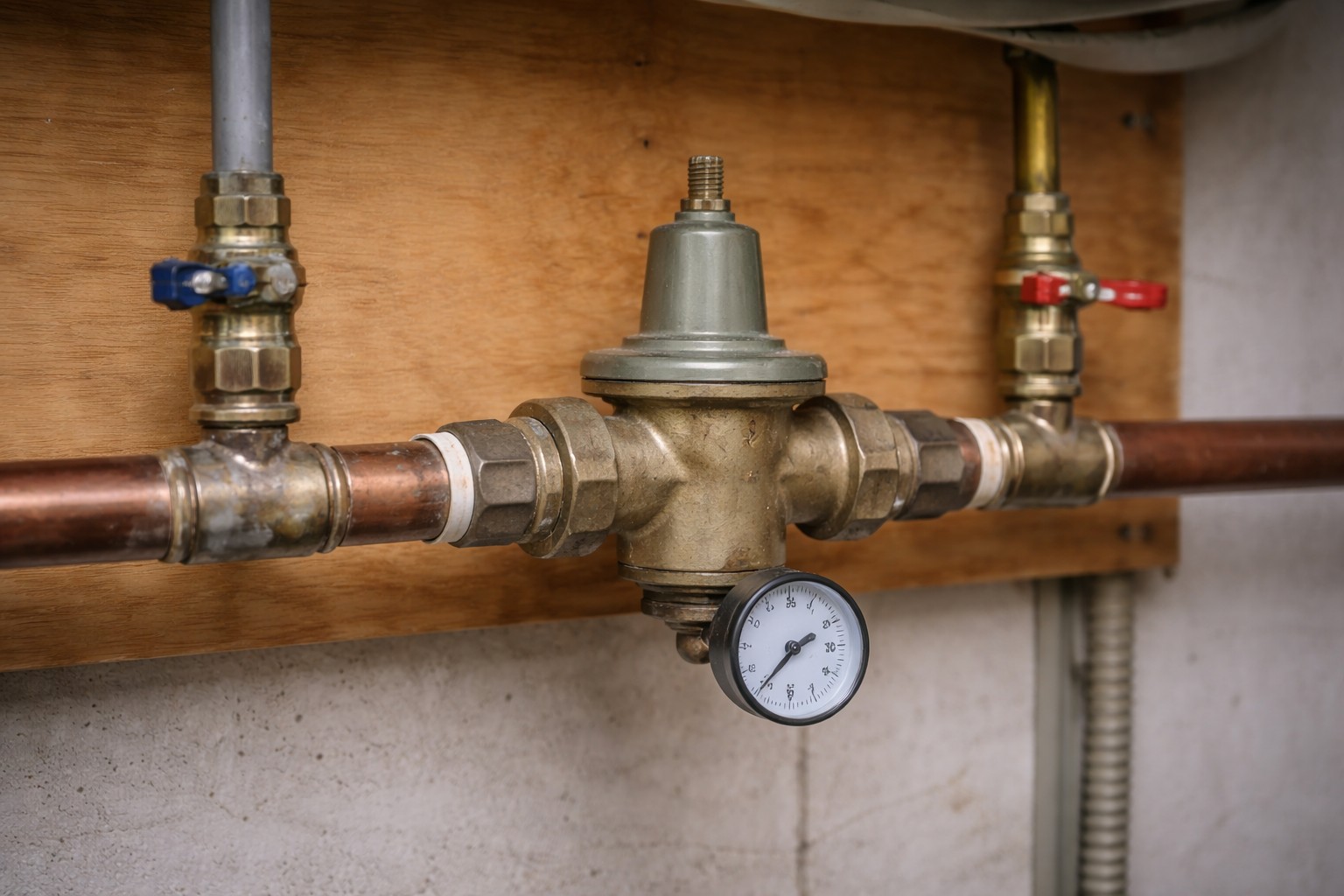
Quick Answer:
If pressure fell after installing a pressure-reducing valve (PRV), first check pressure at a hose bib with a pressure gauge and then isolate sections of the plumbing to narrow the cause. Often the regulator needs a small adjustment, a debris screen is clogged, or an upstream valve is partly closed. Work through the checks below before replacing fixtures or calling for service.
Why This Happens
When a PRV is added or adjusted, it changes how much pressure reaches the rest of the house. Common causes of an unexpected drop include the PRV set too low, trapped debris or scale in the valve, a partially closed shutoff near the meter, or an unexpected restriction from a softener, filter or closed bypass. In some cases the system behavior is temporary and pressure follows normal recovery patterns — see House pressure slowly recovers after use for related behavior — while other times the drop is sudden and affects every outlet, which is closer to Low water pressure everywhere suddenly.
Step-by-Step What to Do
Step 1 — Measure pressure at a hose bib
- Attach a threaded pressure gauge to an outdoor hose bib or laundry faucet. Record two numbers:
- Static pressure: no water flowing (all faucets closed).
- Dynamic pressure: while one faucet or the hose is running.
- Typical targets: many systems are set to 40–60 psi. If static and dynamic readings are both low, the issue is upstream or with the regulator setting.
Step 2 — Isolate main components
- Close isolation valves to separate major sections: water softener, whole-house filter, bypass lines, and the PRV bypass if present.
- Test pressure at the hose bib after each isolation step. If pressure returns when a component is isolated, that component or its connections are causing the restriction.
- Also check the house main shutoff and the service valve by the meter; a partly closed valve at the entry can look like a PRV problem.
Step 3 — Check and gently adjust the PRV
- Locate the adjustment screw or cap on the regulator. Before making changes, note the current pressure reading from Step 1.
- Make small adjustments (quarter turns) and re-measure the pressure at the hose bib after each change. Do not force the screw—only small, controlled adjustments.
Step 4 — Flush the system appropriately
- To clear debris trapped at the PRV or near the meter, open an outdoor hose bib or the lowest drain and run water for several minutes while watching the pressure gauge.
- Remove faucet aerators and shower heads before flushing to avoid clogging them with dislodged debris.
- If your PRV has a built-in strainer with a cleanout, follow the manufacturer instructions to depressurize and clean it. If you’re unsure how to do that safely, skip it and call a pro.
Step 5 — Re-check and compare
- After adjustments and isolations, record the static and dynamic pressures again. Compare to your initial readings to verify improvement.
- If isolating parts of the system showed normal pressure, re-check those components for clogs, stuck bypass valves, or internal screens that need cleaning.
What Not to Do
- Do not immediately replace fixtures without verifying service entry issues.
- Do not remove or disassemble a PRV while the system is pressurized.
- Do not crank the PRV adjustment hard—make small changes and re-test.
When to Call a Professional
- Pressure stays low after the checks above or you find a leaking or visibly damaged PRV.
- You cannot access or find the main shutoff, meter valves, or regulator safely.
- There is an active leak, or pressure fluctuates wildly (which can indicate a failing regulator or main supply problem).
- You’re asked to clean a factory strainer or replace the PRV and are not comfortable doing plumbing work—this is a common time to hire a licensed plumber.
Safety Notes
- Turn off the main water and relieve pressure before opening any pressurized valve or removing strainers.
- Use proper tools and eye protection when working on valves and regulators.
- If you suspect a gas or major leak, evacuate and contact emergency services or your utility—don’t try to diagnose that yourself.
Common Homeowner Questions
- Why is pressure fine in one faucet but low elsewhere?
That usually means a localized restriction—check aerators, showerheads, or an isolated appliance filter. - Can I adjust the PRV myself?
Yes, small adjustments are common, but proceed slowly and re-measure pressure each time. - How long should flushing take?
Usually a few minutes is enough to clear loose debris; if pressure doesn’t recover, further isolation and inspection are needed.
For more related articles, see the Whole-House Low Water Pressure hub.