Quick Answer:
If only upstairs fixtures are weak, start by measuring pressure at an outdoor hose bib to compare overall house pressure, then isolate the upstairs branch to narrow the problem. Common causes are a partially closed valve, a clogged branch line, or a failing pressure regulator on the service side. Simple flushing and valve checks often fix it; call a plumber if the service entry looks suspect or pressure is low at the hose bib.
Why This Happens
Plumbing in a house is split into branches. If downstairs is OK but upstairs is weak, the restriction is usually in the upstairs branch: a closed or partly closed isolation valve, corrosion or mineral build-up in the branch piping, a clogged aerator or fixture, or a malfunctioning pressure regulator or service valve. Compare overall supply pressure first — a normal reading there points to a local branch problem, while low supply pressure points to a service-side issue such as a failing regulator.
For related troubleshooting that compares different floors or appliance-driven drops, see Low pressure only downstairs and Pressure drops when washing machine fills for examples of shared diagnostics and next steps.
Step-by-Step What to Do
Step 1 — Measure pressure at a hose bib
- Attach a simple water pressure gauge to an outdoor hose bib or a laundry tap on the ground floor. Turn the faucet fully on and read the pressure.
- Normal municipal pressure is typically 40–60 psi. If the gauge reads low here, the problem is at the service entry or the pressure regulator and affects the whole house.
- If the hose bib reads normal but upstairs is weak, the issue is in the upstairs branch.
Step 2 — Isolate main components
- Find the isolation valves: main shutoff, water heater(s), and any branch valves feeding upper floors. Note their positions without making changes yet.
- Close and reopen the upstairs branch valve (if present) to rule out a partially closed valve. Do this slowly and test pressure after each change.
- If you have zone valves or a pump, confirm they are operating correctly or left in the correct position for testing.
Step 3 — Check fixtures and remove basic restrictions
- Remove aerators and showerheads upstairs; mineral build-up often reduces flow. Test pressure with aerators off.
- Open a full-size tub spout and a sink faucet simultaneously to see if pressure improves when larger passageways are used. That can clear minor debris.
Step 4 — Flush system appropriately
- Flush the upstairs branch by opening cold and hot fixtures fully for several minutes to push out debris. Do one valve at a time if you’re trying to find which line is clogged.
- If hot water is weak only upstairs, consider flushing the water heater (or tankless service check) because sediment and scale can reduce hot flow to higher elevations. If unsure, get a professional for water heater work.
Step 5 — Narrow the fault and test again
- After flushing and valve checks, re-measure pressure at the hose bib and test upstairs fixtures. If upstairs pressure improved, the cause was likely a local restriction.
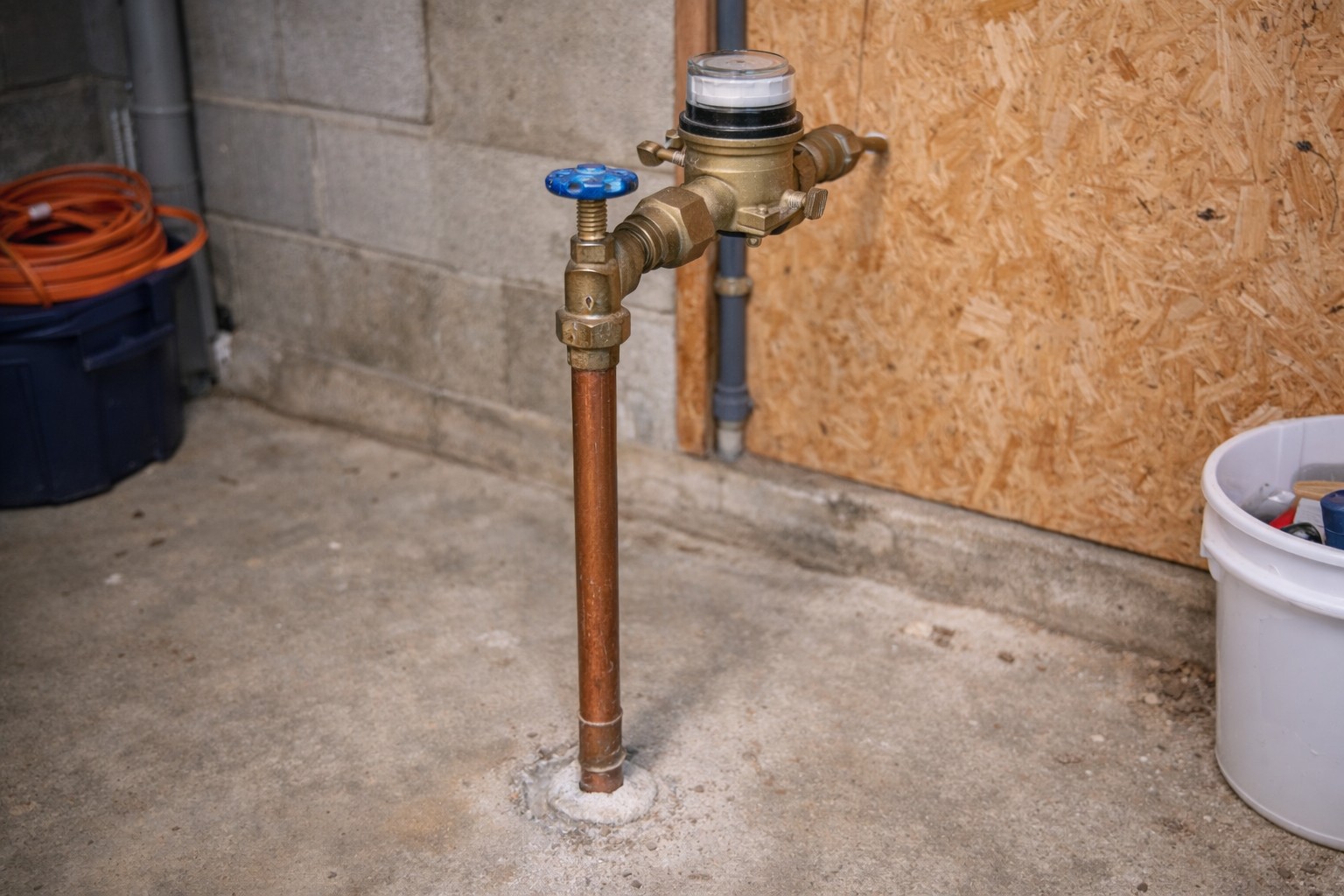
- If problems persist and pressure at the hose bib is low, the issue is likely at the service entry (main shutoff, meter, or pressure regulator) and requires professional attention.
What Not to Do
- Do not immediately replace fixtures without verifying service entry issues. Replacing faucets or showerheads before isolating the cause wastes time and money.
- Do not force or remove the main service valve yourself; incorrect handling can shut off service to the whole house or cause leaks.
- Do not attempt complex work on the pressure regulator or meter if you are not qualified — those are typically the water utility’s or a licensed plumber’s responsibility.
When to Call a Professional
- If pressure at the hose bib is low, indicating a service-side issue (main valve, meter, or regulator).
- If isolating the upstairs branch or flushing does not restore normal pressure, especially if multiple upstairs fixtures remain weak.
- If you find corrosion, a broken valve, or need work on the water heater or pressure regulator — these are best handled by a licensed plumber.
Safety Notes
- Turn valves slowly to avoid water hammer and sudden pressure changes.
- Wear eye protection when flushing lines to avoid spray from removed aerators or fixtures.
- If you smell gas or see signs of major leakage, turn off the main and call emergency services or your utility immediately.
Common Homeowner Questions
- Why does hot water upstairs have lower pressure than cold? — Sediment in the water heater or partially closed hot branch valves can restrict hot flow; flush and test the heater or call a plumber if unsure.
- Can a pressure regulator affect only one floor? — Yes, if the regulator feeds a branch differently or if a branch valve downstream is partially closed; measure at the hose bib to confirm.
- How long should I run fixtures when flushing lines? — Run full flow for 3–5 minutes per fixture; longer if there is visible debris or rust-colored water.
For more related articles, see the Whole-House Low Water Pressure hub.