Quick Answer:
If water pressure drops during or immediately after you run a fixture and then slowly creeps back up, start by measuring static and running pressure at an outdoor hose bib, isolate major parts of the system to find where the problem is happening, and flush lines where debris or trapped air may be slowing recovery. This pattern often points to a supply-side restriction, a partly clogged pressure regulator, a well pressure-tank issue, or trapped air rather than a single bad faucet.
Why This Happens
When pressure falls during use and comes back slowly, the system is recovering from a temporary demand or a flow restriction. Common causes include:
- Supply-side recovery — the municipal line or well pump takes time to restore pressure under demand.
- Pressure regulator or service-entry restriction — a partially clogged regulator or meter can limit flow until pressure equalizes.
- Air in the lines or a weak pressure tank on a well system — the tank’s bladder or pre-charge may be off, so pressure takes time to build back.
- Partial blockage from sediment or mineral build-up in pipes, valves, or internal cartridges.
If you need background on related symptoms, see the articles **Low pressure with no visible leaks** and **Gradual pressure decline throughout house** for troubleshooting patterns that overlap this behavior.
Step-by-Step What to Do
Step 1 — Measure pressure at the hose bib
- Attach a simple pressure gauge to an outdoor hose bib (spigot). Read the static pressure with all fixtures off, then open a nearby faucet to get running pressure.
- Note typical household ranges: 40–60 psi is common. If static is normal but running pressure drops sharply then slowly recovers, record both values and the time it takes to return.
- Repeat the test at different locations (front yard, back yard) to see if the issue is localized to one branch.
Step 2 — Isolate main components
- Close valves or bypass individual devices one at a time (water softener, filter, hot-water heater, irrigation, appliance shutoffs) and re-test at the hose bib after each change.
- If isolating one component restores immediate pressure, that component likely needs cleaning or service.
- On well systems, check the pressure tank and pressure switch area for obvious signs (moisture, rapid cycling). If you have a well, avoid touching electrical components until power is off.
Step 3 — Flush the system appropriately
- Remove faucet aerators and screens and run an exterior hose at full flow to try to flush trapped debris or air from the lines.
- If the hot water is involved, you can flush the water heater following the manufacturer’s instructions; if you’re unsure, call a pro for that step.
- For small blockages in filters or softeners, follow the device’s cleaning/bypass steps and then retest pressure.
Step 4 — Check the service entry and regulator
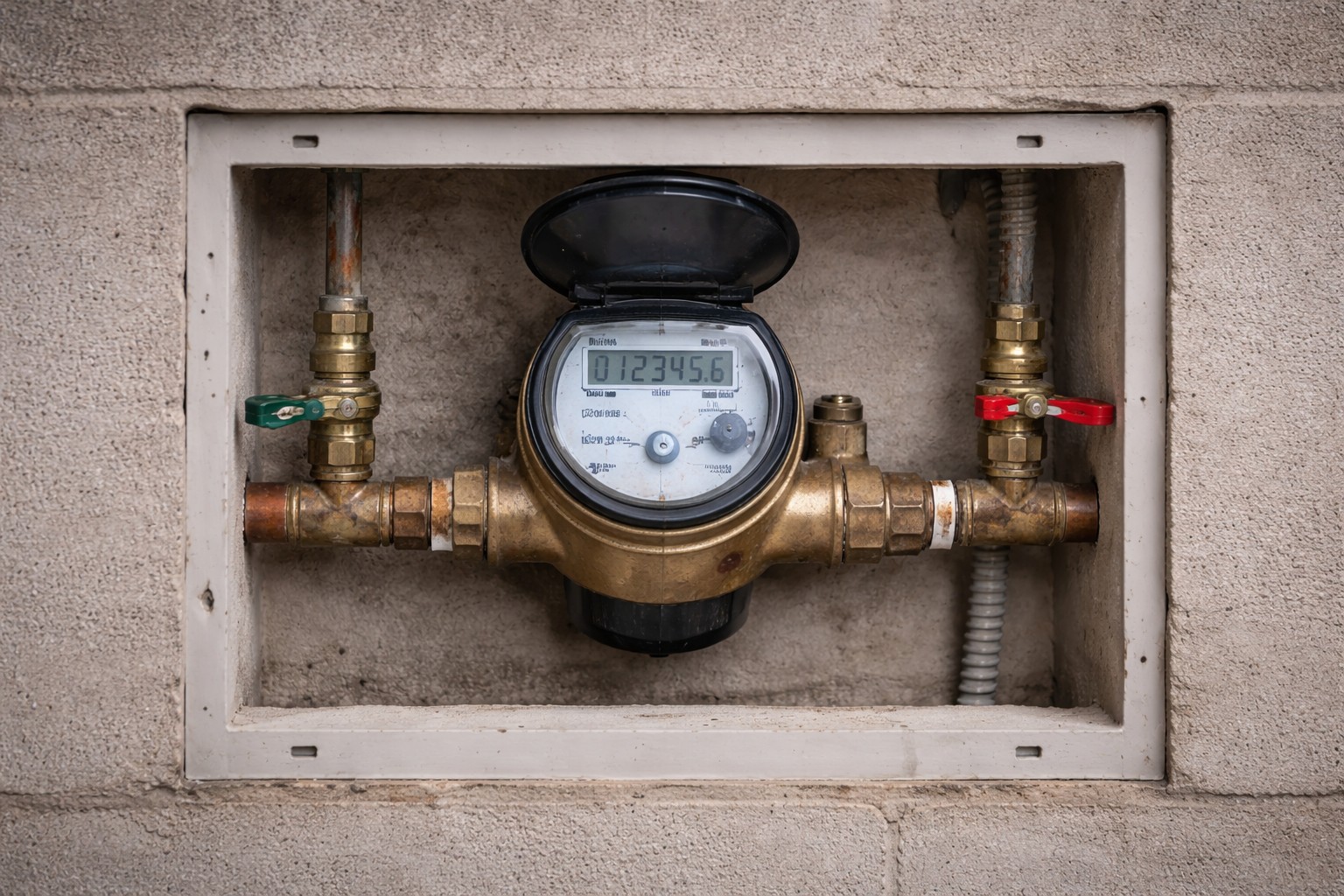
- Look at the water meter and main shutoff for debris or corrosion and check any pressure-reducing valve (PRV) near the entry. A PRV can stick partly closed and cause slow recovery.
- Do not attempt complex PRV adjustments unless you’re comfortable with plumbing systems—see When to Call a Professional below.
What Not to Do
- Do not immediately replace fixtures without verifying service entry issues.
- Do not open pressure tanks, pressure switches, or electrical panels while the system is energized; that can be dangerous.
- Do not assume a single faucet is the cause until you’ve isolated branches and measured pressure at a hose bib.
When to Call a Professional
Call a licensed plumber if any of the following apply:
- Pressure never recovers, or it drops very low during normal use.
- There are visible leaks, spurting or air that won’t clear, or repeated pump short-cycling on a well system.
- The meter, PRV, or service line appears damaged or clogged, or you detect long-term steady decline across many fixtures.
A pro can test service entry pressure, replace or adjust a PRV safely, and diagnose well-pump or pressure-tank problems.
Safety Notes
- Shut off the main water before doing any work on piping or fixtures that could leak.
- Turn off power to a well pump at the breaker before working near the pump, pressure switch, or tank.
- Wear eye protection and gloves when flushing lines or removing aerators; water can eject debris at speed.
- If you smell gas, see electrical arcing, or find a large leak, leave the area and call emergency services or a pro immediately.
Common Homeowner Questions
- Why does pressure drop only when I run a shower? — That often indicates a flow restriction or pressure regulator issue serving that branch; isolate and test as above.
- Can I fix this by myself? — You can do basic checks: measure at a hose bib, remove aerators, and isolate components; stop and call a pro if the meter, PRV, or well equipment looks faulty.
- Will replacing a faucet cartridge fix slow recovery? — Not usually. Verify service-entry and system-wide issues before replacing fixtures.
For more related articles, see the Whole-House Low Water Pressure hub.