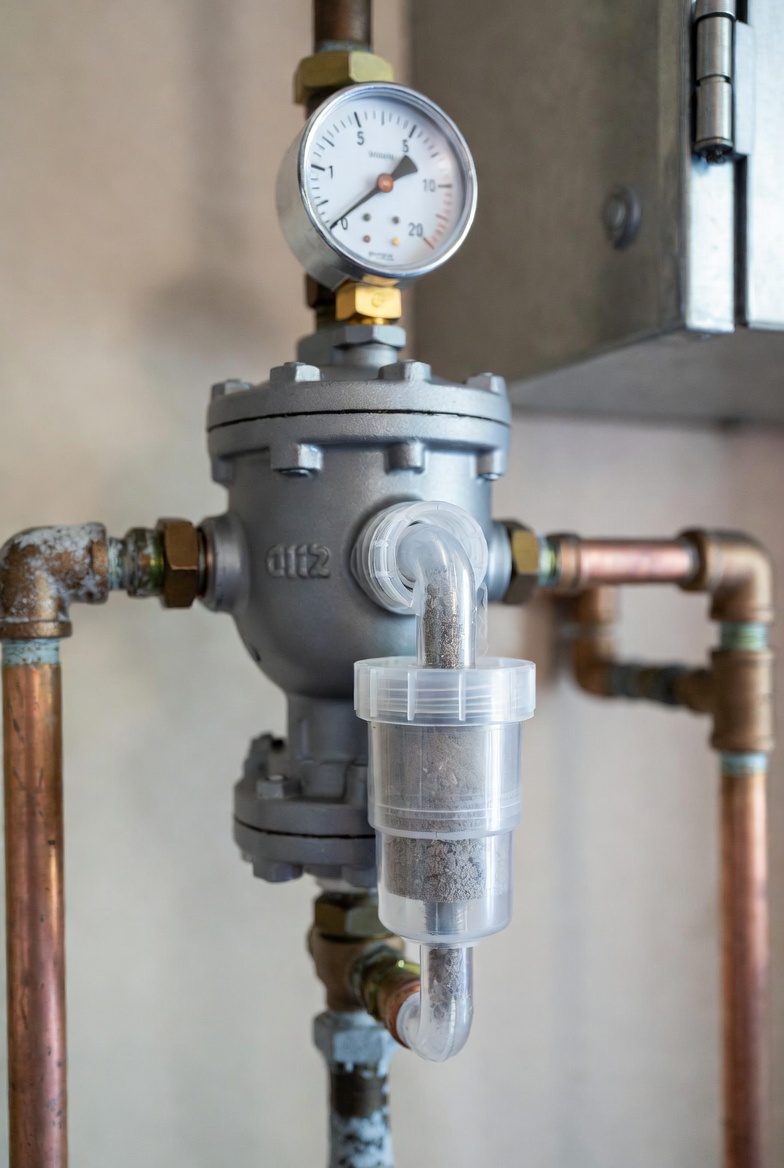
This hub covers sediment and debris issues that start at water entry—brown or cloudy water, sand or particles after city work, clogged aerators, and screens or regulators blocked by buildup.
It also includes what to do after an outage or shutoff to flush lines and reduce the chance of sediment damaging fixtures and appliances.
Use the groups below to match what you’re seeing and open the most relevant article.
Related sub-category: Water Entry, Shutoffs & Flow Control Systems
Brown, rusty, or cloudy water
Color or clarity changes often come from disturbed pipe deposits or air and fine particles introduced during valve work.
-
Brown water after main valve use
Brown water commonly follows main valve operation when rust and sediment are dislodged; flushing the service and running taps usually clears it over time.
-
Water cloudy after turning main back on
Cloudiness can be caused by trapped air or very fine particulate; allow lines to clear and check multiple fixtures to confirm improvement.
-
Whole-house sediment issues
When sediment affects many fixtures, the entry or service line is the likely source and systematic flushing or filtration is often needed.
-
Rust flakes in plumbing
Flaking iron deposits point to internal corrosion in older pipes or components and can produce visible flakes and staining at taps.
Particles and grit at fixtures
Sand and debris tend to show up at endpoints first, often clogging aerators, screens, and small valves.
-
Sediment clogging fixtures after outage
Outages and subsequent flow changes can push sediment into fixtures where it blocks flow and affects performance; cleaning aerators and screens is a common fix.
-
Debris in aerators suddenly
Aerators often trap debris released from the service line; removing and rinsing them restores flow in many cases.
-
Sand in water after city repair
City repairs can introduce sand and grit into your service line; flushing and checking appliances for sediment is recommended.
-
Particles in water after pipe replacement
Pipe replacement can leave scale and debris that appear as particles at taps; controlled flushing helps clear the system safely.
-
Sediment causing toilet fill failure
Toilet fill valves and inlet screens can be clogged by sediment, causing slow or failed refills that often resolve after cleaning or flushing.
Pressure loss and blocked components
Buildup at entry components reduces flow or produces uneven pressure; diagnosing the location helps decide the remedy.
-
Pressure loss due to sediment buildup
Gradual or sudden pressure loss can result from sediment narrowing passages; check entry screens, valves, and visible fittings first.
-
Meter screen clogged symptoms
A clogged meter screen often causes a noticeable drop in flow to the whole house and may require utility or plumber attention to clear.
-
Sediment blocking PRV
Pressure reducing valves can become obstructed by debris, producing low or erratic downstream pressure and sometimes noisy operation.
Debris causing leaks and valve problems
Particles can prevent proper sealing and lead to seepage or drifting valves.
-
Debris causing valves to leak
Debris lodged in valve seats or discs can stop valves from closing fully, producing leaks that may clear after cleaning or require component replacement.
Appliance and equipment impacts
Appliances and control devices are sensitive to particulate and can be damaged or tripped by sediment.
-
Sediment damaging appliances
Particles can abrade internal parts in pumps, valves, and appliances, shortening service life and reducing efficiency.
-
Water heater fills with debris
Debris entering a water heater can settle on the tank bottom or elements, causing noise, reduced capacity, and possible damage.
-
Sediment clogging tankless heaters
Tankless units are particularly sensitive to particulate; inline screens and routine flushing help prevent clogging and failure.
-
Sediment causing smart shutoff trips
Smart shutoff devices and flow sensors can interpret transient debris-driven flows as faults, causing nuisance shutoffs that may need inspection.
Flushing and prevention after service changes
Planned flushing and preventive measures reduce repeat problems after shutoffs, repairs, or meter work.
-
How to flush system after outage
Flushing typically starts at outside taps and proceeds through low and high fixtures to purge sediment; follow a measured procedure to protect appliances.
-
Preventing sediment damage after shutoff
Simple steps—using screens, staged flushing, and protecting appliances—can limit sediment-related damage after service interruptions.
-
Sediment buildup after curb stop work
Work at the curb stop often releases localized debris into the service; targeted flushing and checking the meter area helps clear the line.
All Articles in This Cluster
- Brown water after main valve use
- Water cloudy after turning main back on
- Whole-house sediment issues
- Rust flakes in plumbing
- Sediment clogging fixtures after outage
- Debris in aerators suddenly
- Sand in water after city repair
- Particles in water after pipe replacement
- Sediment causing toilet fill failure
- Pressure loss due to sediment buildup
- Meter screen clogged symptoms
- Sediment blocking PRV
- Debris causing valves to leak
- Sediment damaging appliances
- Water heater fills with debris
- Sediment clogging tankless heaters
- Sediment causing smart shutoff trips
- How to flush system after outage
- Preventing sediment damage after shutoff
- Sediment buildup after curb stop work