Quick Answer:
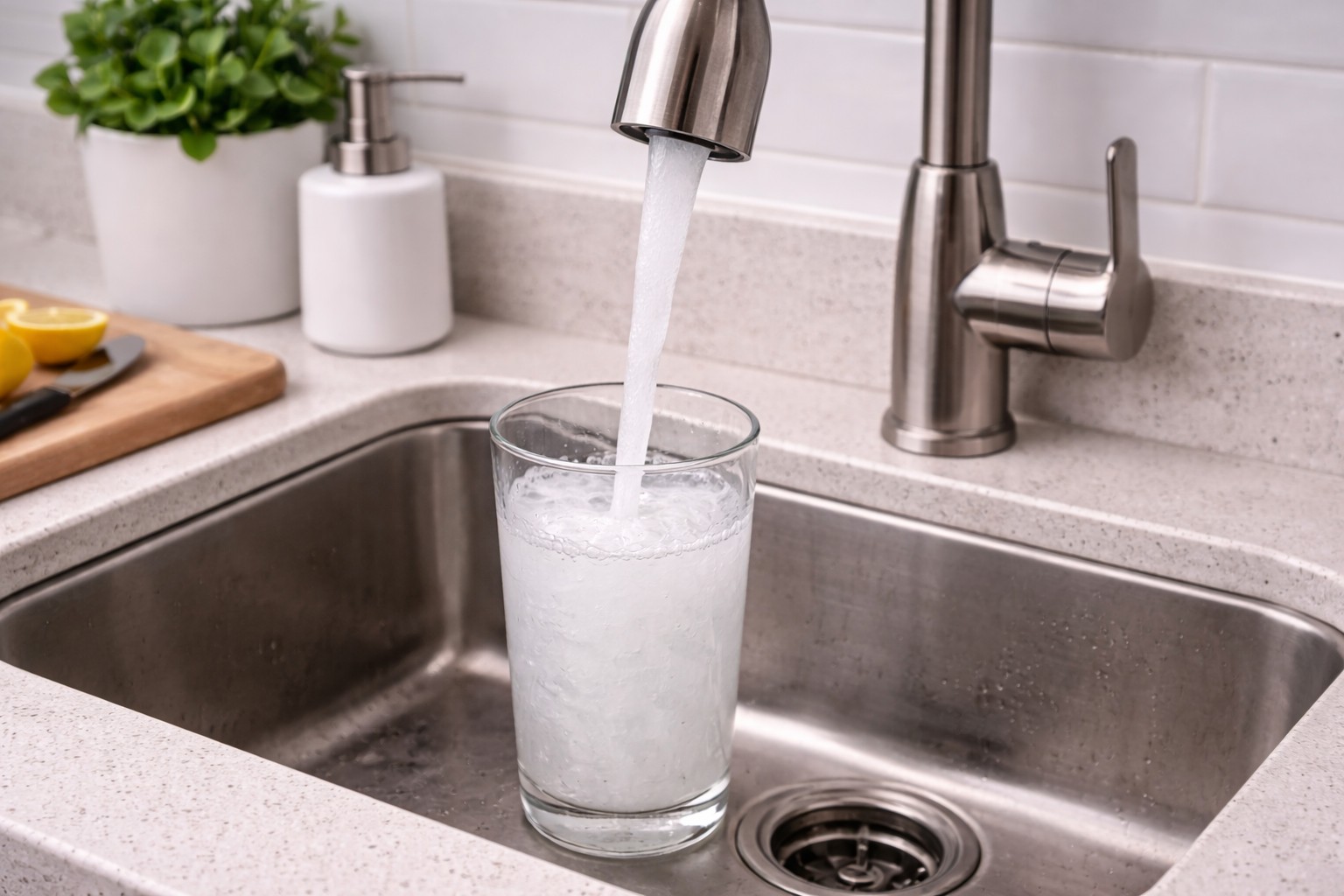
Most cloudy or milky water right after the main is turned back on is trapped air or disturbed fine sediment. Let a clear glass sit for a minute: air clears quickly, sediment settles to the bottom. Run a high-flow cold outlet (a tub spout) for several minutes and clean faucet screens and aerators. If cloudiness is slow to clear, follow a careful flush routine and reopen valves slowly to avoid sending debris into cartridges.
Why This Happens
When the water main is shut off and then reopened, the flow can dislodge tiny mineral particles and trap air in the pipes. Pressurized pockets of air make water look white or milky; they typically disappear from a glass in seconds. Fine sediment can remain suspended and makes the cloudiness last longer or settle slowly.
Some devices in your plumbing — pressure-reducing valves, filters, or softener inlets — can trap or collect that sediment and then release it when flow resumes. If those devices are partially blocked, they may cause uneven flow and continued cloudiness. See Sediment blocking PRV for more on how a PRV can behave after an outage.
Step-by-Step What to Do
1. Do a quick settle test
- Fill a clear glass from a cold tap and set it on a table. Watch for a few minutes.
- If the water clears from the bottom up quickly (a few seconds), it was air. If particles fall to the bottom and water above becomes clear, that is sediment.
2. Run a tub spout cold for several minutes
- Open the cold tub spout (or another high-flow fixture) and let it run for 3–5 minutes. A tub spout provides higher flow than a sink and moves air and loose sediment out of the service line faster.
- If multiple fixtures are cloudy, start at the lowest fixture in the house and move upward to push debris out of the system.
3. Reopen valves slowly to protect cartridges and filters
- If you shut any local valves or the main during repairs, reopen them slowly (partially open, wait, then continue) to avoid a sudden surge that can slam debris into cartridge filters, faucets, and softener valves.
- Slowly cycling the valve also reduces the chance of pressure shock that dislodges more sediment.
4. Clean screens and aerators after settling
- Remove faucet aerators, showerhead screens, and inline strainers. Rinse or soak briefly to remove trapped particles, then reinstall.
- Clean any sediment from shower arm screens or cartridge housings per manufacturer instructions before turning flow back on fully.
5. Flush the rest of the system if needed
- If the house still has cloudy water after these steps, perform a controlled flush of the system — open outside hose bibs, run cold fixtures on each floor, and allow a steady flow until water runs clear.
- For a full guide on completing this safely and efficiently, follow the steps in How to flush system after outage.
What Not to Do
- Don’t assume cloudiness is only air—let it settle and flush appropriately.
- Don’t force valves open all at once; avoid full blasts that can push debris through delicate fixtures and filters.
- Don’t ignore persistent discoloration or a metallic smell — that can indicate corrosion or contamination requiring further action.
- Don’t use chemical cleaners or additives in plumbing lines to “clear” cloudy water without professional advice.
When to Call a Professional
- If water remains cloudy after a full house flush and aerator cleaning.
- If you see rust-colored water, particles that don’t settle, or detect a metallic or sewage-like smell — contact your water utility and a licensed plumber.
- If you have low pressure after flushing, repeated clogging of cartridges, or suspect a damaged PRV or water heater issue.
Safety Notes
- If water is brown, has a strong odor, or you are unsure about safety, avoid drinking or cooking with it and check with your water utility. Use bottled water until the issue is resolved if recommended by authorities.
- Turn off appliances that use water (ice makers, dishwashers, water softeners) during flushing to prevent sediment damage.
- When removing screens or working on valves, relieve pressure first and follow manufacturer directions. If you are not comfortable, hire a professional.
Common Homeowner Questions
- How long should cloudy water last? It should clear within minutes if air; sediment may take longer but usually clears after a proper flush.
- Can I drink the water while it’s cloudy? If cloudiness is just air it’s usually safe, but if it’s sediment, discolored, or smells off, don’t drink it until it’s cleared or your utility confirms safety.
- Will cleaning aerators fix the problem? Cleaning aerators helps if small particles are trapped at fixtures, but whole-system flushing may still be needed for sediment from the main.
For more related articles, see the Sediment & Debris at Water Entry hub.