Quick Answer:
If sediment shows up in every fixture and returns after cleaning, the problem is coming in at the point of entry. Start flushing at the lowest or closest-to-entry fixture, work outward through the house, flush cold lines first then hot, and clean toilets and shower cartridges last. If it keeps happening, consider installing a whole-house sediment filter and have a pro check the meter screen and main piping.
Why This Happens
Sediment can come from several sources: rust inside aging pipes, disturbed deposits in the municipal main, or a failing part on a private well. When the water supply carries grit it will settle in low spots and can be pushed into fixtures after any pressure change or plumbing work. If a meter or screen is partly blocked, you may also see sudden bursts of material—check for meter screen clogged symptoms. In other cases, flakes and gritty particles are actual corrosion debris—see notes on rust flakes in plumbing.
Step-by-Step What to Do
1. Identify the inlet and the lowest fixture
- Find where the main supply enters the house (basement laundry tub, utility sink, or an outdoor hose spigot near the foundation are common entry-area fixtures).
- Choose the fixture that is lowest or closest to that entry point to start.
2. Prepare the house
- Gather a bucket, towels, and a stiff brush for fixture screens and aerators.
- Turn off delicate appliances (dishwasher, washing machine) or put them on standby so they won’t draw in grit while you flush.
3. Flush cold lines first, starting at the lowest point
- Open the cold tap at the lowest/closest-to-entry fixture and let it run until the water clears—this may take several minutes if there is a lot of material.
- Move to the next fixtures outward and higher, flushing cold at each until clear. Work through the house methodically to avoid reintroducing grit into cleared areas.
4. Flush hot lines next
- After cold lines are clear, run the hot water at the same fixtures. Sediment often sits in the hot-water tank or lines and needs separate flushing.
- If your water heater is old or you see sediment coming from the hot taps only, consider flushing the heater following manufacturer steps or having a pro do it.
5. Clean toilets and shower cartridges last
- Toilets and shower cartridges contain small parts that trap grit. Clean or replace these after the supply lines are clear so you don’t recontaminate them.
- Remove and rinse aerators and strainers last, and reassemble when clear.
6. Consider ongoing protection
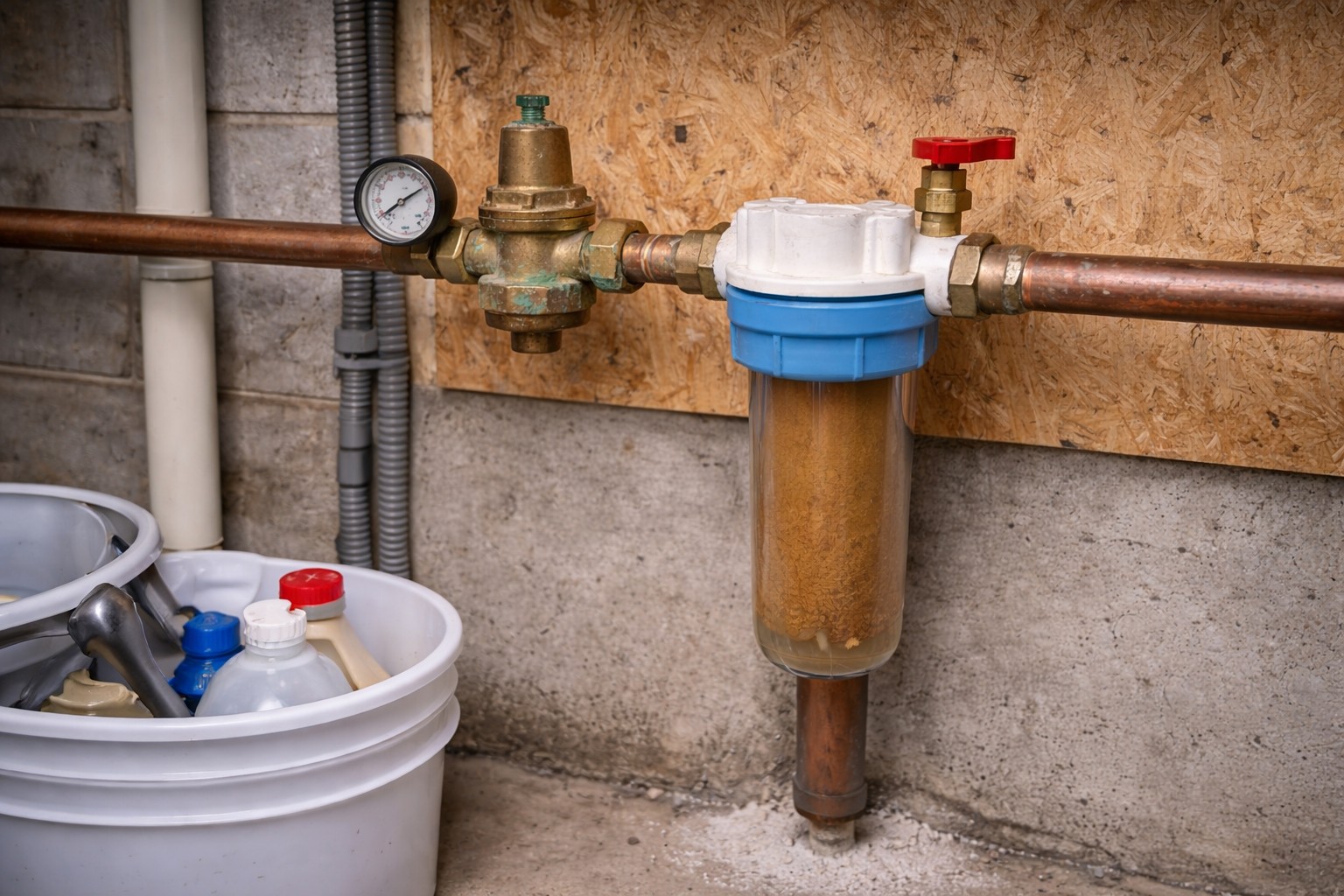
- If sediment returns, a whole-house sediment filter at the point of entry can capture grit before it reaches fixtures and appliances.
- Persistent problems may also mean corroded pipes or issues in the supply line that need professional inspection and repair.
What Not to Do
- Don’t flush everything at once; targeted zone flushing prevents grit from lodging in valves and fixtures.
- Don’t assume the water heater is the only source—flush both cold and hot to isolate where the material is coming from.
- Avoid running powerful chemical cleaners into lines to “dissolve” sediment—these won’t solve mechanical debris and can harm pipes or septic systems.
When to Call a Professional
- If sediment keeps returning after a thorough, staged flushing and filter cleaning.
- If you see heavy discoloration, abrasive particles that damage fixtures, or very large amounts of material—these suggest pipe corrosion or supply-main damage.
- If you rely on a private well and can’t find the source—have a well technician inspect the pump, tank, and screens.
Safety Notes
- Wear gloves and eye protection when handling gritty water or removing cartridges and aerators.
- Take care on wet floors—sediment can make surfaces slippery.
- Do not try to access buried mains or tamper with utility-owned equipment; contact your water provider or a licensed plumber for those items.
Common Homeowner Questions
- Why did this start suddenly? A pressure change, nearby main work, or a dislodged deposit in a meter or line often causes a sudden appearance.
- Will a filter fix it? A whole-house sediment filter will catch particles but won’t stop corrosion; use it with regular maintenance and inspection.
- Can I flush my water heater myself? Yes for many models if you follow the manufacturer’s instructions, but call a pro if you’re unsure or if the heater is old or heavily sedimented.
For more related articles, see the Sediment & Debris at Water Entry hub.