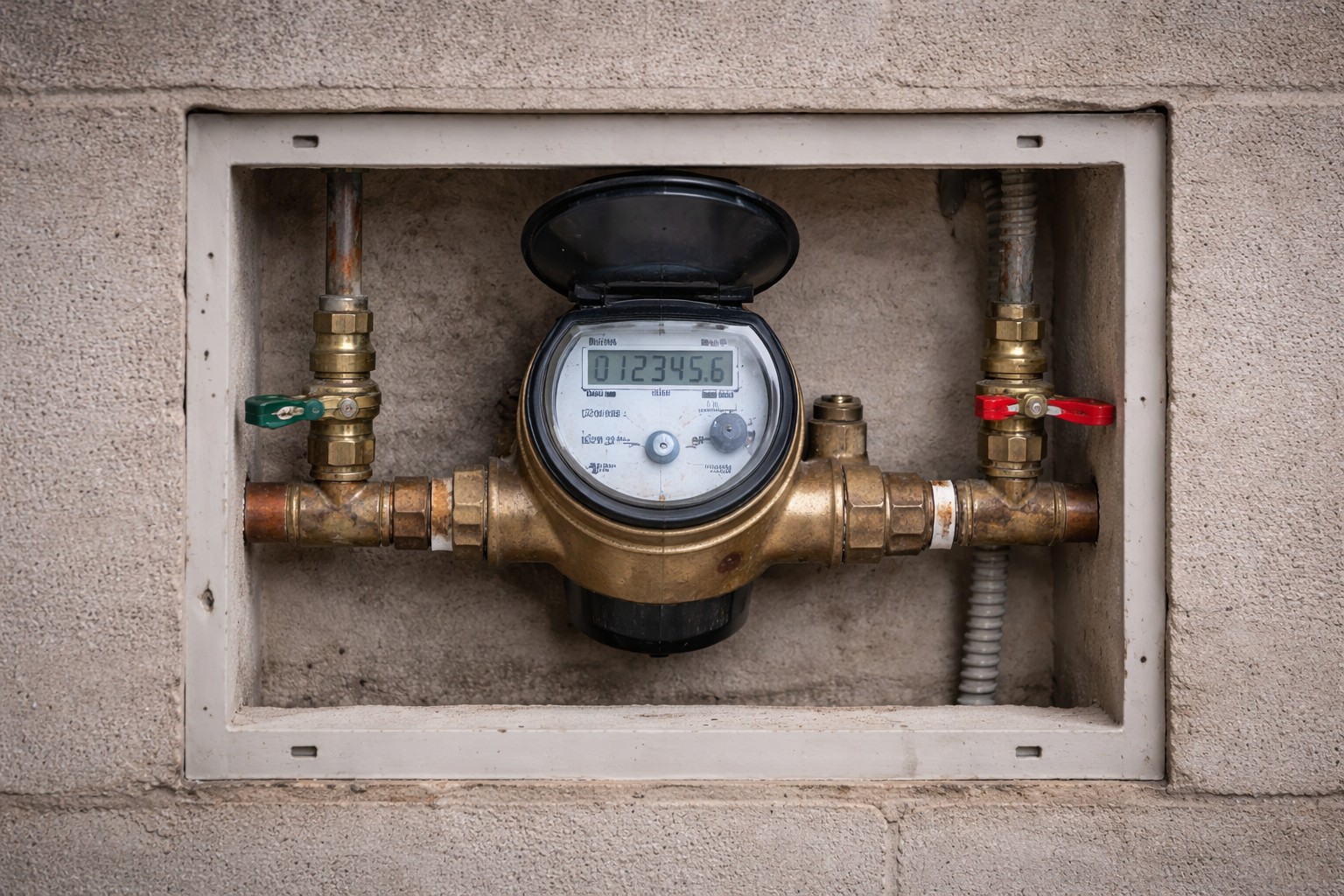
Quick Answer:
Right after curb stop work, heavy sediment can rush into your plumbing. Coordinate timing with the utility, and as soon as service returns open a hose bib or a tub spout to flush the line until the water runs clear and pressure stabilizes. Avoid aerators and appliances during flushing and clean any screens after the flow clears.
Why This Happens
When crews turn water back on at the curb or work on the main, flow can dislodge sand, rust, and other debris from the service line and nearby mains. That material travels quickly into the house plumbing and shows up as gritty water, sudden drops in pressure, or clogged screens. If debris reaches fixtures, it can block valves or damage seals, which is why early flushing is important. For more on fixture-level problems, read about Sediment clogging fixtures after outage.
Step-by-Step What to Do
1. Coordinate timing with the utility
- Confirm when the curb stop work is scheduled and ask when crews will restore water. Be ready at that time so you can act immediately.
- If the utility gives a window, plan to be home or have someone available to start the flush as soon as service returns.
2. Prepare a flushing point before service is restored
- Choose an outdoor hose bib or a bathtub spout as your primary flush point — these let debris exit directly to a drain or outside.
- Disconnect garden hoses and remove or leave off aerators on fixtures. Close any appliance shutoffs (dishwasher, washing machine, ice maker).
3. Start flushing the moment water is restored
- Open the chosen hose bib or tub spout fully as soon as you have pressure. Let it run at a strong steady flow until water clears.
- Watch the flow for grit, discoloration, and steady pressure. The first few minutes are usually the worst; continue until the water is clear and pressure is stable.
4. Work through the house carefully
- After the hose bib or tub run is clear, open other faucets one at a time starting with the lowest floor and moving up. Keep aerators removed until you finish.
- Check shower/tub spouts and sinks for grit; let each fixture run until clear before moving to the next.
5. Clean screens and reattach aerators last
- Only after water runs clear and pressure is stable, remove and clean faucet screens and aerators. Sediment trapped there can look like persistent pressure loss.
- Reattach aerators and restore appliance valves slowly, watching for any remaining debris or irregular pressure.
What Not to Do
- Don’t turn everything on right after curb stop work — doing so spreads sediment through all fixtures and into appliances.
- Do not use dishwashers, washing machines, or the water heater until you’ve flushed lines and cleaned screens.
- Don’t reinstall aerators or put appliances back online before the water is clear and pressure has stabilized — flush first, then restore fixtures slowly.
When to Call a Professional
- If after thorough flushing you still have discolored water, low pressure at multiple fixtures, or repeated clogs, call a licensed plumber.
- If sediment has reached appliances ( clogged inlet filters in washing machines or ice makers) and you’re not comfortable cleaning them, get professional help.
- Persistent whole-house problems such as continuous grit, pressure loss, or contaminated hot water may indicate deeper issues — consult a pro experienced with Whole-house sediment issues.
Safety Notes
- Use caution when flushing hot water lines; start with cold water unless you know the temperature and the water heater’s condition.
- Dispose of dirty flush water where it won’t cause slips or damage landscaping. Direct runoff to a drain or gravel area if possible.
- If you suspect contamination (unusual color, odor, or health concerns), avoid drinking the water and contact the utility and a plumber before using it for cooking or drinking.
Common Homeowner Questions
- How long should I flush? Flush at the hose bib or tub until the water is clear and pressure is steady — typically several minutes, sometimes longer depending on how much debris is present.
- Can I use my water heater during flushing? Not until lines are clear; sediment can enter and damage the tank or its connections.
- What if sediment returns after I clean screens? If the problem recurs, call a plumber — there may be a lingering deposit in the service line or a damaged internal filter.
For more related articles, see the Sediment & Debris at Water Entry hub.