Choose by the original alert and operating event. “False,” “random” and “conflict” describe a reported concern, not a proven cause. Smart products differ in sensing, power, network and manual control; retain the exact model and underlying event before changing anything.
Safety and the original protective event
If fuel gas is suspected, leave the building or affected area immediately. Do not operate valves, switches, plugs, appliances or phones there. Call the gas emergency service from a safe location well away, and wait for responders’ clearance.
Keep away from wet electrical equipment. Do not touch wet appliances, plugs or switches, or enter water to reach a breaker. When no gas leak is suspected, power may be isolated only from a safely accessible dry location; otherwise call an electrician or emergency help. Wet equipment needs qualified assessment before it is used again.
Preserve the original alert, timestamp, displayed state and settings before clearing logs, resetting, unpairing or changing firmware. A dry room, zero flow after closure, a quiet meter or a matched timestamp does not prove there was no leak. Keep a known protective closure in place while its reason is assessed. For active leakage, obtain prompt help and use only an identified permitted private emergency control from dry safe access without force; do not operate unknown utility, shared or fire-service valves.
Keep the questions separate
Phone, device, cloud and power can have different states.
The actual valve, supply and original closure cause need assessment.
A permitted reopen and verified intended protection require actual model conditions.
Before reopening or changing settings
Record exact alert/time, device/generation, firmware, current indication, relevant work and safe existing observations. Do not reset/unpair, add exclusions, raise thresholds, disable automatic closure or force manual opening to establish that an event was false. Zero flow after a valve closes may reflect containment, not clearance.
Unverified alerts during ordinary use
- A reported false trigger
- App alert without a visible leak
- Trip during appliance use
- Trip during a shower
- Irrigation-associated closure
- Alert near a recorded pressure dip
Unexpected closure and restoration
- Repeated unexplained closures
- Remote reopen command fails
- Street supply restored but local water remains off
- Manual override does not operate
Network, power and software
- Wi-Fi or phone connectivity event
- Power-outage event
- Battery warning or suspected backup fault
- Behavior after firmware work
Delivery, installation and sound
- Delivery or pressure concern
- Reduced delivery after installation
- Buzzing during a particular operating phase
- Regulation and smart-device interaction
Physical damage or bypass concerns
Actual model examples
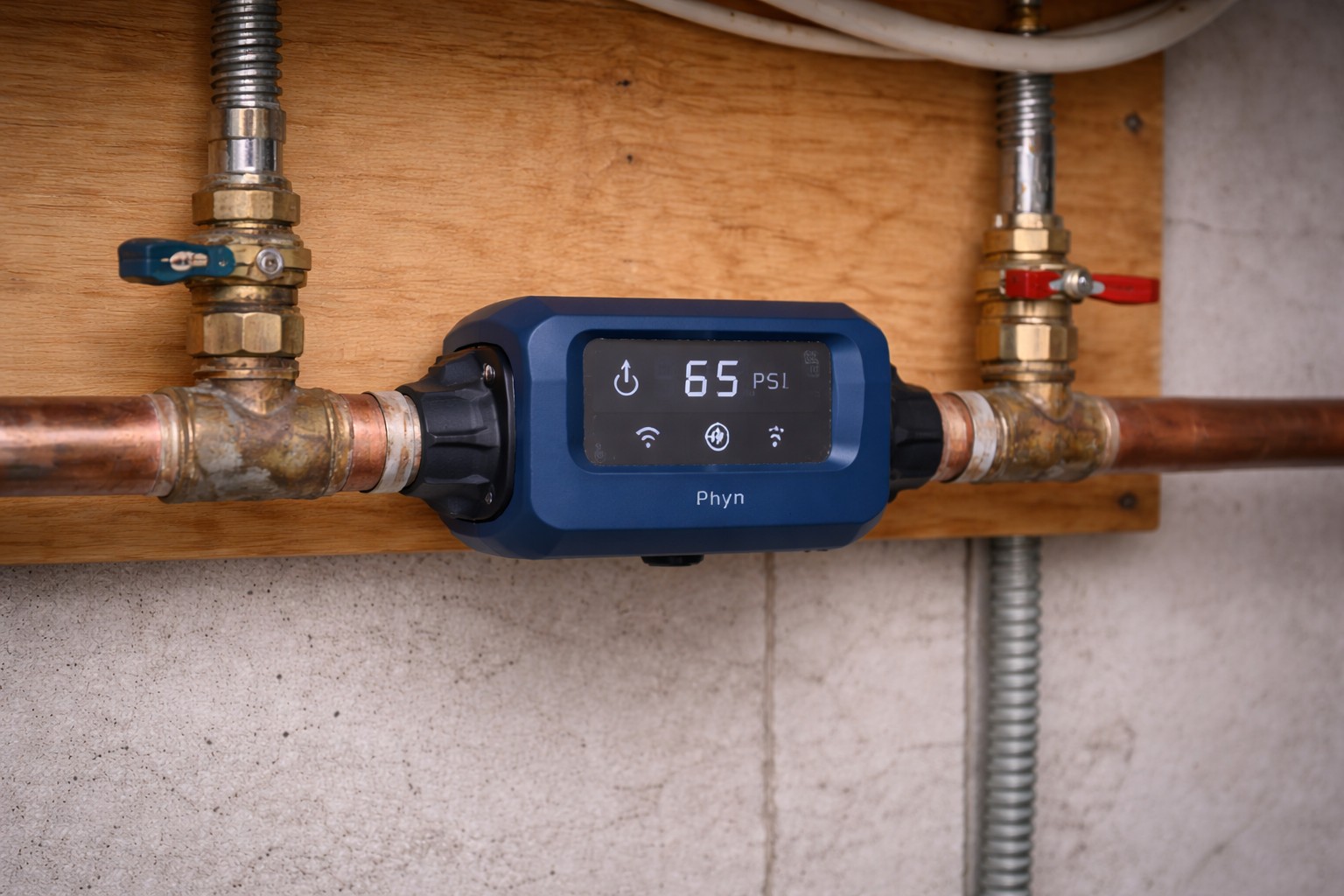
Moen Flo describes local monitoring during a Wi-Fi outage while internet is needed for real-time alerts and remote control. Phyn Plus documents different powered and manual methods, including generation-specific access. Neither example supplies a procedure or fail-state rule for an unidentified product.
Return to service
If the underlying reason has been assessed and controlled and the actual product’s conditions are met, follow its exact permitted owner restoration method. Reopening is different from resetting, learning or disabling automatic protection. Verify the required leak checks, intended control, notifications and protective configuration under the actual instructions. A faucet challenge, no repeated trip or normal app icon does not certify detection of every leak. Plan for any critical/shared service with its responsible provider before an authorized test.
Broader directory: Water Entry, Shutoffs & Flow Control Systems.
Safety sources
- Con Edison: suspected gas leaks
- CDC: electrical hazards near water
- Moen Flo example: assess and resolve the underlying shutoff alert before reopening
- Moen Flo example: local monitoring versus internet alerts and remote control
- Phyn Plus example: generation and power state change the documented control method
- EPA: cross-connection control and protection