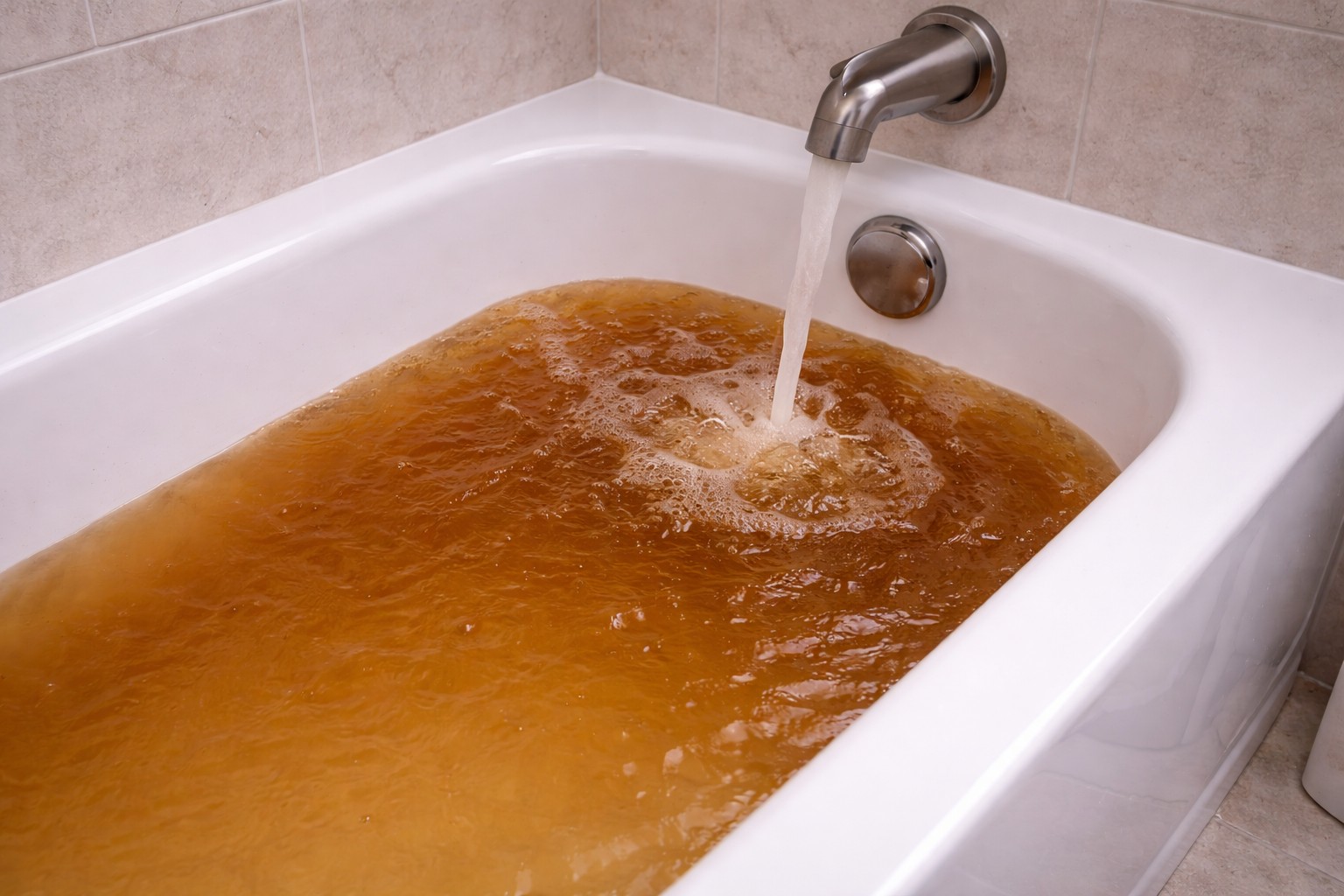
Quick Answer:
If the first water at several taps is brown or rust-colored after you cycle the main shutoff, start by running cold water from a tub spout (no aerator) into a white bucket to judge the color. Keep flushing until the water clears, then remove and clean faucet aerators and screens. Don’t run appliances until the lines are clear.
Why This Happens
When the main valve is closed and then reopened, flow changes can stir up settled mineral deposits, rust, and other debris inside your pipes, meter, or pressure-reducing valve. Older pipes and internal fittings in meters or valves are the most likely sources. If a pressure device has collected grit, you could have **Sediment blocking PRV** or similar blockages that send discolored water downstream. Fine particles can also lodge in faucet aerators, making water look dirty even after the line itself clears.
Step-by-Step What to Do
1. Prepare a white bucket and choose the right outlet
- Get a clean white bucket or container — white makes it easier to judge color and tiny particles.
- Pick a tub spout or an outdoor hose bib. Do not use a faucet with an aerator at this stage.
2. Flush cold water from the tub spout first (no aerator)
- Run cold water through the tub spout at a steady flow. Cold water moves settled material out of the main lines more predictably than hot.
- Fill the white bucket to inspect the color and any particles.
3. Continue flushing until the water clears
- Keep running the cold water and occasionally check the bucket. It may take several minutes to a half hour depending on how much sediment was disturbed.
- Check multiple fixtures around the house after the tub spout starts producing clear water; some branches may clear more slowly.
4. Clean aerators and faucet screens
- Once the lines are visibly clear, remove aerators and screens from faucets and rinse or soak them to remove trapped particles. You may find Debris in aerators suddenly after flushing—this is why cleaning them after flushing matters.
- Reinstall screens only after they are clean and the water runs clear to avoid reintroducing debris.
5. Resume normal use cautiously
- Avoid running dishwashers, washing machines, or filling hot water heaters until both cold and hot lines produce clear water. Appliances can trap particles and stain clothing or tanks.
- If you use a water softener or filter system, check and flush those components according to the manufacturer’s instructions before normal use.
What Not to Do
- Don’t start flushing through faucet aerators — they clog instantly and make it harder to judge the line condition. Use a tub spout or hose bib first.
- Don’t run washing machines, dishwashers, or fill tanks until the water is clear at several fixtures.
- Don’t use hot water to judge the problem first; hot lines may hold sediment longer and can stain if the water is dirty.
When to Call a Professional
- If the water stays discolored after 30–45 minutes of flushing at several outlets.
- If you notice strong metallic smell, taste, or particles that are more than fine grit (flakes of material or persistent rust), or if only some branches never clear — these can indicate pipe corrosion, meter issues, or a blocked PRV that needs professional attention.
- If you are unsure how to access or clean faucet screens, or if your property has a complex pressure device, call a licensed plumber.
Safety Notes
- Do not drink or cook with visibly discolored water until it clears.
- Avoid using hot water during flushing; hot water systems can trap and hold sediment, and using them may spread discoloration or cause stains.
- If you suspect contamination beyond rust or mineral sediment (foul odors, oily sheen, or sudden health symptoms), stop using the water and contact your water provider or a professional immediately.
Common Homeowner Questions
- How long will it take to clear? Usually minutes to under an hour for most homes; larger systems can take longer.
- Can I run the dishwasher or laundry? Not until both cold and hot water are visibly clear at several taps.
- Will this damage pipes? Brief flushing from cycling a valve rarely damages modern pipes, but repeated heavy sediment movement can accelerate corrosion over time — have a plumber inspect if it happens often.
For more related articles, see the Sediment & Debris at Water Entry hub.