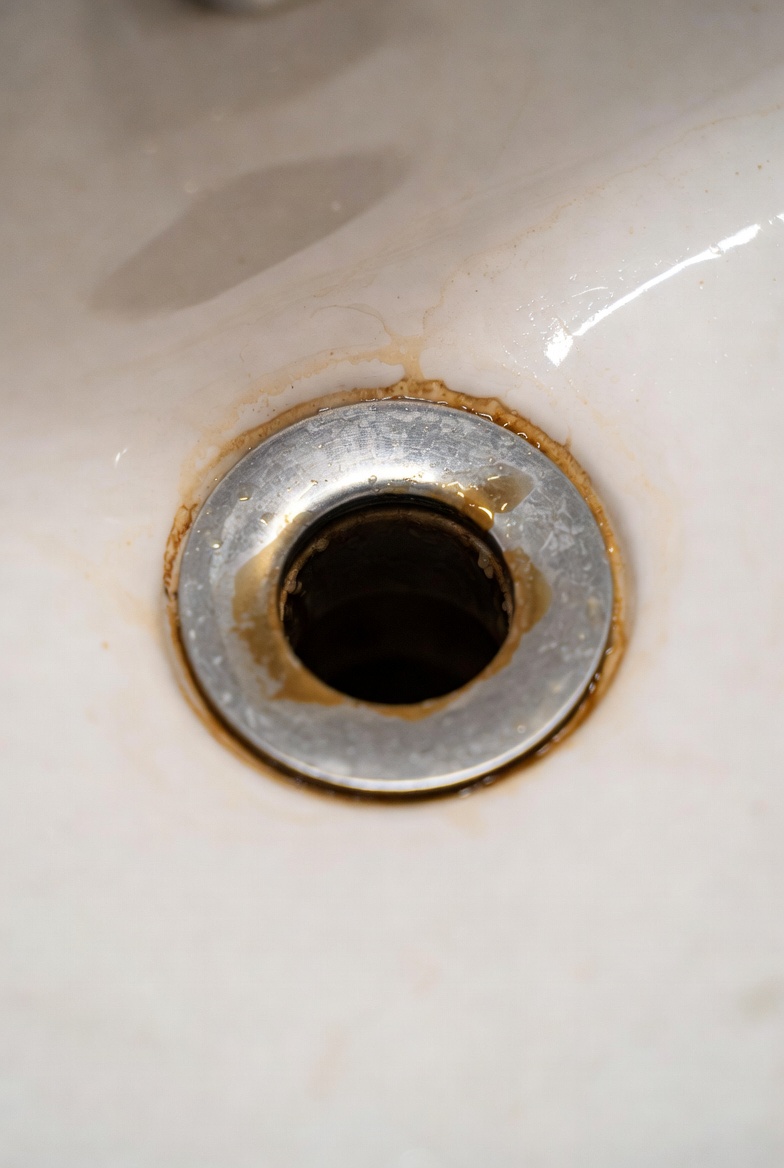
A floor-drain odor is a symptom to investigate safely, not proof of a dry trap or of contaminated tap water. This guide separates a lost drain seal, wastewater backup, odor in supplied water, and a possible gas-appliance problem. Choose the scenario you actually observed; do not recreate a dangerous smell to make the diagnosis easier.
Choose the safe route first
| What was observed | Useful next route |
|---|---|
| Rising wastewater, sewage, or several drains backing up | Stop adding water and arrange drainage service. Keep out of contaminated or electrically hazardous areas. |
| A known unused floor drain, in a cleared safe area | Consider a limited clean-water refill only if it accepts water normally. Water retained below the grate is usually part of its seal. |
| Odor appears in water rather than room air | Do not taste it. Follow utility advice and investigate the water-quality branch; a trap refill does not establish drinking-water safety. |
| Odor near a gas appliance, an alarm, or symptoms | Leave and call from outside. Do not operate fans or switches, inspect a burner, or assume this is a drain odor. |
How the systems differ
A drain trap retains water to limit sewer-air entry. Potable supply pressure, drain/vent air pressure, and room-air movement are different things. A supply outage, regulator adjustment, or smart-valve closure does not alone prove trap siphonage. A real cross-connection is a separate water-safety issue requiring appropriate investigation. An odor that improves after a refill supports a seal-related investigation but does not certify the entire installation.
A particular location or ordinary-use trigger
- Sewer smell from basement drain — One known basement floor drain: seal water versus wastewater rising.
- Smell only in basement — Basement-wide odor: identify fixtures and sealed equipment without opening covers.
- Smell when washer drains — Washer drain timing: separate appliance odor, hose routing, and shared-drain behavior.
After work on the home
- Smell after plumbing repair — Plumbing repair: use the job scope and visible conditions for a return inspection.
- Smell after remodel — Remodel: preserve unknown caps and verify the completed drain/vent layout.
- Smell after drain cleaning — Drain cleaning: identify chemicals before any flushing or mechanical work.
- Smell after filter install — Filter installation: distinguish water quality from any actual drain connection.
- Smell after water heater install — Heater installation: room-air gas concerns take priority over water-odor troubleshooting.
After supply events or time away
- Smell after city outage — City outage: utility water-use notices come before flushing.
- Smell after pressure change — Pressure change: do not confuse a supply reading with drain-trap behavior.
- Smell after smart shutoff trip — Smart shutoff trip: resolve the alert before any reset; do not bypass protection.
- Smell after turning water back on — Water restored: distinguish a sputtering faucet from a bubbling or backing-up drain.
- Smell after vacation — Vacation: investigate low-use traps without assuming a universal drying time.
- Smell after winterization — Winterization: identify products, freeze damage, and reopening requirements first.
A recurring time or weather pattern
- Odor only at night — Night only: record existing activity without fan/furnace experiments.
- Smell worse in winter — Winter: use ground-level observations and appropriate heating/vent service.
- Smell comes and goes — Intermittent: collect natural-use evidence without close sniff tests.
What to give the professional
Provide the affected room and fixture, when the odor was first noticed, ordinary-use or weather timing, recent work, product names if cleaners were used, visible wetness, any observed drain-level change, and whether one safe refill helped. A camera inspection can show the inside of a drain but does not by itself prove every gas pathway is sealed. Appropriate trap, vent, and joint testing belongs with a qualified professional.
Stop points
Do not open sewer cleanouts, remove unknown caps, unseal sewage-ejector lids, enter pits or confined spaces, or climb to roof vents. Do not sniff closely at drains or switch fans on to reproduce an odor. Leave chemicals, smoke testing, and drain/vent repairs to appropriate professionals. Persistent or returning odor needs a plumber even if adding water helped temporarily.
Broader topics: Floor Drains, Basement & Main Lines. For water-level interpretation, see Standing Water in Floor Drain. For an issue in supplied water, use Water Contamination, Taste & Odor.
Sources and equipment instructions
- Wisconsin DHS: Sewer gas
- MMSD: Sewer odors and water-sealed traps
- We Energies: Gas-leak precautions
- EPA: Cross-connections and backflow
- CDC: Do not mix cleaning products
These sources support the safety precautions and plumbing principles above. They do not diagnose this particular home. Use the actual equipment model’s instructions; ask a qualified professional about concealed piping, vents, primers, and gas appliances.