Quick Answer:
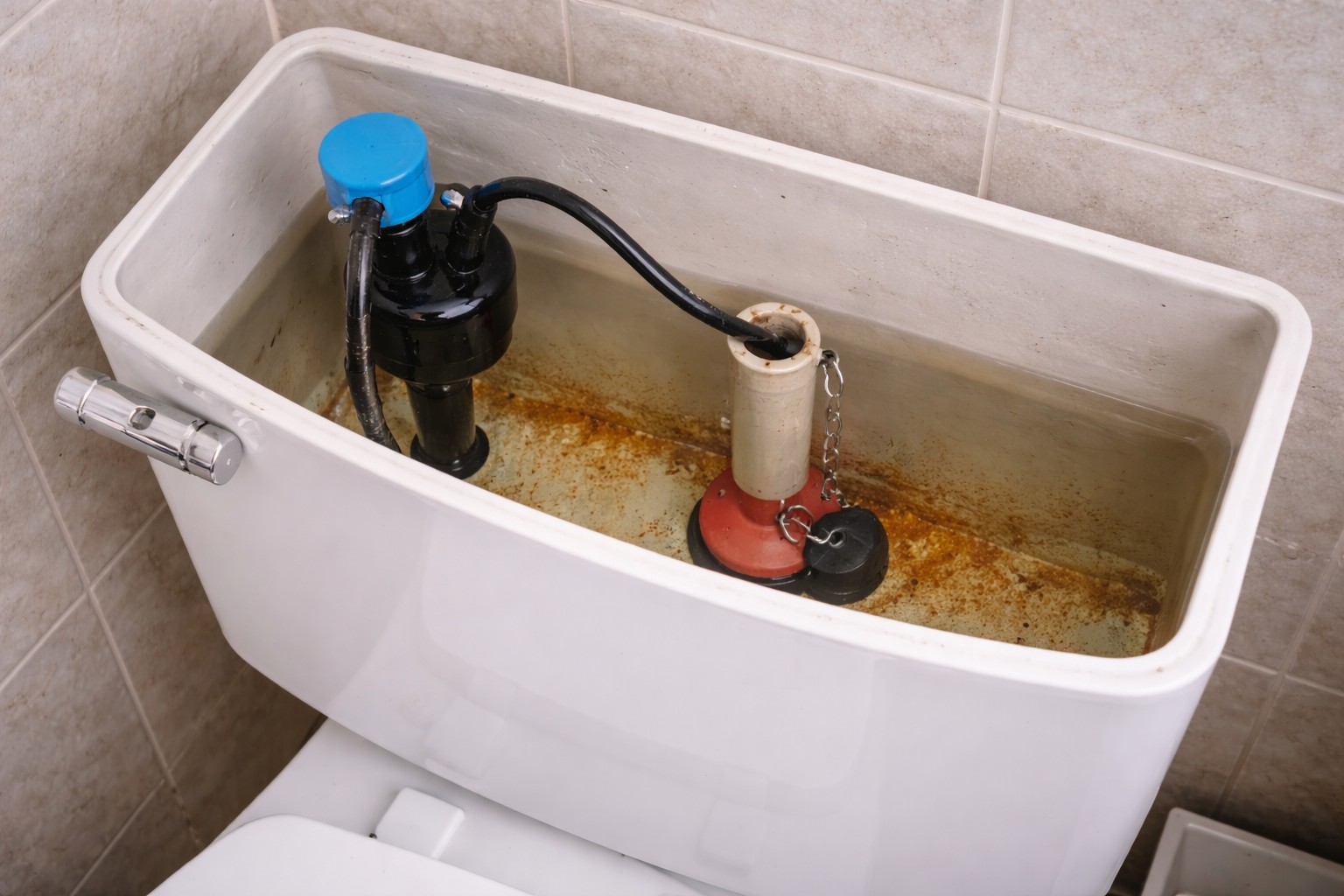
If your toilet refills slowly or doesn’t refill right after water service was restored, fine sediment likely jammed the fill valve screen or diaphragm. Close the toilet stop, remove the fill valve cap and rinse the screen, briefly flush the stop into a bucket, reassemble and test. Replace the fill valve if the diaphragm is torn by grit.
Why This Happens
When water is turned back on after a repair, maintenance or a disturbance in the supply, sediment that was resting in the pipes can wash downstream. The small screen and rubber diaphragm inside the toilet’s fill valve are easy places for grit and particles to collect. That debris blocks or holds the valve partly closed, so the tank refills slowly or not at all.
This problem is similar to other household issues caused by loose sediment, such as Sediment clogging tankless heaters or Debris in aerators suddenly reducing flow at fixtures.
Step-by-Step What to Do
1) Close the toilet stop
Turn the shutoff valve at the base of the toilet clockwise until it stops. This prevents more water—and sediment—from entering the tank while you work.
2) Remove the fill valve cap and inspect
Lift the tank lid and locate the fill valve (usually at the back left of the tank). Follow the manufacturer’s method for removing the top cap or cover. Look for grit on the small screen and the rubber diaphragm.
3) Rinse the screen
Hold the cap and screen under clear running water or rinse into a clean container to wash out trapped particles. If the screen is removable, take it out and rinse both sides. Be gentle with the rubber diaphragm—don’t stretch it.
4) Flush the stop into a bucket briefly
With the toilet stop still closed, open the household shutoff (if you had turned off a main) or carefully open the toilet stop slightly into a bucket to flush any remaining sediment out of that short run of pipe. Close it back when the water runs clear.
5) Reassemble and test
Put the fill valve cap and screen back, open the toilet stop, and let the tank refill. Watch the valve: it should let a steady stream into the tank and shut off normally when the float rises.
6) Replace the fill valve if the diaphragm is torn by grit
If the diaphragm is nicked, torn, or the screen is damaged, replace the fill valve assembly. A damaged diaphragm will continue to leak or stick even after cleaning.
What Not to Do
- Don’t keep forcing toilet refills by holding the flush lever or repeatedly opening the stop. That can let more sediment move into the valve and cause more damage.
- Don’t ignore the issue — if cleaning doesn’t fix it, replace the fill valve rather than repeatedly taking it apart and reassembling damaged parts.
When to Call a Professional
- If you can’t access or remove the fill valve cap without risk of breaking the valve or tank parts.
- If cleaning doesn’t restore normal operation, or the diaphragm is visibly torn and you are uncomfortable replacing the valve yourself.
- If multiple fixtures are affected after water was restored, indicating widespread sediment in the service line—call a plumber to inspect the main supply.
Safety Notes
- Work with the water off at the toilet shutoff to avoid unexpected flooding.
- Use a bucket and towels to catch water when you rinse the screen or flush the stop.
- Handle the tank lid carefully—set it on a towel to avoid chipping or cracking.
Common Homeowner Questions
- Why did this start right after water was restored? Temporary disturbance in the pipes moved settled sediment into the valve.
- Can I just replace the screen? You can try rinsing or replacing the screen, but if the diaphragm is damaged, replace the whole fill valve.
- How long should a fill valve last? Properly maintained valves last several years; sediment and hard water shorten their life.
For more related articles, see the Sediment & Debris at Water Entry hub.