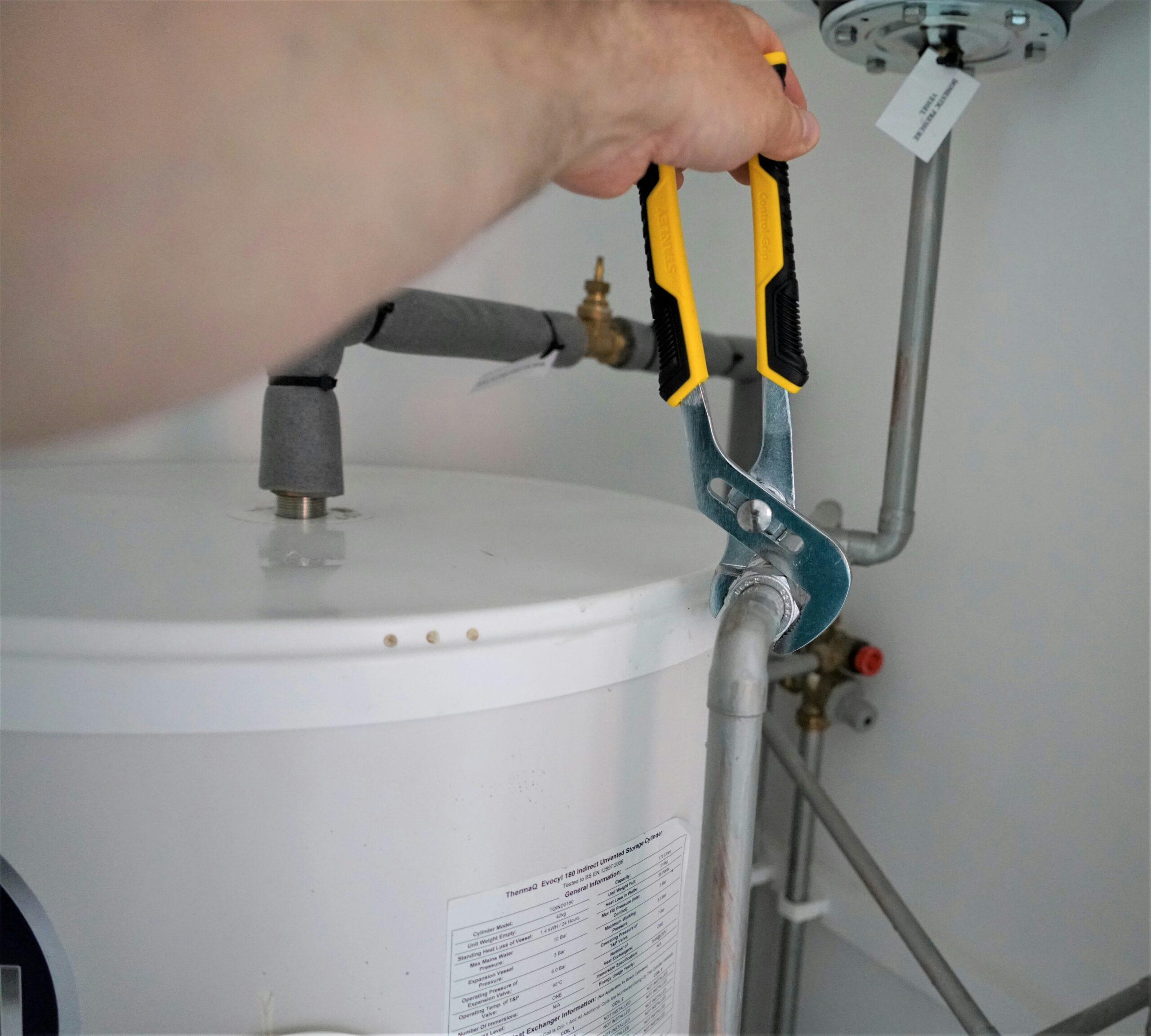
This hub covers water quality problems that happen only on hot water—discoloration, cloudiness, odors, tastes, or sediment that doesn’t show up on the cold side. Because hot water passes through the water heater and hot-side piping, changes can appear after heater refills, heater draining, repairs, or long downtime. The pattern (smell, taste, particles, or film) helps narrow it down.
For related issues that can affect either hot or cold water, see the broader Water Contamination, Taste & Odor category: https://homefixerguide.com/water-contamination-taste-odor/
Hot water looks discolored or cloudy
Discoloration and cloudiness that only occur on the hot side often point to the heater or hot plumbing rather than the supply. Check timing, recent work, and whether the problem appears at every hot outlet.
- Discolored hot water only
Color in hot water but not cold commonly comes from corrosion or rust inside the heater or hot pipes; the tank and anode condition are primary suspects.
- Hot water cloudy after heater refill
Cloudiness right after refilling a heater is often trapped air, mineral disturbance, or loosened sediment—usually clears after running the water for a few minutes.
- Hot water cloudy only in morning
Morning-only cloudiness can come from overnight stratification in the tank or soft sediment settling that gets stirred when the heater first runs.
- Hot water discolored after vacation
Discoloration following a period of nonuse often results from stagnation in the tank or pipes, allowing corrosion or bacterial films to form while the system sat idle.
Hot-water-only particles and sediment
Visible particles that only appear in hot water suggest tank sediment, scale, or deteriorating hot-side components rather than supply-line debris.
- Sediment only in hot water
Settled material inside the heater—rust, minerals, or broken-up anode bits—can flush into hot outlets while cold lines stay clear.
- Particles only in hot water
Small particles may be scale, granulated anode, or flaking from interior tank components; particle shape and color help identify the source.
- Hot water sediment clogging fixtures
Accumulation at aerators, shower screens, or fixture cartridges is typical when hot-side sediment is present; cleaning or inline strainers can help diagnose and mitigate it.
Hot water odors (sulfur, musty, chemical)
Odors limited to hot water are often tied to bacterial growth, anode reactions, or contaminants disturbed by heater activity.
- Hot water smells bad but cold is fine
When only hot water smells, the heater tank or hot plumbing is the likely source, commonly due to bacteria or anode-related reactions inside the tank.
- Sulfur smell only when heater runs
A rotten-egg odor when the heater is operating often points to sulfate-reducing bacteria in the tank or the interaction of a magnesium anode with sulfate in the water.
- Hot water smells musty
Musty or earthy hot-water odors usually indicate organic buildup or biofilm inside the tank or hot lines that is released when the heater is used.
- Hot water smells chemical
Chemical or solvent-like smells after repairs or installation may result from construction materials, sealants, or dislodged residues in the hot plumbing.
- Hot water smells after heater drain
Draining and refilling can release trapped odors or loosen deposits that produce temporary smells until the system is flushed and refilled several times.
Hot water tastes off (metallic, pennies, bitter)
Taste changes only on the hot side usually come from corrosion, leaching from the tank or fittings, or altered chemistry after heating.
- Hot water tastes metallic
A metallic taste in hot water often indicates corrosion of the heater or hot pipes, or interaction with sacrificial anodes and metal fittings.
- Hot water tastes like pennies
A copper-like or “pennies” taste suggests copper or brass corrosion in hot plumbing; localized corrosion near the heater or fixtures is a common cause.
- Hot water tastes bitter
Bitter or off tastes from hot water can indicate mineral concentration changes, chemical residues, or organic material released from the tank.
Hot water feels oily or changes after repairs
Films, oily residues, or sudden changes that follow maintenance usually point to contaminants introduced during work or disturbed deposits in the system.
- Hot water leaves oily film
An oily or slippery film on hot water can come from manufacturing oils, plumbing compounds, or biofilms that become noticeable when water is heated.
- Hot water contamination after repair
Contamination noticed after repairs often results from debris, flux, lubricants, or disturbed sediment entering the hot system during work.
- Hot water quality changed suddenly
A sudden change in hot-water quality warrants checking recent service, heater condition, and any supply interruptions that may have affected the tank.
All Articles in This Cluster
- Discolored hot water only
- Hot water cloudy after heater refill
- Hot water cloudy only in morning
- Hot water discolored after vacation
- Sediment only in hot water
- Particles only in hot water
- Hot water sediment clogging fixtures
- Hot water smells bad but cold is fine
- Sulfur smell only when heater runs
- Hot water smells musty
- Hot water smells chemical
- Hot water smells after heater drain
- Hot water tastes metallic
- Hot water tastes like pennies
- Hot water tastes bitter
- Hot water leaves oily film
- Hot water contamination after repair
- Hot water quality changed suddenly