Quick Answer:
If hot tap water shows an oily-looking film, don’t panic. The film is usually from household oils, degraded deposits in the tank, or contamination from the water supply. It is uncommon for a factory coating to dissolve quickly, but you should check the heater and plumbing to be safe. Start by running the heater drain and inspect the flow for an oily sheen, then compare hot and cold taps and follow the steps below.
Why This Happens
- Household oils: soaps, lotions, cooking oils that enter the drain can end up in hot-water lines and collect as a film when heated.
- Tank deposits: sediment and broken-down inner materials can hold greasy films that wash out during use or when draining.
- Supply contamination: occasional contamination from the water source or nearby construction can introduce oily substances into the system.
- Plumbing fixtures or water treatment: problems with the water softener, a deteriorating dip tube, or backflow can change hot-water appearance.
- Less likely causes: rapid deterioration of the tank’s internal coating is rare; still, inspection is wise if other signs appear.
Step-by-Step What to Do
Step 1 — Compare hot and cold
- Run hot and cold taps separately. If only hot water shows the film, the issue is inside the heater or hot plumbing. If both do, the supply may be affected.
Step 2 — Inspect heater drain flow for oily sheen
- Turn off power (electricity or gas) to the water heater before opening any valves.
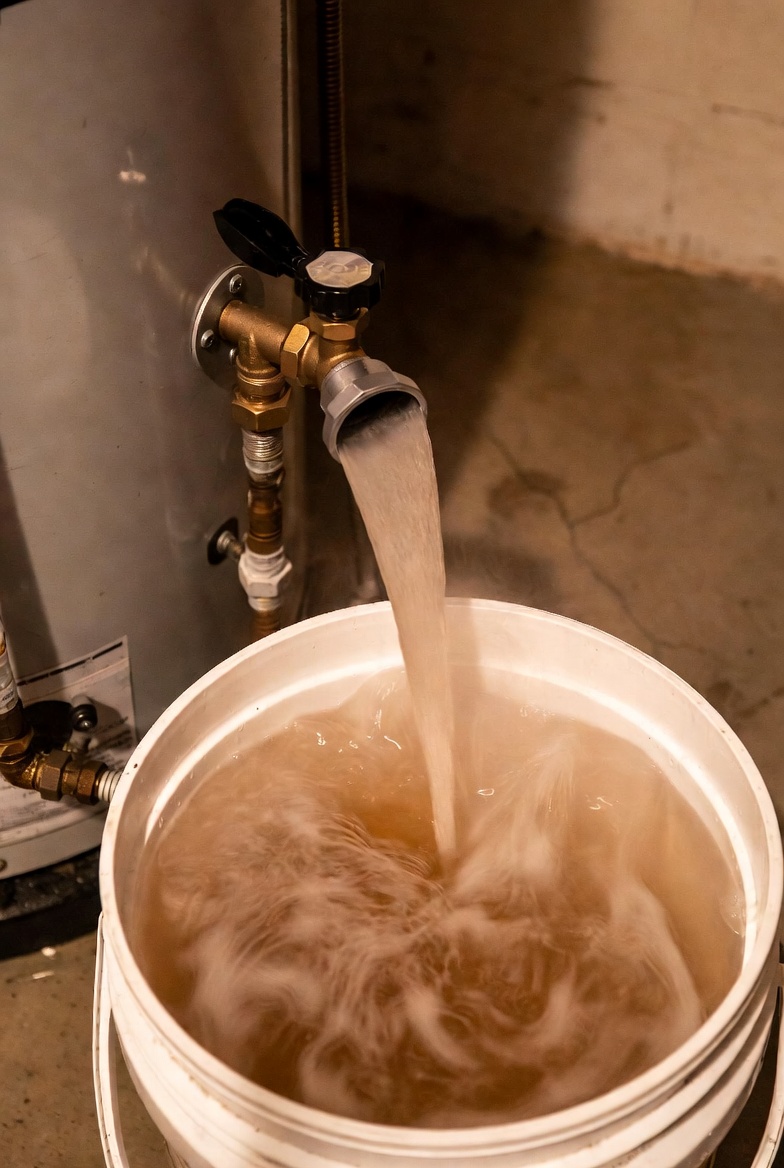
- Attach a hose to the heater drain valve and direct it to a safe drain. Open the valve briefly and observe the flow. Look for an oily sheen, discharge of discolored water, or floating particles.
- Note: do this only if you are comfortable with the steps. If unsure, skip to calling a professional.
Step 3 — Flush a short time and recheck
- If the drain showed film or debris, flush the heater with several gallons until the water runs clearer, then test a hot tap again.
- Flushing can remove trapped oils and loose sediment that create a film.
Step 4 — Isolate fixtures and sample
- Check different hot-water outlets (shower, kitchen sink). If only one fixture shows the film, the problem may be local to that branch of plumbing.
- If the issue is widespread, collect a small sample in a clear container for visual records to show a plumber or the water utility.
Step 5 — Check related signs
- Note any unusual odors, staining, or frequency (only mornings, after long idle periods, or constantly). If odors are present, see Hot water smells musty. If it only happens at certain times, see Hot water cloudy only in morning.
Step 6 — Decide next action
- If flushing and isolation clear the issue, continue monitoring. If the film returns, call a plumber or your water utility for testing.
What Not to Do
- Do not assume oily film is harmless.
- Do not attempt major repairs on a gas or electric water heater without shutting power and understanding the system.
- Do not ignore persistent odors, staining, or health concerns—those need professional attention.
When to Call a Professional
- If the oily film returns after flushing or appears suddenly and everywhere in the house.
- If you detect fuel-like odors, visible staining, or skin irritation after using hot water.
- If you are uncomfortable operating the heater drain, turning off gas/electric, or collecting a safe sample.
Safety Notes
- Always turn off the water heater power and let water cool before working on the tank. For gas units, turn off the gas supply first and follow the manufacturer’s shutdown steps.
- Wear gloves and eye protection when handling drain water; it can be hot and contain debris.
- If you suspect petroleum contamination or a strong smell of fuel, stop using the water and call your water utility and a licensed plumber—avoid open flames.
Common Homeowner Questions
- Why does the film come back after I flush? Short answer: there may be residual deposits or a continuing source of oil in the plumbing that requires repeat flushing or professional cleaning.
- Can I drink the hot water? Short answer: avoid drinking it until the source is identified; use cold water or bottled water for drinking and cooking.
- Could the heater lining be failing? Short answer: it’s possible but uncommon; a persistent oily discharge or rust combined with other signs should prompt inspection by a pro.
For more related articles, see the Hot-Water-Only Contamination and Odor Problems hub.