Quick Answer:
If you see particles only from the hot taps, it most likely points to the water heater or the piping from it — not the main supply. Start by isolating hot vs. cold, check the water heater’s drain pan and visible parts for loose debris, and follow safe inspection steps before assuming the tank lining is failing. In many cases the issue is sediment, a failing anode, or loose scale, not rapid tank breakdown. For related situations, see Hot water discolored after vacation and Hot water smells after heater drain.
Why This Happens
- Mineral sediment (sand, calcium, rust) collects in the bottom of the tank. When disturbed it can flow out of hot taps only.
- A failing anode rod or local corrosion can produce small flakes or metallic particles that appear only in hot water.
- Loose scale inside the tank or on heating elements can break free when water temperature cycles or after a recent heater service.
- Particles in the heater drain pan or the relief-valve drain line can be pushed back into hot plumbing in unusual circumstances; that’s why checking the drain pan is useful.
Step-by-Step What to Do
1. Confirm the problem
- Run cold water from the same fixture for 30–60 seconds. If cold water is clear and only hot is dirty, the heater or hot-side piping is the likely source.
- Collect samples in clear jars to compare (hot vs. cold) so you can show a pro if needed.
2. Check visible fixtures and parts
- Look at the hot water faucet’s aerator and screen for particles sitting on the surface. Do not remove or clean anything yet — see the What Not to Do section.
- Inspect the hot-side supply lines under sinks for sediment or loose fittings that could shed material.
3. Inspect the water heater area
- Turn off power to an electric heater at the breaker, or set a gas heater to pilot/off per the manufacturer’s instructions before doing any close inspection.
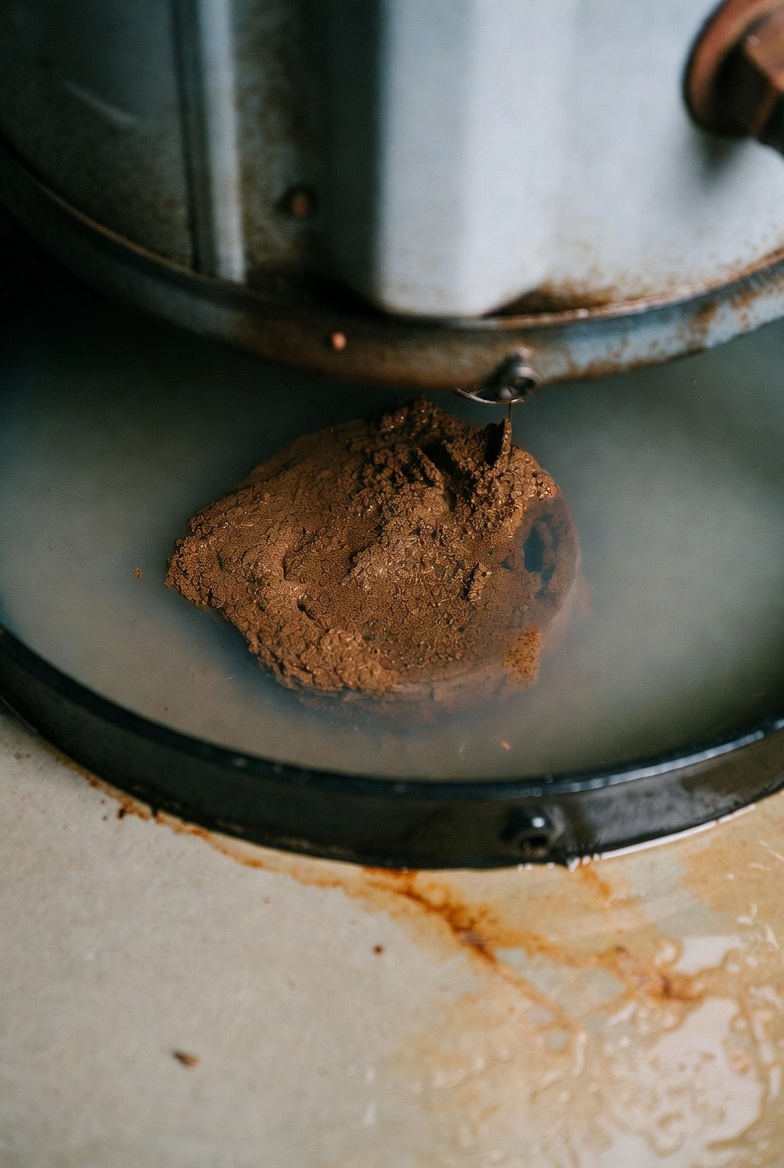
- Check the heater drain pan carefully for loose particles, rust flakes, or sediment. Remove any loose debris from the pan so it cannot be sucked back into the plumbing during drainage or leaks.
- Look at the temperature-pressure relief valve drain line and the area around the tank for signs of corrosion or leaking that could produce particles.
4. Try a controlled flush (if comfortable)
- If you are handy and the heater is in good condition, you can flush the tank briefly to remove loose sediment: turn off power/gas, attach a hose to the drain valve, open cold inlet a little to stir and flush a few gallons until clearer water appears. Stop if you see lots of rust or if anything seems wrong.
- If flushing clears the water, run hot water at several fixtures to confirm the issue is resolved.
5. Take samples and monitor
- Keep a note of when particles appear (after hot starts, after heater cycles, after plumbing work). If they return, you may need a professional diagnosis.
What Not to Do
- Do not clean aerators without checking heater. Cleaning aerators first can hide the source and make the heater look like the problem has disappeared temporarily.
- Do not assume the tank lining is disintegrating just from a few particles; investigate other causes first (anode, scale, local corrosion).
- Do not attempt major repairs on a gas water heater without shutting off gas and following safe procedures — call a pro if unsure.
When to Call a Professional
- If the particles are large, metallic, or there is visible rust or pitting on tank fittings.
- If flushing does not stop the debris, or if the heater is more than 8–12 years old and you see corrosive signs.
- If you notice leaks, a rotten-egg smell, or discolored water that won’t clear after a flush — these can indicate corrosion or bacterial issues that need a pro.
- If you are unsure how to safely turn off power/gas or perform a flush.
Safety Notes
- Always turn off power to electric heaters at the breaker before working on or near the tank. For gas heaters, follow the manufacturer’s instructions to shut off the gas or set to pilot.
- Hot water can cause severe scalds. Cool the tank or let it sit before opening hot taps for inspection.
- Wear gloves and eye protection when handling drain hoses or working near corroded fittings.
- If you detect a gas smell, evacuate and call your gas company or emergency services — do not work on the heater yourself.
Common Homeowner Questions
- Q: Could this mean my tank is about to fail?
A: Not necessarily; particles often come from sediment, the anode rod, or scale. Only widespread corrosion and leaks indicate imminent tank failure. - Q: Will flushing the tank fix it?
A: A brief flush can remove loose sediment and often helps, but recurring debris or metallic flakes may need a professional check or anode replacement. - Q: Can I keep using the hot water until a pro arrives?
A: Yes, but avoid using scalding temperatures and stop if leaks, strong odors, or large metallic particles appear. Collect samples to show the technician.
For more related articles, see the Hot-Water-Only Contamination and Odor Problems hub.