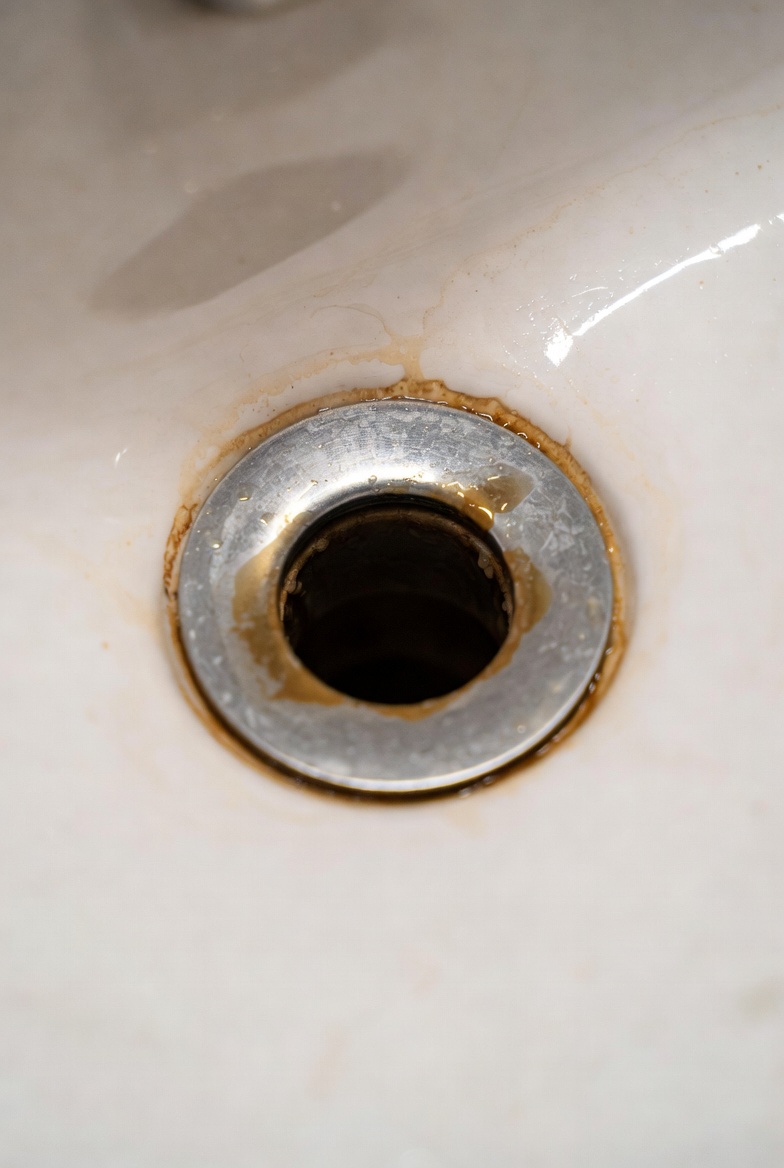
A sewer-type odor after remodeling calls for checking the actual drain and vent changes with the installer. Temporary and permanent caps are not interchangeable: removing an unknown cap can open a sewage or gas path. Keep the new layout and fixture-use history as evidence.
Checks that fit this situation
Compare the work scope with what is visible
Use plans, permit/inspection records where applicable, and before/after photos to identify moved fixtures, new drain connections, or an abandoned fixture. A vent can be concealed, so not seeing it in a cabinet does not prove that it is missing. Ask the installer to explain the completed arrangement.
Leave caps, covers, and concealed piping in place
Photograph externally visible unfinished connections, dampness, damaged trap parts, or construction debris at a grate. Do not remove test plugs, cleanout caps, vent caps, or sewage-pit covers; do not push debris down the drain. Stop using a visibly leaking or backing-up fixture.
Check a disused floor drain, then arrange follow-up
Only after the area is safe: if this is a known floor drain that accepts water normally, add clean room-temperature water slowly through the grate. Stop if the level rises, water leaks, or odor increases. Do not pour a large bucket into a slow or unidentified opening. Water visible below the grate can be the normal trap seal; a hidden water surface does not by itself prove that the trap is dry. If the smell remains or returns, have the plumber inspect the remodeled drain/vent system and identify any lost seal or open connection. A water test or a camera image alone does not prove every gas-carrying joint is sealed. Appropriate professional leak/vent testing may be needed.
Stop points
Do not open sewer cleanouts, remove unknown caps, unseal sewage-ejector lids, enter pits or confined spaces, or climb to roof vents. Do not sniff closely at drains or switch fans on to reproduce an odor. Leave chemicals, smoke testing, and drain/vent repairs to appropriate professionals. Persistent or returning odor needs a plumber even if adding water helped temporarily.
Questions for this scenario
Should I foam or caulk an opening to see if odor stops?
Not until its function is identified. Do not block required plumbing vents, appliance air openings, or drainage paths.
Does a new fixture need a roof vent directly above it?
Its compliant vent arrangement depends on the design and local requirements. Have the installer document it rather than guessing from what is visible.
Choose the next related guide
For the complete decision guide, see Sewer Gas Smell from Floor Drains.
Sources and equipment instructions
These sources support the safety precautions and plumbing principles above. They do not diagnose this particular home. Use the actual equipment model’s instructions; ask a qualified professional about concealed piping, vents, primers, and gas appliances.