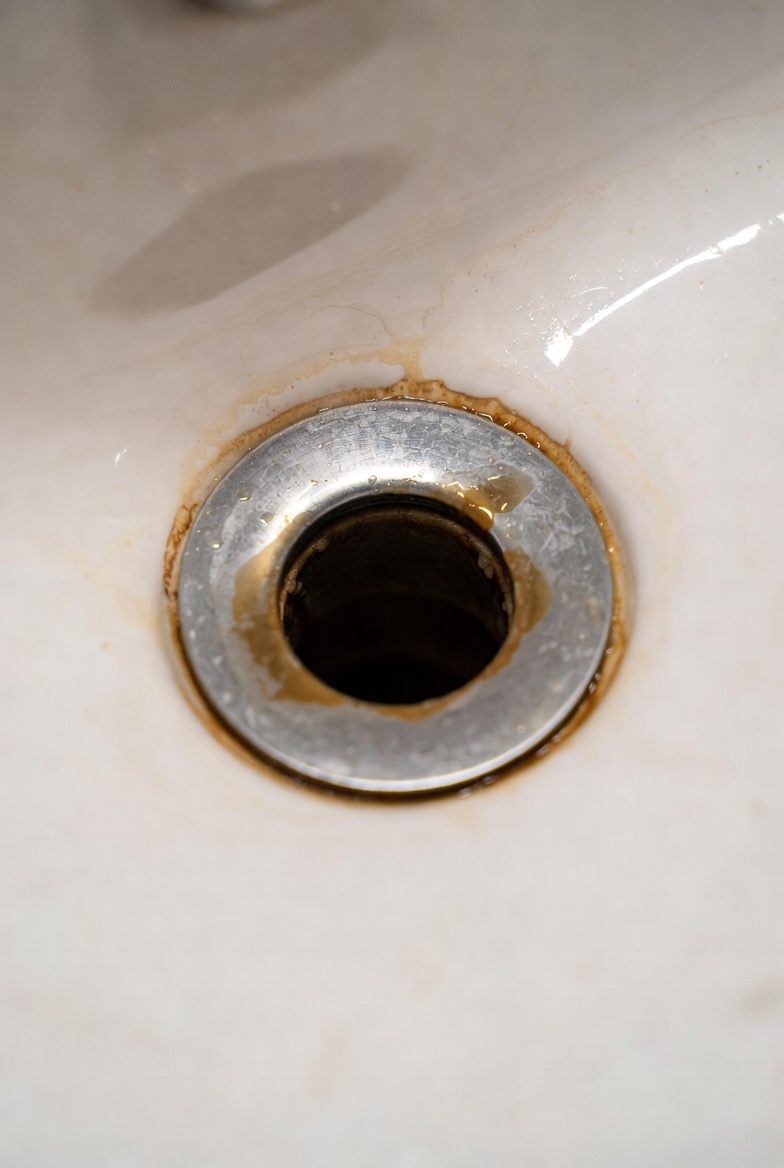
After a vacation, an unused water-sealed drain is a reasonable place to check once urgent gas hazards have been ruled out. Evaporation depends on the trap and conditions; there is no reliable universal number of days. Returning home also does not prove that every unusual odor is a dry trap.
Checks that fit this situation
Start with the fixtures that actually went unused
List guest sinks, showers, basement floor drains, and seldom-used toilets. Note whether water was shut off and for how long. Do not disable appliance drains, alter a smart shutoff, or open sewage-pit covers. Ordinary supply shutoff is not evidence that a drain trap was emptied.
Restore one appropriate seal at a time
Only after the area is safe: if this is a known floor drain that accepts water normally, add clean room-temperature water slowly through the grate. Stop if the level rises, water leaks, or odor increases. Do not pour a large bucket into a slow or unidentified opening. Water visible below the grate can be the normal trap seal; a hidden water surface does not by itself prove that the trap is dry. For an unused sink or shower that drains normally, brief ordinary use can restore the trap seal. There is no need to fill a bathtub or run every appliance at once. Stop if a drain backs up or a leak appears.
Use the response to plan prevention
Record which drain was refilled and whether odor returns. Repeated loss of the seal warrants checking the trap, venting, and any installed primer with a plumber. A suitable maintenance plan depends on that installation; topping up indefinitely without checking recurrence can conceal a defect. If the home was winterized, use the separate reopening procedure rather than treating it as ordinary absence.
Stop points
Do not open sewer cleanouts, remove unknown caps, unseal sewage-ejector lids, enter pits or confined spaces, or climb to roof vents. Do not sniff closely at drains or switch fans on to reproduce an odor. Leave chemicals, smoke testing, and drain/vent repairs to appropriate professionals. Persistent or returning odor needs a plumber even if adding water helped temporarily.
Questions for this scenario
Will bleach replace the missing water seal?
No. Do not pour bleach or another cleaner into a drain as an odor cure, particularly when previous chemical use is unknown.
What if the odor remains although the trap holds water?
Stop treating evaporation as the confirmed cause. Another drain, a leaking joint, or another gas source may need investigation.
Choose the next related guide
For the complete decision guide, see Sewer Gas Smell from Floor Drains.
Sources and equipment instructions
- MMSD: Sewer odors and water-sealed traps
- Wisconsin DHS: Sewer gas
- CDC: Do not mix cleaning products
- We Energies: Gas-leak precautions
These sources support the safety precautions and plumbing principles above. They do not diagnose this particular home. Use the actual equipment model’s instructions; ask a qualified professional about concealed piping, vents, primers, and gas appliances.