If odor starts after a pressure-regulator adjustment, preserve that timing but do not assume the regulator siphoned a drain trap. Supply-water pressure, pressure within drain/vent piping, and room-air movement are different measurements. A normal pressure gauge cannot diagnose a sewer-gas entry path.
Checks that fit this situation
Record the adjustment without repeating it
Keep the installer’s before/after readings, valve model, and time of work if available. Do not readjust the regulator to chase an odor, open backflow test ports, or bypass a protective device. If supply pressure or flow also changed, have that assessed as its own symptom.
Describe the drain behavior separately
Note naturally occurring gurgling, a changing floor-drain water level, a leaking joint, or wastewater rising during normal use. These are more relevant to a drainage investigation than a supply gauge number. Do not run several fixtures or climb to a roof vent to force a pressure event.
Use a limited trap check only in a safe area
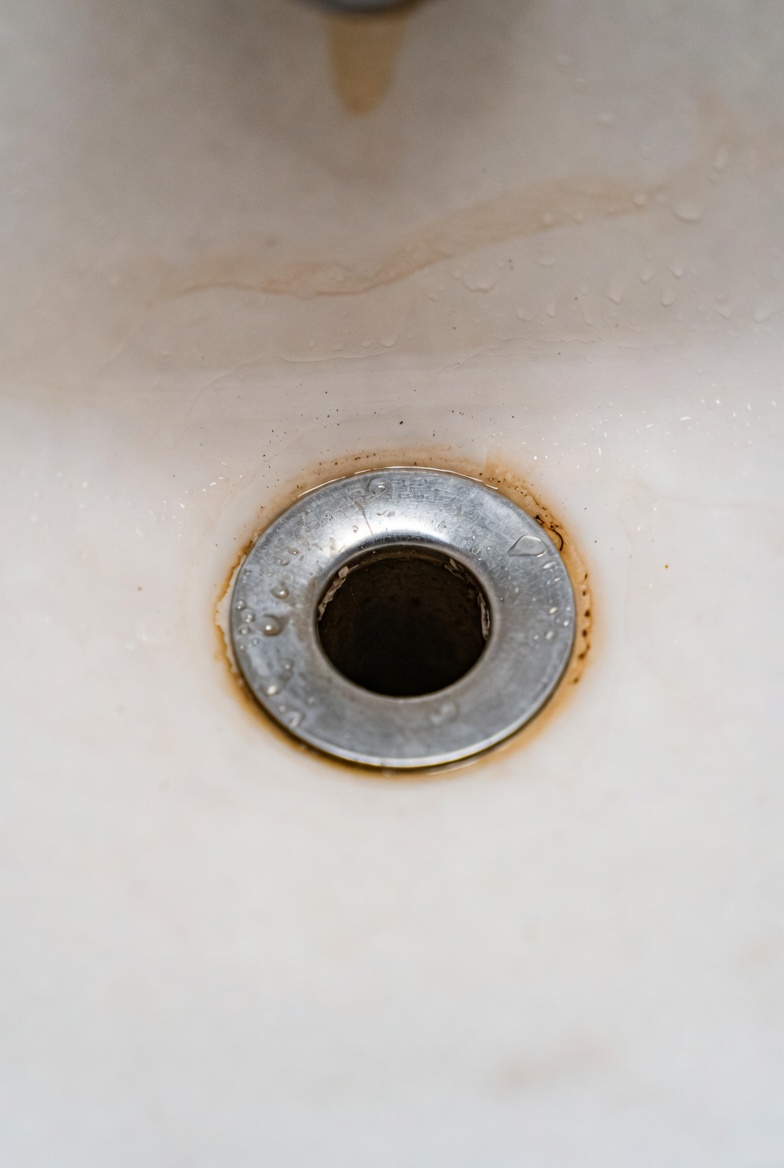
Only after the area is safe: if this is a known floor drain that accepts water normally, add clean room-temperature water slowly through the grate. Stop if the level rises, water leaks, or odor increases. Do not pour a large bucket into a slow or unidentified opening. Water visible below the grate can be the normal trap seal; a hidden water surface does not by itself prove that the trap is dry. If an odor decreases after the refill, ask a plumber to investigate why the seal was lost. A supply-fed trap primer, if actually installed, can be part of that assessment; the existence and operation of that device must be confirmed, not assumed from the pressure-change timing.
Stop points
Do not open sewer cleanouts, remove unknown caps, unseal sewage-ejector lids, enter pits or confined spaces, or climb to roof vents. Do not sniff closely at drains or switch fans on to reproduce an odor. Leave chemicals, smoke testing, and drain/vent repairs to appropriate professionals. Persistent or returning odor needs a plumber even if adding water helped temporarily.
Questions for this scenario
Could a cross-connection affect drinking water?
A real cross-connection and backflow condition can affect potable water safety. Odor alone does not establish one. Report suspected contamination to the water utility and a qualified backflow professional; do not test it by bypassing protection.
Which professional should I ask for?
Describe both the odor and any separate supply-pressure issue. A plumber can evaluate drain traps and venting; regulated backflow testing requires the appropriate qualified tester.
Choose the next related guide
For the complete decision guide, see Sewer Gas Smell from Floor Drains.
Sources and equipment instructions
- EPA: Cross-connections and backflow
- MMSD: Sewer odors and water-sealed traps
- We Energies: Gas-leak precautions
These sources support the safety precautions and plumbing principles above. They do not diagnose this particular home. Use the actual equipment model’s instructions; ask a qualified professional about concealed piping, vents, primers, and gas appliances.