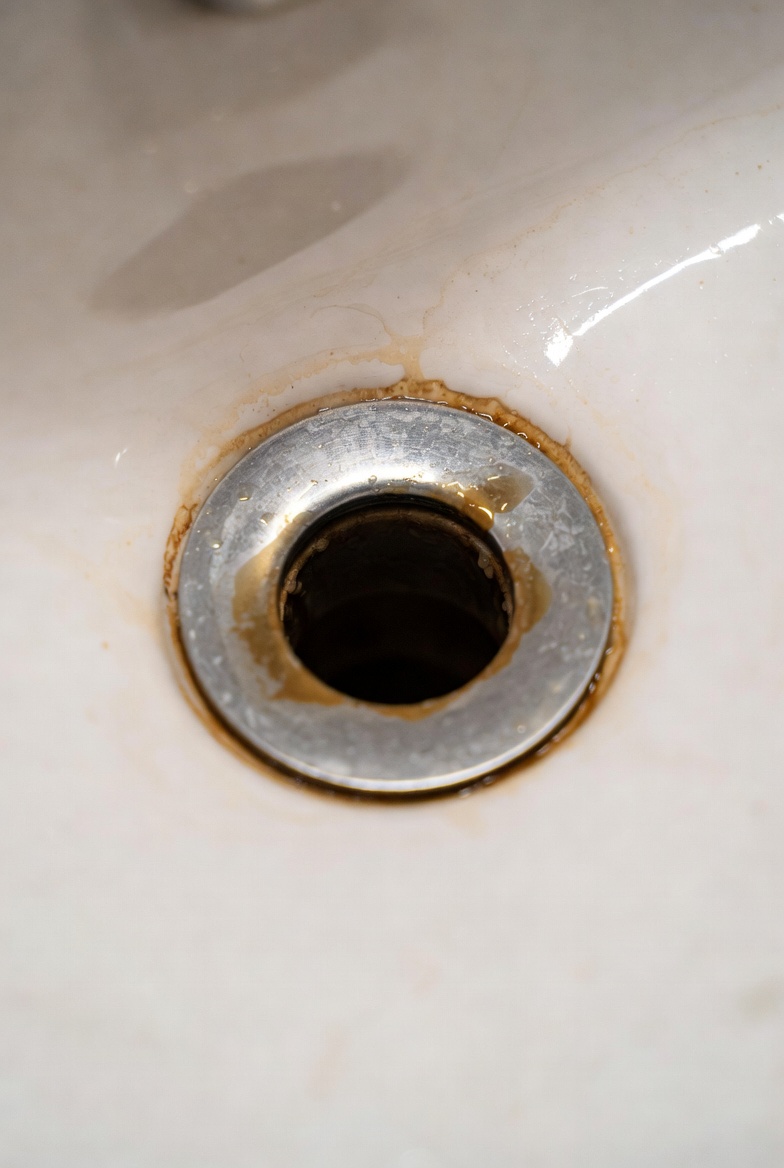
After a filter installation, first distinguish odor in the filtered water from odor in the room or a nearby drain. A cartridge filter does not automatically have a wastewater drain, and a new odor is not automatically harmless packing material. Keep the filter’s model and installation instructions available.
Checks that fit this situation
For an odor in water, use the filter-specific commissioning instructions
Do not taste questionable water. Check the documented cartridge type, flow direction, and required flushing with the installer. Use the maker’s specified outlet and procedure, not an invented number of gallons. Persistent chemical odor, unusual color, illness, or a utility advisory needs water-safety advice; clearing an odor is not a laboratory test.
For a room or drain odor, inspect the installation scope
Ask whether this particular system added a drain or modified a trap or drain connection. If a drain hose is present, have the installer verify its approved connection and any required air gap. Do not insert a hose into a floor drain, seal a gap, or change a bypass position without the actual instructions. A filter-only supply installation should not be described as automatically emptying a sewer trap.
Limit homeowner checks to visible conditions
Note accessible drips, an obviously disconnected drain, and whether a nearby low-use floor drain was left unused. A safe limited refill applies only to a known, normally draining trap. Never loosen a pressurized fitting to purge air, open the filter housing as an odor test, or tighten unidentified push-fit connections. Have the installer correct leaks or commissioning errors.
Stop points
Do not open sewer cleanouts, remove unknown caps, unseal sewage-ejector lids, enter pits or confined spaces, or climb to roof vents. Do not sniff closely at drains or switch fans on to reproduce an odor. Leave chemicals, smoke testing, and drain/vent repairs to appropriate professionals. Persistent or returning odor needs a plumber even if adding water helped temporarily.
Questions for this scenario
Does a carbon-filter smell prove the water is safe?
No. Identify the source and complete the manufacturer’s startup process; unresolved water-quality concerns need the utility, installer, or appropriate laboratory.
What if there is no drain hose on this filter?
Do not invent one as the explanation. Record the water-quality symptom separately and inspect nearby drain seals only if a room/drain odor is actually present.
Choose the next related guide
For the complete decision guide, see Sewer Gas Smell from Floor Drains.
Sources and equipment instructions
- CDC: Changes in drinking water
- EPA: Lead in drinking water
- EPA: Cross-connections and backflow
- MMSD: Sewer odors and water-sealed traps
- We Energies: Gas-leak precautions
These sources support the safety precautions and plumbing principles above. They do not diagnose this particular home. Use the actual equipment model’s instructions; ask a qualified professional about concealed piping, vents, primers, and gas appliances.