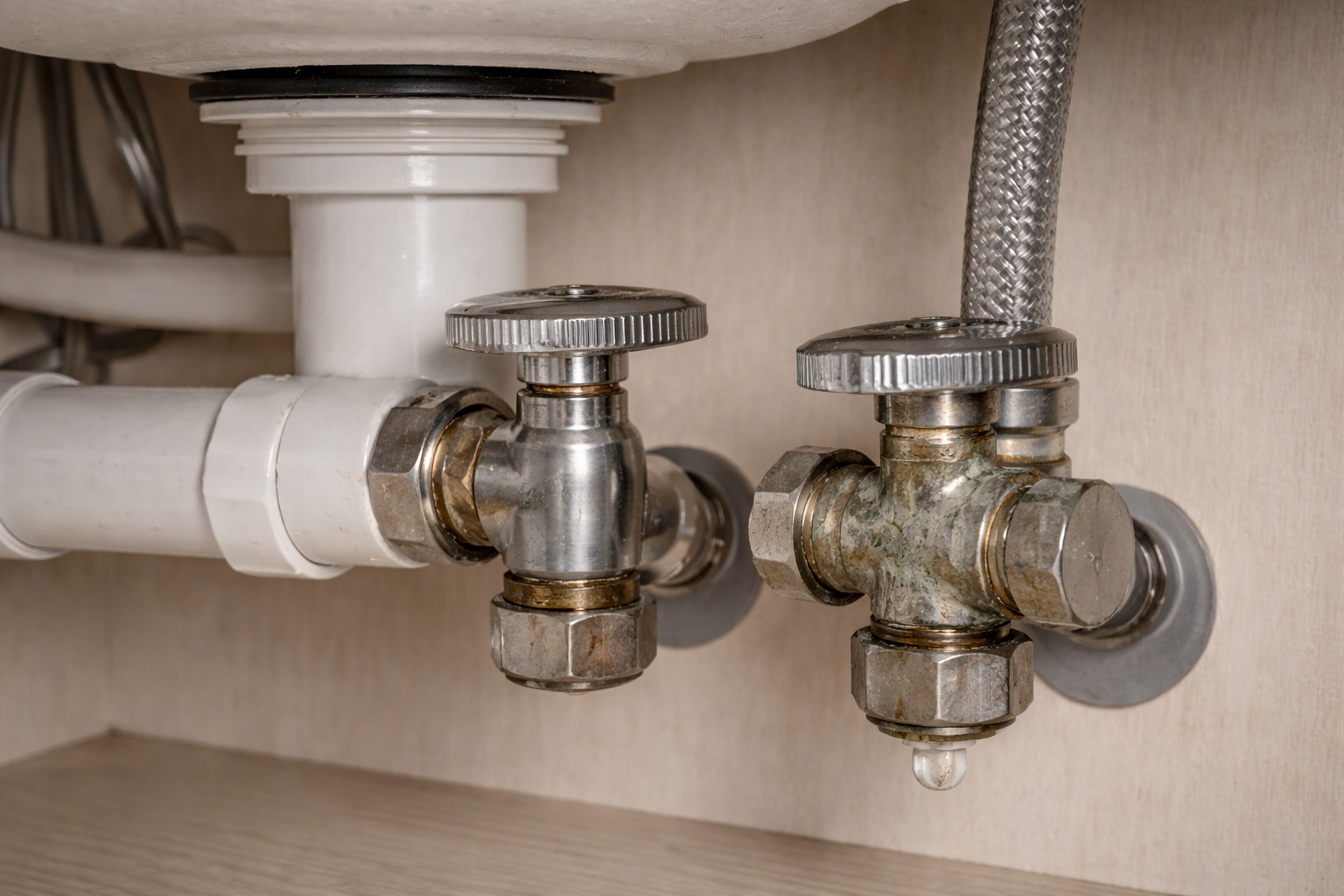
Fixture clogging after an outage needs actual restoration/use guidance and component identity before screen removal or temporary filtration.
Use and safety first
Keep away from wet electrical equipment. Do not touch wet appliances, plugs or switches, or enter water to reach a breaker. When no gas leak is suspected, power may be isolated only from a safely accessible dry location; otherwise call an electrician or emergency help. Wet equipment needs qualified assessment before it is used again.
For leakage or immediate danger, use only a separate known safely accessible permitted owner control without force or obtain prompt supplier/plumber help. Keep out of potentially energized water and do not touch wet appliances or enter water to reach a valve or breaker. Do not operate unknown shared, fire, meter or curb controls.
For a new unexplained water-quality change, use bottled water or another known-safe consumption source and contact the supplier; a private well needs the appropriate well/health response. Do not taste it or boil suspected chemical contamination as a general remedy. Actual notices and hazard-specific permitted uses govern. Clear appearance, clean screens or a specified number of minutes do not certify water safe.
Keep the original observation
- Actual outage/work and supplier instructions, first blocked fixtures and existing particles.
- Actual toilet/appliance/filter models and whether their screens are user serviceable.
- Existing quality concerns, safe containment and equipment commissioning status.
What it can and cannot identify
Visible grit can affect small passages without identifying its source. A pitcher filter treats water passing through the pitcher; it cannot protect an appliance inlet. Clean screens for hours or a day do not certify all household water safe.
What to do next
- Check the actual supplier notice before flushing or running an appliance to clear its inlet.
- Do not remove every aerator/showerhead or disconnect all appliance hoses as a default cleanup.
- Use actual fill-valve and appliance service methods with effective shutoff, pressure/energy control and correct screen access. Some screens are cleaned in place.
- Any filter choice needs actual contaminant/particle purpose, compatible temperature/material, rated flow/loss and service requirements; do not add a generic hose filter as guaranteed protection.
- Return equipment under actual maker readiness and water-use conditions, not appearance or a short test cycle alone.
Actual service and discharge conditions
For retained supply connections, filter housings, regulator covers or valve parts, establish every-feed isolation, controlled pressure release and verification under the actual model. A main cannot isolate its own inlet and a mixer can have both hot and cold feeds. Unless the actual maker specifies a controlled captured service arrangement, keep the source isolated until compatible parts are fully secured; never substitute an exposed pipe, removed assembly or loose hose aimed at a bucket.
Will a pitcher or a clean screen make an appliance safe to restart?
A pitcher does not protect the inlet, and screen cleanliness is not complete source or equipment clearance. Use the actual applicable conditions.
Related guides
- Sand in water after city repair
- Meter screen clogged symptoms
- Sediment causing toilet fill failure
- Sediment damaging appliances
- Sediment & Debris at Water Entry