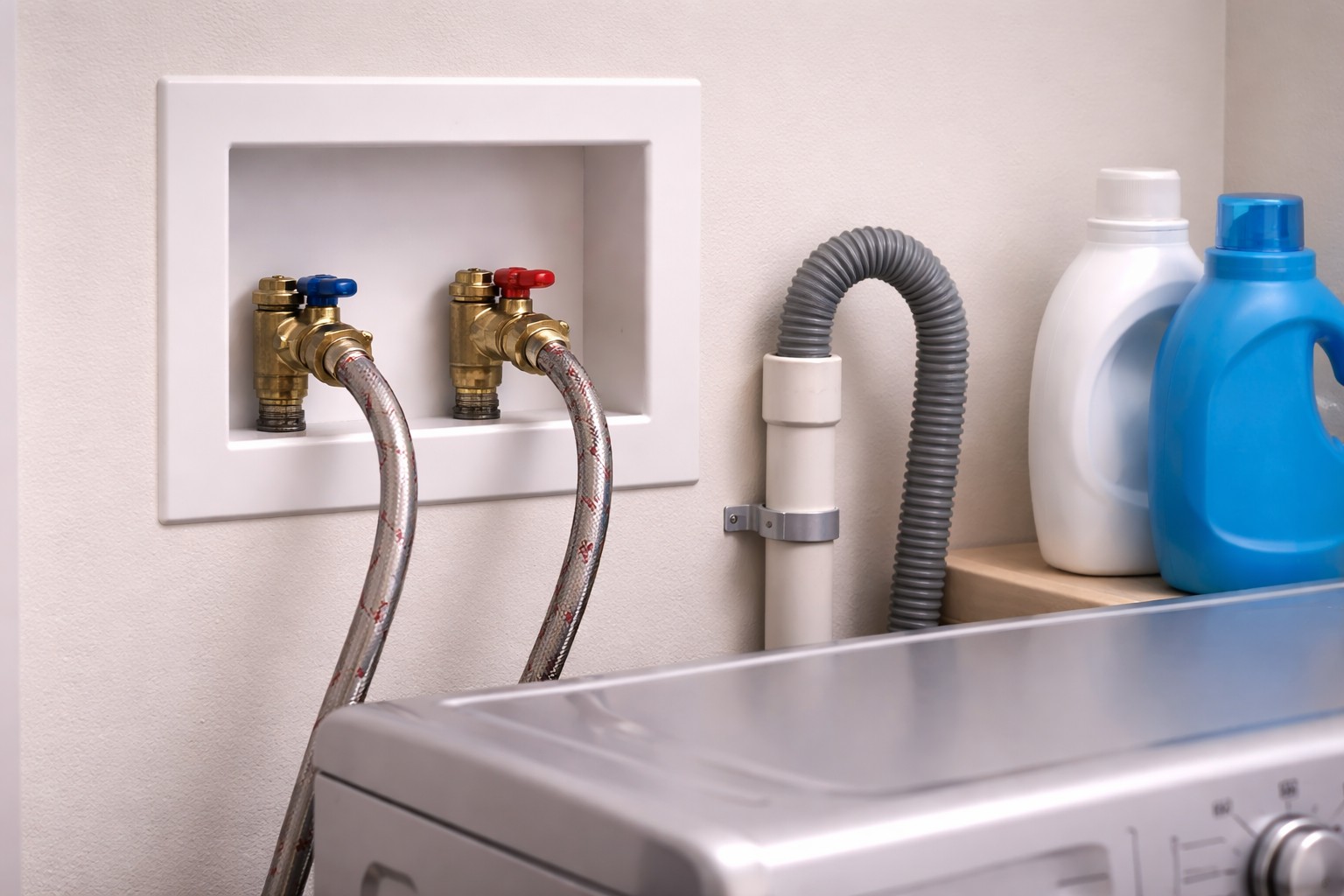
Appliance fill errors, weak delivery or leakage after a particle event need actual model and fault assessment. Do not remove every inlet screen or select a replacement solenoid from timing alone.
Use and safety first
Keep away from wet electrical equipment. Do not touch wet appliances, plugs or switches, or enter water to reach a breaker. When no gas leak is suspected, power may be isolated only from a safely accessible dry location; otherwise call an electrician or emergency help. Wet equipment needs qualified assessment before it is used again.
For leakage or immediate danger, use only a separate known safely accessible permitted owner control without force or obtain prompt supplier/plumber help. Keep out of potentially energized water and do not touch wet appliances or enter water to reach a valve or breaker. Do not operate unknown shared, fire, meter or curb controls.
For a new unexplained water-quality change, use bottled water or another known-safe consumption source and contact the supplier; a private well needs the appropriate well/health response. Do not taste it or boil suspected chemical contamination as a general remedy. Actual notices and hazard-specific permitted uses govern. Clear appearance, clean screens or a specified number of minutes do not certify water safe.
Keep the original observation
- Actual appliance/model, original code and external versus internal leak location.
- Existing material/work/notice and any shared supply symptoms.
- Known safe water/energy isolation and the actual inlet/hose arrangement.
What it can and cannot identify
A nearby faucet can leave a closed appliance hose or dead leg unflushed. Some maker instructions clean inlet screens in place: Whirlpool’s cited front-load example says not to remove those screens. That example is not the method for every appliance.
What to do next
- Keep an affected unit inactive as appropriate and follow actual supplier and appliance readiness before restarting.
- Do not disconnect hoses or expose electrical connectors until actual water/retained-pressure and safe dry energy conditions are established.
- Identify the exact screen service method; do not pull a retained screen because another appliance permits removal.
- Use actual source/path and secured restoration rather than a nearby clear tap or short cycle as complete inlet clearance.
- Have the actual leak/code/source assessed before valve/solenoid replacement. A hose connection, seal, supply or other fault can have different remedies.
Actual service and discharge conditions
For retained supply connections, filter housings, regulator covers or valve parts, establish every-feed isolation, controlled pressure release and verification under the actual model. A main cannot isolate its own inlet and a mixer can have both hot and cold feeds. Unless the actual maker specifies a controlled captured service arrangement, keep the source isolated until compatible parts are fully secured; never substitute an exposed pipe, removed assembly or loose hose aimed at a bucket.
Must a solenoid be replaced whenever a drip follows grit?
Identify the real leak and model condition first. Do not keep operating a leaking appliance, but chronology alone does not select the failed assembly.
Related guides
- Rust flakes in plumbing
- Sediment causing smart shutoff trips
- Sediment clogging fixtures after outage
- Sediment & Debris at Water Entry