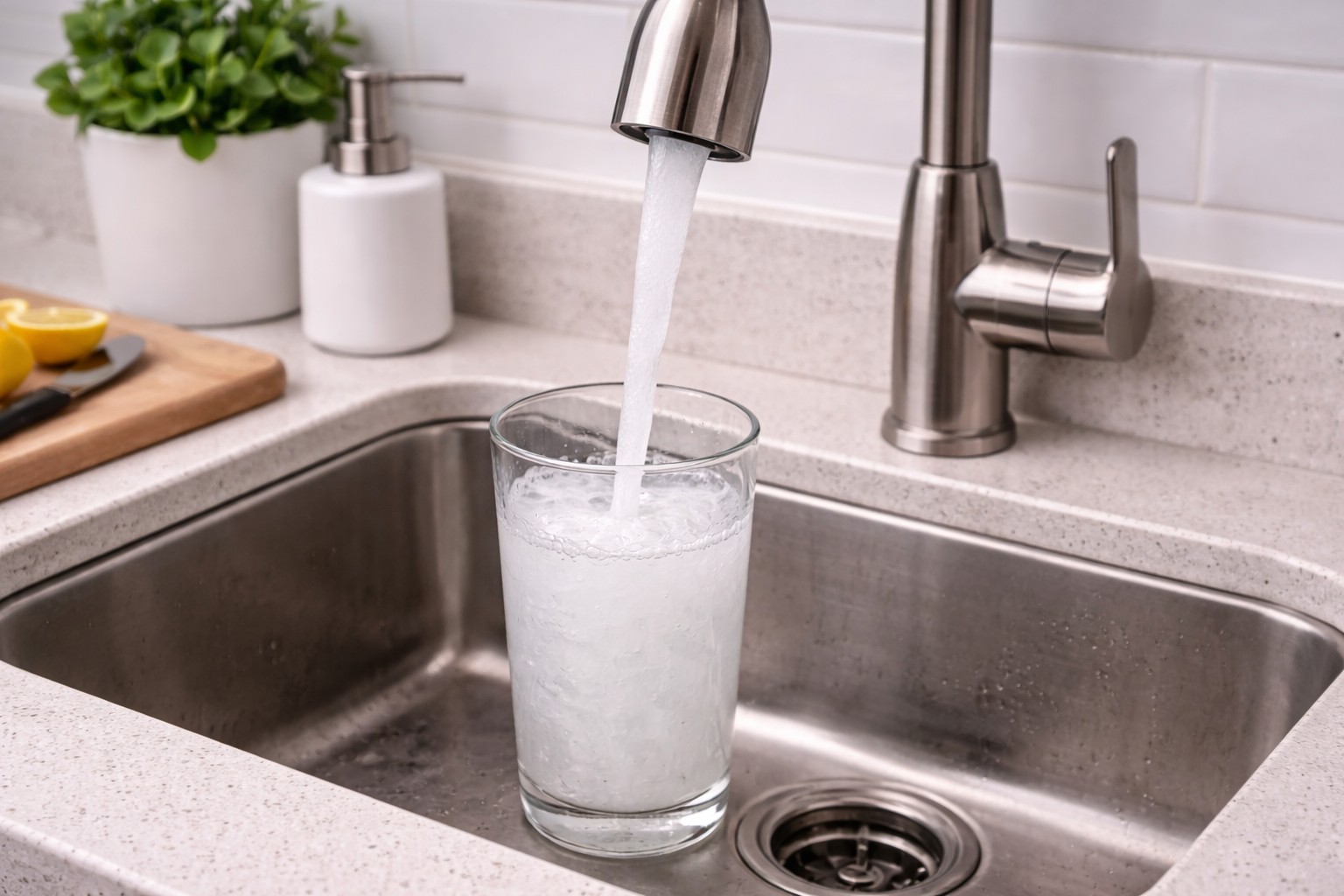
Sudden material in several aerators needs the actual common paths and work record assessed. Recurrence is not unique proof that the source is outside the house or at entry.
Use and safety first
Keep away from wet electrical equipment. Do not touch wet appliances, plugs or switches, or enter water to reach a breaker. When no gas leak is suspected, power may be isolated only from a safely accessible dry location; otherwise call an electrician or emergency help. Wet equipment needs qualified assessment before it is used again.
For leakage or immediate danger, use only a separate known safely accessible permitted owner control without force or obtain prompt supplier/plumber help. Keep out of potentially energized water and do not touch wet appliances or enter water to reach a valve or breaker. Do not operate unknown shared, fire, meter or curb controls.
For a new unexplained water-quality change, use bottled water or another known-safe consumption source and contact the supplier; a private well needs the appropriate well/health response. Do not taste it or boil suspected chemical contamination as a general remedy. Actual notices and hazard-specific permitted uses govern. Clear appearance, clean screens or a specified number of minutes do not certify water safe.
Keep the original observation
- Existing particle color/size and outlet/side scope, without naming a substance from appearance.
- Actual supplier/work history and heater/treatment/shared internal paths.
- Removable aerator models and existing photo or sample record.
What it can and cannot identify
The same visible material at several endpoints can involve shared internal piping or equipment as well as incoming supply. A coarse filter or washing use cannot be declared suitable from the absence of visible grit.
What to do next
- Ask the supplier/repairer whether collection should precede cleaning or flushing. An existing photo can describe the observation.
- Use actual intended removable-aerator care, compatible cleaner and controlled discharge; do not run full-force timed bursts at every tap.
- Do not infer metallic, sandy or organic identity from color alone or automatically assign recurring particles to the entry line.
- Select filtration only for the actual purpose, rating and required protection. Keep appliance use within the actual notice and product requirements.
- Have recurrent material and affected components assessed before a new filter, pipe replacement or unrestricted normal use.
Actual service and discharge conditions
For retained supply connections, filter housings, regulator covers or valve parts, establish every-feed isolation, controlled pressure release and verification under the actual model. A main cannot isolate its own inlet and a mixer can have both hot and cold feeds. Unless the actual maker specifies a controlled captured service arrangement, keep the source isolated until compatible parts are fully secured; never substitute an exposed pipe, removed assembly or loose hose aimed at a bucket.
Is short-term washing automatically fine after grit is no longer visible?
No blanket use rule follows. Use the actual notice and hazard-specific guidance, including a known-safe consumption source while unexplained quality is assessed.
Related guides
- Pressure loss due to sediment buildup
- Debris causing valves to leak
- Rust flakes in plumbing
- Sediment & Debris at Water Entry