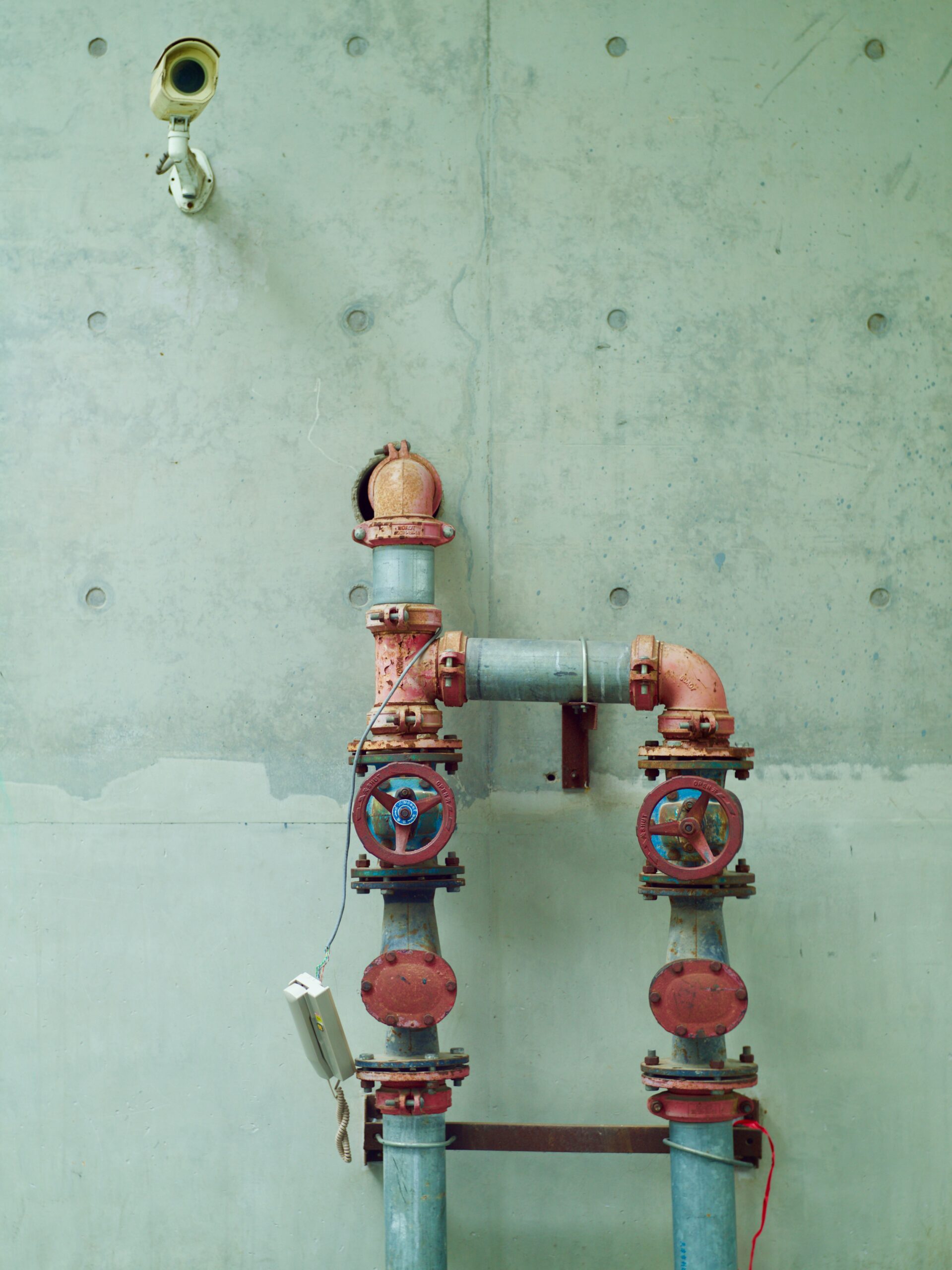
Use the original shutoff event to choose a guide: toilet refill, appliance inlet, shower, outdoor control or a change after work. A bang after flow stops can involve hydraulic and mechanical conditions; sound alone does not select a failed part. Do not recreate shocks by snapping valves or repeatedly running fixtures.
Air, Noise & Vibration in Pipes
When to stop and get help
Stop using an affected fixture for active leakage, severe pipe movement, steam or very hot discharge, and obtain appropriate prompt help. Do not wait for another bang to demonstrate it. Keep away from wet electrical equipment; use a safely accessible dry normal control only when safe, otherwise get qualified help. For suspected fuel gas or a carbon monoxide alarm, leave immediately and call the appropriate emergency service from safety; do not operate switches, phones, valves or appliances in the affected area.
Supply stop
Isolates a supply. A partly closed stop is not a pressure-regulator setting.
Pressure regulator
Regulates supply pressure. Correct adjustment needs the actual procedure and suitable measurement.
Manufactured arrester
Controls a suitable rapid flow-change event. Identify the marked model; a capped stub is not proof.
Thermal-expansion provision
Accommodates heating-related expansion in the actual system. It does not replace heater relief protection.
Pressure record
A current reading or retained maximum does not establish a bang’s time or source.
This is a function guide, not an installed piping map. Address active hazards before collecting evidence.
Common fixture triggers
- Pipes bang when toilet shuts off
A bang as a toilet finishes filling can involve the supply valve closure, pipe movement or another pressure condition. Record whether it happens at the end of refill or during the earlier flush. That distinction makes the service request more useful without requiring another flush.
- Hammer after replacing toilet fill valve
A bang after a toilet fill-valve replacement deserves a check of the actual installation and valve compatibility. Keep the old and new model details and the installer’s commissioning record. Do not infer that every new valve closes too quickly or that the new part is defective.
- Banging after shower shuts off
For a bang after a shower is turned off, preserve the original handle action, water temperature and delay before the sound. Do not snap the handle, repeat closures or run hot-only trials to identify a side. A sound behind tile can travel from elsewhere.
- Pipes bang when dishwasher finishes filling
A bang near the end of dishwasher filling may involve its inlet event, nearby pipe movement or another source. Keep the actual program stage and original timing. A single impact alone does not distinguish the supply from every pump or drain event.
- Pipes bang when ice maker shuts off
For a bang associated with an ice-maker fill ending, preserve the original time and model information. Ice release, a compressor or a pump can also make sounds; a short bang alone does not prove a refrigerator inlet valve or the water-supply side.
- Banging noise when hose turned off
A bang when a hose nozzle or spigot is closed needs the actual closing point distinguished. Record which control was used and the first sound without snapping it shut again or removing the nozzle to stage a high-flow trial.
Irrigation and sprinkler shutoff hammer
- Hammering noise after irrigation shuts off
For hammer after irrigation stops, retain the controller’s original zone and end time, any actual master-valve or pump record, and the first sound description. Do not manually cycle every zone to reproduce a system-wide shock.
- Pipes bang when sprinkler valve closes
If a particular sprinkler valve closes as the bang occurs, retain its original zone number, end time and any pump or master-valve event. A zone association can guide an inspection without proving that this valve, a nearby backflow device or a particular pipe size is the cause.
After installs or repairs
- Banging started after plumbing repair
If banging began after plumbing repair, contact the installer with the actual work date, changed route and first noise observation. The timing is a reason to investigate; it does not prove a loose support, trapped air or contractor damage.
- Hammer after installing pressure regulator
Use the actual regulator installation, correctly located pressure measurements and heating-expansion findings. A new PRV and a quieter interval do not by themselves identify the fault.
- Hammer after installing smart shutoff valve
Use the smart valve’s actual alert and event record, keep protection active and resolve the underlying concern before an approved restoration.
- Hammer noise after water heater refill
First clarify what “refill” means. In normal pressurized storage-heater use, incoming cold water replaces hot water during the draw. Filling an emptied heater after draining or repair is a different commissioning event. Neither is the same as subsequent heating recovery.
- Banging triggered by city pressure changes
If a bang coincides with a reported city-pressure change, keep the actual supplier notice and original timestamps. Report new supply concerns to the supplier and appropriate plumber. Coincidence or matching neighbor reports do not establish the source, damage or responsibility.
Where and when it happens
- Pipes bang only at night
Nighttime banging may be easier to hear and may coincide with automatic demand, heating or supply changes. Record what was already heard and any existing appliance or controller timestamps. Night timing alone does not establish city pressure as the cause.
- Pipes bang only in winter
Winter-only banging needs actual temperature, flow and equipment observations before it is called harmless contraction. The seasonal pattern is useful history, but does not certify pressure or rule out freezing, damage or another source.
- Banging only on hot water
For banging described as hot-water-only, use the original fixture, handle position and timing. A mixing valve may combine supplies, so a handle setting or loud hot-side wall does not map the origin. Do not force hot-only trials or touch pipe to decide.
- Hammer noise in upstairs pipes
For hammer heard upstairs, record the perceived room and original fixture event. Sound can transmit through risers and framing; a loud ceiling does not pinpoint a loose pipe or establish that the upstairs fixture produced it.
- Banging behind shower wall
A bang heard behind the shower wall can be transmitted from the valve, connected piping or another location. Record the original control action and delay without treating immediate versus delayed sound as a conclusive diagnosis.
Multiple fixtures and high-demand shutoffs
- Loud bang when washing machine stops
A bang when a washer stops admitting water needs to be distinguished from a spin, pump or drum impact. Use the cycle stage already observed or the machine’s existing record. Do not repeatedly start fills or alternate hot and cold cycles to create a stronger noise.
- Pipes bang when multiple fixtures shut off
Keep the original multiple-fixture event without staging paired shutoffs. Distinguish actual pressure, demand and component functions before selecting a remedy.
All Articles in This Cluster
- Pipes bang when toilet shuts off
- Hammer after replacing toilet fill valve
- Banging after shower shuts off
- Pipes bang when dishwasher finishes filling
- Pipes bang when ice maker shuts off
- Banging noise when hose turned off
- Hammering noise after irrigation shuts off
- Pipes bang when sprinkler valve closes
- Banging started after plumbing repair
- Hammer after installing pressure regulator
- Hammer after installing smart shutoff valve
- Hammer noise after water heater refill
- Banging triggered by city pressure changes
- Pipes bang only at night
- Pipes bang only in winter
- Banging only on hot water
- Hammer noise in upstairs pipes
- Banging behind shower wall
- Loud bang when washing machine stops
- Pipes bang when multiple fixtures shut off
What to send with a service request
Keep the original time, fixture or program stage, actual models, recent work record and any existing alert or pressure data. Note visible leaks or movement from safety without touching hot or moving pipe. A single static reading can miss a brief event; a maximum pointer does not identify time or origin. Appropriate routine owner care differs from internal pressurized service. Keep backflow, relief, leak and freeze protection active, and ask what actual finding supports the proposed repair.
Sources and equipment limits
- BrassCraft: identify and operate the actual supply stop
- Sioux Chief 660 example: piston arrester, connections and installation limits
- Watts IWTG example: a maximum pointer retains the highest registered reading
- A. O. Smith Bulletin45: closed-system heating and expansion protection
- Rain Bird: valve roles, troubleshooting and model-specific service
- Korky 5010MP example: separate fill valve, flush valve and flapper
- University of Maryland Extension: cold water enters a storage heater during hot-water use
Manufacturer documents are examples; identify your actual equipment before selecting settings, parts or service steps. These articles have not received independent professional review or field testing.