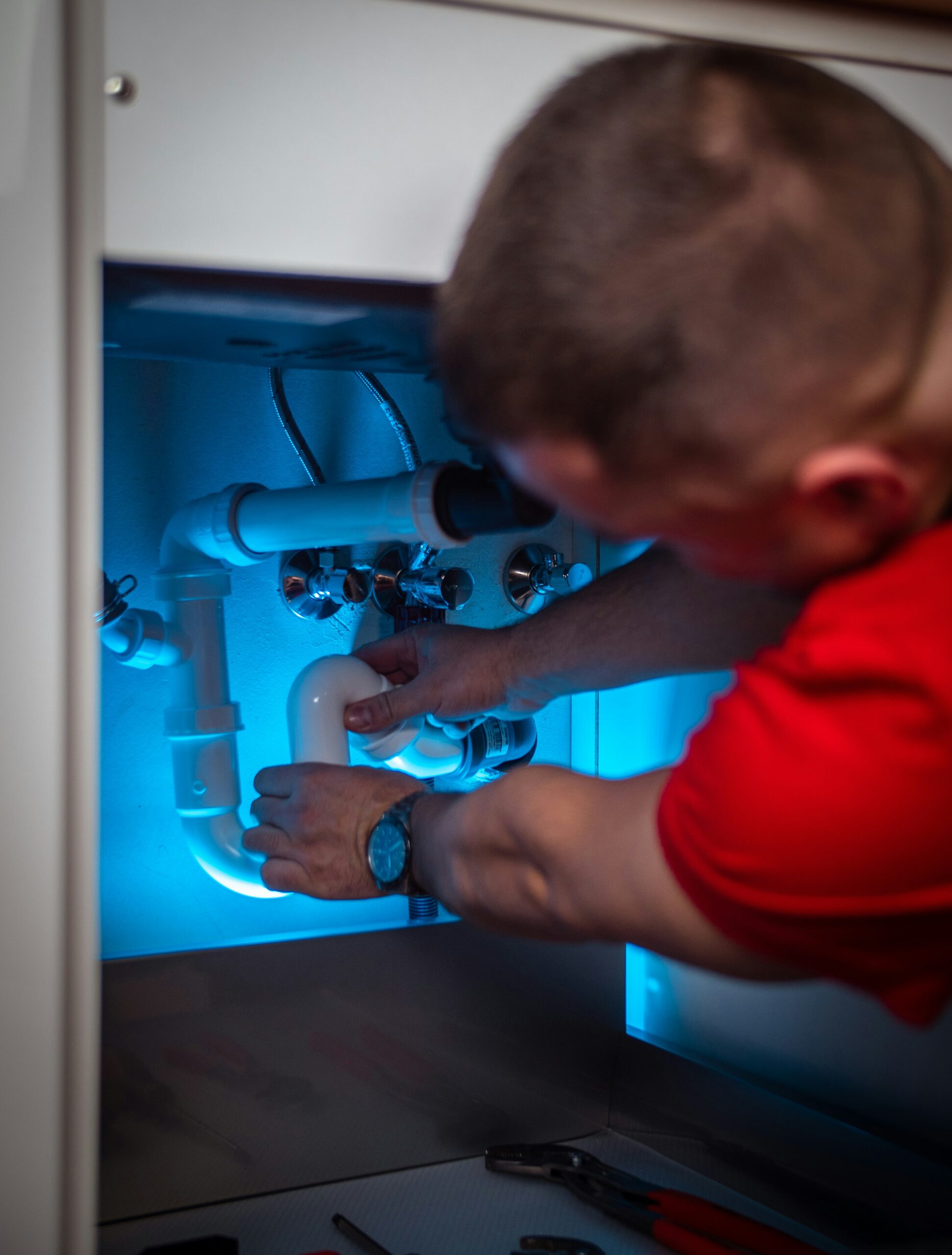
Use the actual fixture, work history and original event to choose a guide below. Whistling can change with flow or transmitted vibration without proving an exact restriction. Do not select a failed part, pressure setting or safe waiting period from pitch alone.
Air, Noise & Vibration in Pipes
Check for a condition that needs prompt help
Active leaking, severe movement, loss of control, unsafe temperature, steam or hot relief discharge needs appropriate prompt response. Stop the relevant use and keep clear of unsafe spray. A known safely operable customer stop can limit a supply leak when safe; do not force a stiff, corroded or unknown valve. Stay away from wet electrical equipment and use only safely accessible dry controls when safe, otherwise obtain qualified help.
For suspected fuel gas, a carbon monoxide alarm or exposure symptoms, leave immediately and call the appropriate emergency service from safety. Do not operate switches, phones, valves or appliances in the affected area. Do not approach a heater or concealed service to listen more closely.
Supply stop
Use the actual specified normal position. Fully open can be correct; do not tune unknown stops at partial settings.
Fixture or appliance control
Use permitted ordinary operation with safe temperature and enclosure intact. Do not create rapid-flow challenges or reach into a powered appliance.
Pressure regulator
Use actual target, measurement side, load and instrument response. Pitch, spray reach and screw turns are not pressure readings.
Filter or aerator
Identify model, seal, rated function and approved service path. No loose aerator or open pressure housing test.
Keep active leaks, unsafe heat and electrical hazards ahead of sound comparisons. This is a control guide, not a diagnosis of your installed equipment.
Faucet, toilet, shower, and dishwasher sources
- Faucet whistles when turned on
For a faucet whistle, note the original opening and ordinary setting rather than assuming pitch identifies a restriction. Faucet parts, supplied pressure and transmitted vibration may need different checks.
- Toilet squeals while refilling
For a toilet squeal during refill, keep the original start, middle or end-of-fill timing. That helps describe the event without proving a fill valve, stop or supply-line fault.
- Squealing from toilet at night
For nighttime toilet squealing, keep the first time and any uncommanded refill already noticed. Quiet surroundings, actual pressure or tank water loss can affect the pattern; night timing alone does not identify the failed part.
- High-pitched noise from shower valve
A high tone while the shower runs needs its actual control and temperature behavior identified first. Do not switch to full hot or move the handle quickly to force the sound.
- High-pitch noise when filling bathtub
For a high tone during bathtub filling, keep the original control setting, outlet and timing. Do not rapidly open to full flow, switch to full hot or grip the spout and diverter to find a vibrating part.
- Whistling noise when dishwasher fills
For a whistle during dishwasher filling, keep the model, program stage and original timing. Distinguish the actual fill event from circulation, draining or transmitted sound without opening a running appliance.
Hot-only, cold-only, or multi-fixture effects
- Whistling only on cold water
For a whistle reported only with cold water, keep the actual outlet and setting. Cold-only timing is useful scope information, but does not prove a particular cold-side part or rule out a shared condition.
- Whistling only on hot water
Use the original hot-water event, actual model and safe temperature boundaries. Do not feel hot pipe or alter protective controls to locate a whistle.
- Whistling when two fixtures run
If two fixtures were operating when a whistle occurred, record the actual pair and sequence. Their interaction can matter, but it does not prove one common restriction or exclude two separate problems.
After changes at the outlet or supply
- Whistling after installing aerator
When a whistle begins after an aerator installation, keep the old/new part details and original event. The new aerator’s effect on flow is relevant without proving a damaged screen or a particular hidden restriction.
- High-pitched noise after installing filter
For whistling after a filter installation, identify the actual system, cartridge, source quality and treatment purpose before considering bypass. A filter that protects drinking water is different from a simple debris screen.
- Screeching after replacing angle stop
After an angle-stop replacement, keep the exact valve model and installation record. Not every quarter-turn, ball or other stop contains a generic serviceable washer or removable bonnet.
- Whistling after PRV replacement
After a PRV replacement, keep the actual model, installer’s target and commissioning readings. A factory label may show a range or initial setting rather than the correct target for this installation.
- Whistling started after city work
For whistling after city work, preserve the actual notice, work date and first symptom. Timing, neighbor reports or a loud meter area do not prove a public-side fault or responsibility.
Inside walls or outdoor connections
- Screeching noise inside wall
For screeching heard inside a wall, keep the original room and associated water event. A vibrating finish or loud adjacent room does not identify an exact hidden valve, restriction or pipe route.
- Screeching when hose connected
For screeching associated with a hose, identify the actual spigot, hose, nozzle, timer and backflow protection. A different sound after an attachment change does not uniquely prove that attachment failed.
Behavior clues
- Noise stops when valve opened fully
If a whistle stopped when a valve was opened fully, retain that actual observation and identify the valve’s job. Fully open can be the intended normal position of a supply stop; it is not generically a state that must be avoided.
- Squealing during peak hours
Peak-hour squealing needs the actual time and household use recorded. A drop between no-flow off-peak pressure and flowing busy-time pressure does not by itself prove a supply or PRV defect.
All Articles in This Cluster
- Faucet whistles when turned on
- Toilet squeals while refilling
- Squealing from toilet at night
- High-pitched noise from shower valve
- High-pitch noise when filling bathtub
- Whistling noise when dishwasher fills
- Whistling only on cold water
- Whistling only on hot water
- Whistling when two fixtures run
- Whistling after installing aerator
- High-pitched noise after installing filter
- Screeching after replacing angle stop
- Whistling after PRV replacement
- Whistling started after city work
- Screeching noise inside wall
- Screeching when hose connected
- Noise stops when valve opened fully
- Squealing during peak hours
What the sound can and cannot establish
Keep the original fixture or appliance phase, actual model, handle position, timing, recent work and safe visible conditions. A pitch change, a quieter result or the loudest pipe is a clue, not proof of an exact failed part or general safety. Normal permitted control observations can be useful in safe conditions; do not force high flow, rapidly snap a valve or repeatedly reproduce a severe event.
Opening or reworking pressure-containing parts requires actual source isolation and controlled retained pressure, temperature and energy, followed by correct reassembly and commissioning. Power off alone does not remove water pressure. Do not tighten an unidentified nut from appearance, grip hot or moving lines, force threads or blindly open finishes. Qualified inspection may require planned access; no tool guarantees an exact hidden location or damage-free repair.
What to ask before buying parts
Ask which actual model, operating event, pressure/load record and component or connection finding supports the proposed repair. A new stop is not assumed to need bedding in; a bypass or quiet full-open position is not proof of overall safety. Preserve protective functions and actual installation records, with a clear access and commissioning plan.
Sources and equipment limits
- BrassCraft: actual stop configurations and fully open/closed operation
- Portland Water: flow, pressure and demand are different observations
- Moen: identify the actual aerator and service method
- Pentair FPS example: filter purpose, pressure relief and sealed reassembly
- Whirlpool example: enclosure, power and actual supply requirements
- Watts 25AUB example: measured setting and service precautions
These manufacturer and supplier examples do not identify your installed model or safe settings. Use its actual instructions and local requirements. Independent professional review and field testing have not been obtained.