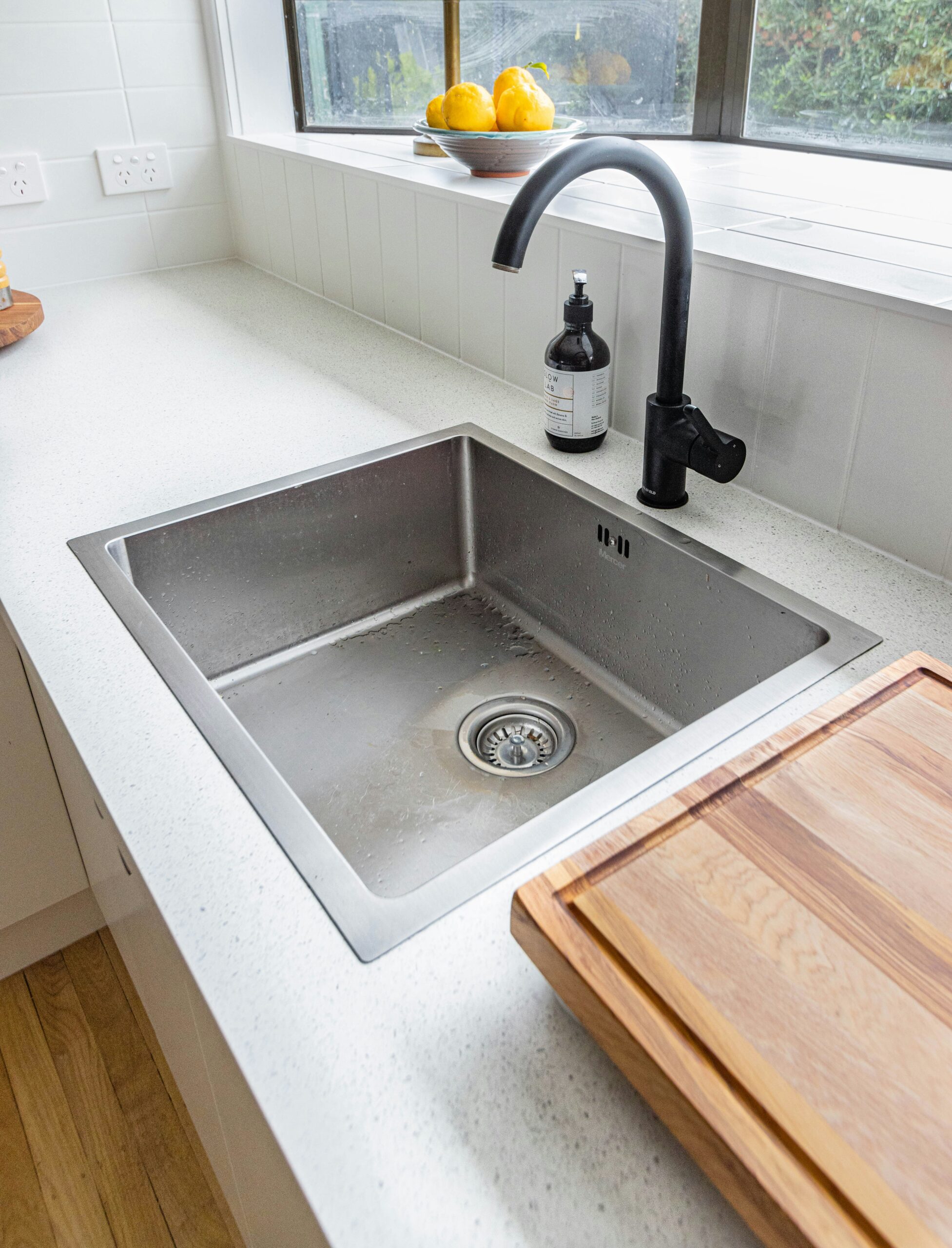
This hub covers garbage disposal leaks—drips under the sink, leaks from the flange at the sink opening, and leaks from the disposal body itself. Leak location matters: a flange leak points to the sink/disposal seal, while a bottom leak often points to the disposal housing. Some leaks only show up during running, on hot water, or when the dishwasher drains.
Kitchen Sink & Food Waste Plumbing hub
Where the leak appears (bottom vs flange)
Leak location gives the fastest clue to whether the problem is the sink flange, the mounting seal, or the disposal housing itself.
-
Garbage disposal leaking from bottom
Drips from the underside of the unit often indicate a failed housing seal, crack, or loose internal connection; this article helps you identify the source and consider repair versus replacement.
-
Leak from disposal flange
Water pooling around the sink opening usually points to the flange or mounting hardware; this piece covers how to inspect and reseal that joint.
-
Disposal flange seal failure
Focuses on worn putty or gasket issues at the flange and outlines the basic steps to replace the seal and restore a watertight connection.
Only leaks during certain events
Some leaks only appear under specific conditions, which narrows the likely causes.
-
Disposal leaks only when running
Leaks that show up while the motor runs can be caused by internal seals or a loose plumbing joint; the article explains how to observe and test safely.
-
Disposal leaks only when hot water used
Heat can expand seals and expose weaknesses; this guide helps determine whether hot-water-related expansion or degraded seals are to blame.
-
Leak only when dishwasher drains
Backflow from the dishwasher or a loose inlet hose often causes leaks during cycles; this article walks through checking the hose, clamp, and inlet fitting.
After replacement or mounting changes
Leaks that start after installing or adjusting parts usually stem from alignment or mounting concerns.
-
Leak after replacing disposal
New-install leaks commonly result from misaligned flanges or missed seals; this article lists checks to correct common installation mistakes.
-
Leak after tightening mounting ring
Over-tightening can distort components or pinch the gasket; guidance here explains how to loosen and re-seat the mounting ring properly.
-
Leak after replacing sink
Replacing the sink can change how the disposal sits against the flange; this piece covers alignment checks and re-sealing steps following a sink swap.
Wear-and-tear seals and gaskets
Aging rubber and seals are common culprits for slow drips or recurring leaks.
-
Disposal leaks after long use
Outlines typical wear patterns in older units and what to inspect to decide whether repairing seals is sufficient or replacement is advisable.
-
Disposal gasket worn out
Shows how to recognize a degraded gasket and describes straightforward replacement options for homeowners.
After events or repairs
External events or nearby work can introduce new leaks even when the disposal itself hasn’t changed.
-
Disposal leaks after power surge
Electrical surges can damage internal parts or cause motor failures that lead to leaks; this article outlines what to inspect and when to consider replacement.
-
Disposal leaks after plumbing repair
Plumbing work can loosen fittings or disturb seals near the disposal; steps here help you re-check fittings and reseal as needed.
-
Disposal leaks after winterization
Freezing or winter prep can crack or shift components; this guide covers common winterization-related problems and what to inspect first.
Spraying or inlet-specific leaks
Sprays and inlet leaks require focused checks of hose connections and the housing for cracks.
-
Water spraying from disposal housing
Explains how to distinguish spray from a crack versus a loose fitting and what to inspect for a safe diagnosis.
-
Disposal leaks at dishwasher inlet
Targets the dishwasher inlet connection on the disposal, covering hose clamp condition and inlet port checks.
General under-sink dripping
Drips under the cabinet may originate from many places; this section gives a simple sequence to isolate the disposal.
-
Disposal dripping under sink
Provides a practical checklist to determine whether the disposal is the source of a drip and what basic checks to perform first.
All Articles in This Cluster
- Garbage disposal leaking from bottom
- Leak from disposal flange
- Disposal flange seal failure
- Disposal leaks only when running
- Disposal leaks only when hot water used
- Leak only when dishwasher drains
- Leak after replacing disposal
- Leak after tightening mounting ring
- Leak after replacing sink
- Disposal leaks after long use
- Disposal gasket worn out
- Disposal leaks after power surge
- Disposal leaks after plumbing repair
- Disposal leaks after winterization
- Water spraying from disposal housing
- Disposal leaks at dishwasher inlet
- Disposal dripping under sink