Quick Answer:
If the upstairs spigot won’t fill while the downstairs spigot works, the most likely causes are a closed branch shutoff serving the upper level or an air pocket in the upstairs line. First verify the downstairs exterior spigot flow, then locate and slowly open the upstairs branch shutoff (often near an upstairs laundry area or in the attic). Bleed the upstairs line at an indoor tap to remove air. Also check for recent work upstairs that may have left a valve closed. If you can’t reach attic or manifold shutoffs or you suspect a hidden leak, call a plumber.
Why This Happens
- Many homes have separate branch shutoffs for upper and lower exterior faucets. A valve left closed only cuts supply to the upstairs spigot.
- Air trapped in the upper piping can stop water flow until it’s bled out through a nearby indoor tap.
- Recent plumbing or remodeling work upstairs may have temporarily closed a valve or isolated that branch deliberately.
- Less commonly, a leak or a damaged line on the upstairs run will reduce or stop flow.
If you’re researching similar symptoms in other areas, check the advice on No water only at backyard spigot and situations like a Spigot dry after remodel.
Step-by-Step What to Do
1. Verify the downstairs exterior spigot flow
- Turn on the downstairs exterior spigot and watch the flow and pressure. A steady, normal flow there confirms the main supply is on.
- If the downstairs spigot is also weak or dry, the problem is upstream of both taps—start by checking the main shutoff.
2. Locate the upstairs branch shutoff
- Look near the upstairs laundry area, mechanical closet, or in the attic above the affected spigot. Branch shutoffs are often tucked near where the supply branches off the main riser.
- If you have difficulty finding it, trace the pipe from the indoor tap nearest the spigot back toward the main line.
3. Open the upstairs shutoff slowly
- Turn the valve slowly—quarter to half turns at first—so trapped air can escape without causing water hammer or sudden pressure surges.
- Observe the upstairs spigot while you open the valve; if flow returns, fine-tune the valve position for stable pressure.
4. Bleed the upstairs line through an indoor tap
- Open an indoor faucet on the same branch (bathroom or laundry sink) to let air escape. Keep it open for a minute after steady water appears.
- This step clears air pockets that can prevent flow to the exterior spigot.
5. Check for recent work upstairs
- Ask household members or contractors if any valves were shut during recent repairs, painting, or remodeling. A valve may have been closed and not reopened.
- Check behind access panels or in service areas where someone might have isolated that branch.
What Not to Do
- Don’t assume upstairs and downstairs share the same shutoff—many homes have separate branch valves.
- Don’t force a stiff or corroded valve—forcing it can break the handle or damage the assembly.
- Don’t open concealed walls or cut into drywall looking for a valve yourself; that can make a small problem much worse.
- Don’t delay calling a pro when you can’t access attic or manifold shutoffs or when you suspect a concealed leak in the wall—these situations need experienced handling.
When to Call a Professional
- If you can’t locate or safely access the upstairs shutoff (attic, sealed closet, or tight manifold).
- If opening the valve produces no flow and you see wet spots, new stains, or bulging drywall—signs of a hidden leak.
- If you hear continuous hammering, hissing, or notice drops in pressure throughout the house after you open the valve.
- If any valve is seized, damaged, or leaks when you operate it—replace or repair by a licensed plumber.
Safety Notes
- Shut off supply at a known valve before working on fittings or replacing parts. If unsure, turn off the main and call a pro.
- Avoid working alone in attics or on roofs; have someone available to help and to call for assistance if needed.
- Wear eye protection when opening plumbing that may release pressurized water or trapped debris.
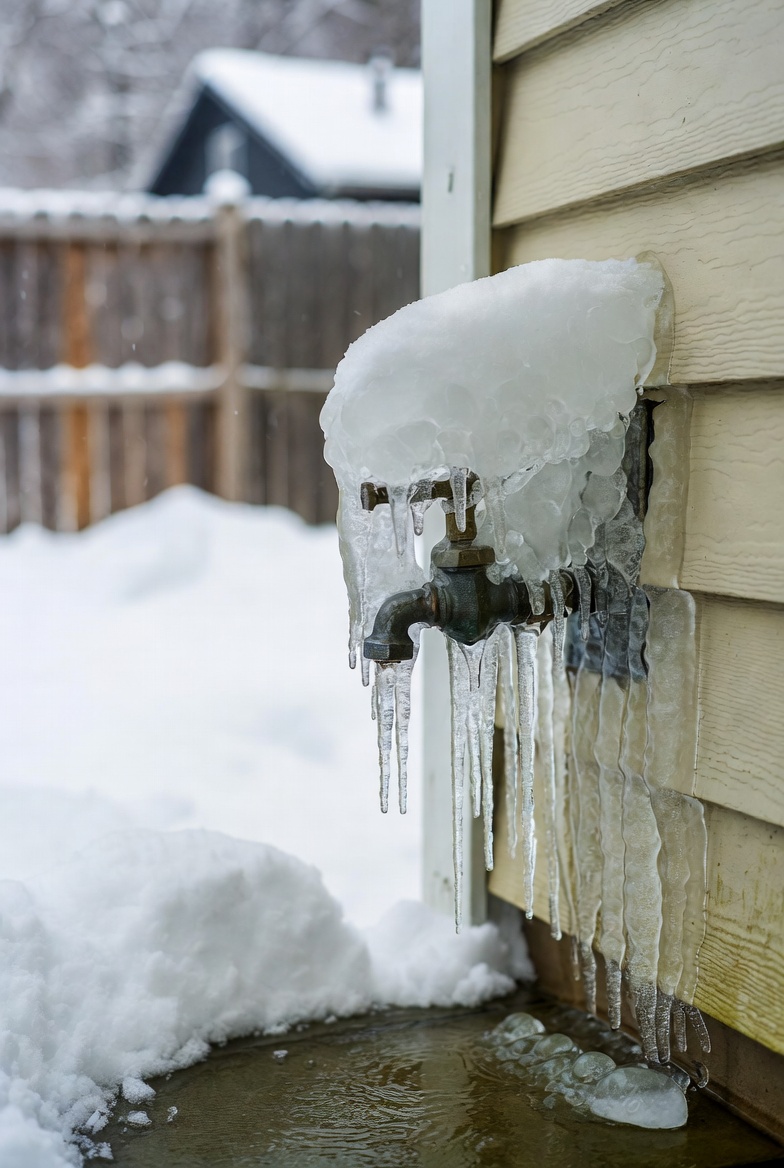
- If you suspect frozen pipes, do not apply open flame—use gentle, controlled heat or call a plumber.
Common Homeowner Questions
- Why does the upstairs spigot have no water but the downstairs one works?
Often a closed branch shutoff or trapped air in the upstairs line; verify the downstairs flow first and check the upstairs valve. - Can I just open the main shutoff to fix this?
Not recommended as a first step—find and open the upstairs branch shutoff slowly to avoid water hammer and unnecessary disturbance to other fixtures. - How long should I wait after bleeding a line?
Keep the indoor tap open until steady water flows for 30–60 seconds to be sure air is cleared.
More in this topic
For more related fixes and similar symptoms, see No Water at Exterior Faucets.