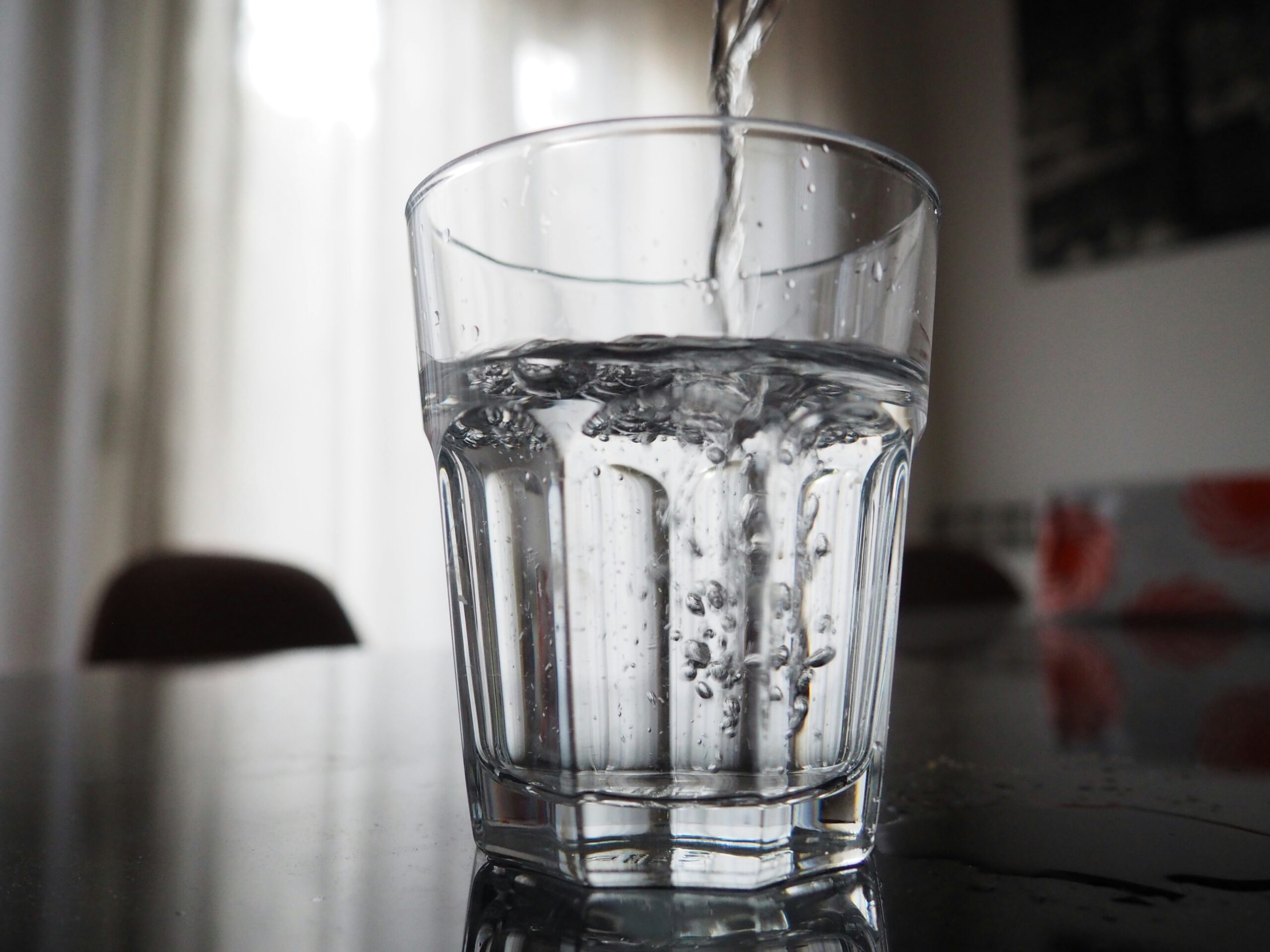
Choose a guide from where particles were originally noticed and what changed. Color, texture, timing and a clear second outlet cannot identify the material or certify water quality.
Decide the safe use and sampling plan first
For a new unexplained particle change, avoid consuming the affected water and use a known-safe supply for food, drinking and oral care while asking the supplier or local well-water authority for advice. Follow any current notice for other uses. Neither clearer water nor boiling clears an unidentified chemical concern. Familiar material already assessed by the provider can have different ordinary-use instructions.
If analysis is needed, ask the supplier or a certified drinking-water laboratory which outlet, bottle, timing and handling fit the question before flushing, removing a screen or changing treatment. A household glass or screen rinse can be a discussion photograph; it is not automatically a valid laboratory sample. Do not taste, rub, burn or chemically challenge unknown particles to identify them.
Work, restoration, nonuse or one affected area can help select a guide without proving a cause. Keep the original supplier notice and equipment record. For a leak, unsafe hot discharge or wet electrical equipment, stop affected use and obtain suitable help before any comparison.
Use the groups below to match what the particles look like and what changed recently, then open the closest article title. For related topics, see the sub-category hub: Water Contamination, Taste & Odor.
Keep appearance, location and event separate
A color or texture describes what was seen; it is not a chemical analysis.
A screen can collect incoming material or local debris; floor location alone is not a pipe map.
Timing selects useful history; it does not prove a failed valve or clear the water for use.
Conceptual comparison. No installed-system diagnosis or water-quality certification is depicted.
Black specks and flecks
Dark or black particles visible at faucets, in sinks, or in shower drains are grouped here.
-
Black particles in sink water
Black color is not material identification. Consider the actual filter, hose or local component and arrange source assessment before draining a heater or replacing parts.
-
Black flecks after city shutoff
Keep the actual city work notice and original particle record. Directed restoration and analytical clearance answer different questions.
-
Black flecks after pressure change
Keep pressure state and particle timing separate. A gauge reading or two open outlets does not locate the source or flush every branch.
-
Black specks only on hot side
Separate the hot connector, fixture, pipe and heater. A hot-only observation or dirty drain sample does not identify a failed internal part.
-
Black specks from showerhead
Distinguish delivered particles from head or drain residue. Use actual permitted head care without a spray challenge or a generic valve-filter cure.
Grit, sand, and debris in the water
Coarser particles, sand-like grit, or hard debris that feel abrasive or settle quickly.
-
Grit coming out of faucets
Record the supplied outlet and existing grit before cleaning. Appearance and a finer screen do not establish toxicity or justify heater replacement.
-
Sand in water after pipe replacement
Ask the installer about actual open-pipe exposure and sanitary commissioning. A secured construction flush and final reconnection require defined safe states.
-
Debris after turning main back on
Use the actual restoration record. A supply faucet can discharge supplied water; a floor drain cannot purge a potable line.
Clogging and where sediment collects
Locations and symptoms where sediment causes reduced flow, screen clogging, or appliance issues.
-
Sediment clogging aerators suddenly
Keep blocked-screen history and source sampling separate. Use compatible owner care and appropriate handling of unknown debris.
-
Particles in toilet tank
Distinguish retained incoming material, local parts and tank products. A failed local stop needs effective upstream isolation before replacement.
-
Sediment in dishwasher supply
Distinguish the supply inlet from tub residue. Isolate electrical power and actual feeds before permitted service; do not flush oily water to visual clarity.
Appliance and outdoor-only sediment
When grit appears primarily with specific appliances or at exterior spigots.
-
Grit in washing machine water
Separate drum and inlet evidence. Follow the actual removable or retained screen design and the safe hose-discharge/reconnection sequence.
-
Grit from outdoor spigot
Identify the actual source, hose and protected outlet. Clear indoor water does not exclude an intermittent common-source particle event.
After specific events or changes
Particles that begin after maintenance events, smart shutoffs, or long idle periods.
-
Sediment after water heater flush
Keep drain and delivered-water evidence separate. Actual shutdown, temperature, secured discharge and full refill precede safe heater restart.
-
Sediment after curb stop use
Use the provider’s actual operation, restoration and ownership rules. Do not assign a universal cleanup liability boundary or flushing duration.
-
Particles after smart shutoff triggers
Address the original protective alert before restoration. Do not invent partial actuation or repeated valve cycling to prove a particle source.
-
Sediment after long periods of no use
Separate routine unused-outlet care from unexplained particles, actual winterization and equipment commissioning. Visual clarity is not the whole return-to-use plan.
Upstairs-only or area-specific particles
When particles have so far been noticed on certain floors or zones; this does not exclude an intermittent common source.
-
Particles only in upstairs fixtures
Closing a fixture’s feed stops particles whatever their upstream origin. Use actual routing and appropriate source assessment before riser replacement.
All Articles in This Cluster
- Black particles in sink water
- Black flecks after city shutoff
- Black flecks after pressure change
- Black specks only on hot side
- Black specks from showerhead
- Grit coming out of faucets
- Sand in water after pipe replacement
- Debris after turning main back on
- Sediment clogging aerators suddenly
- Particles in toilet tank
- Sediment in dishwasher supply
- Grit in washing machine water
- Grit from outdoor spigot
- Sediment after water heater flush
- Sediment after curb stop use
- Particles after smart shutoff triggers
- Sediment after long periods of no use
- Particles only in upstairs fixtures