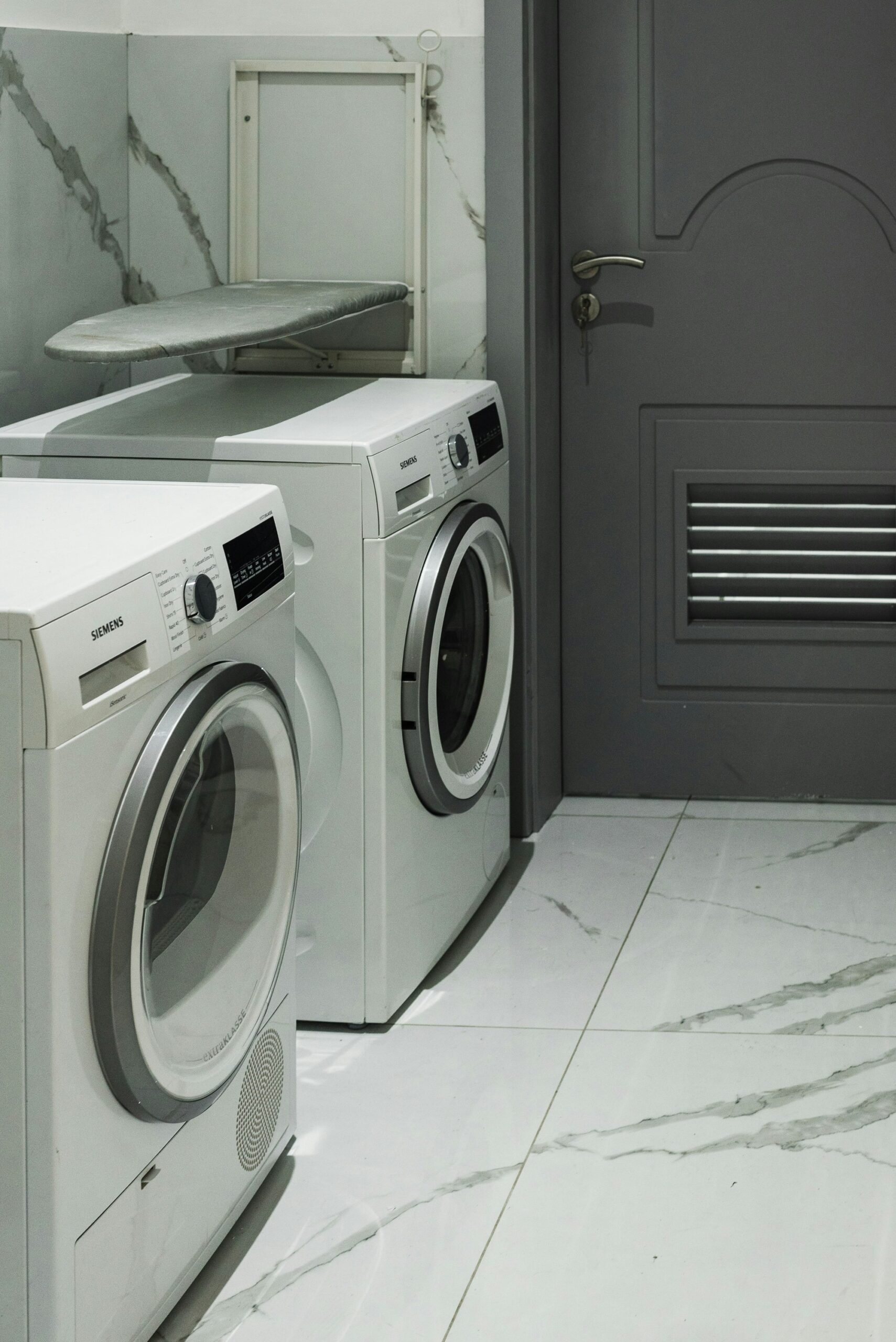
Grit in a washer drum, grit caught on an inlet screen and grit in supplied water are different findings. Pause affected use and preserve where the material was seen before blaming the home supply or running another load.
Choose a safe first response
Keep away from wet electrical equipment. Do not touch wet appliances, plugs or switches, or enter water to reach a breaker. When no gas leak is suspected, power may be isolated only from a safely accessible dry location; otherwise call an electrician or emergency help. Wet equipment needs qualified assessment before it is used again.
For a new unexplained particle change, avoid consuming the affected water and use a known-safe supply for food, drinking and oral care while asking the supplier or local well-water authority for advice. Follow any current notice for other uses. Neither clearer water nor boiling clears an unidentified chemical concern. Familiar material already assessed by the provider can have different ordinary-use instructions.
Keep the original evidence
- Exact washer model, cycle and whether material was in clothing, the drum, a screen or a supplied sample.
- Existing hot/cold history, hose and treatment work, leaks and any fill or drain error.
Identify the actual screen design
GE gives examples with removable screens; Whirlpool’s front-load guidance describes cleaning specified inlet screens in place. Follow the actual model, not the other brand’s procedure. Do not pry, delete or replace a retained inlet insert as a generic cleaning step. A drum deposit may also need appliance or laundry-product assessment.
Keep the hose sequence coherent
Before permitted hose work, isolate electrical power from dry safe access, close every relevant feed, control hot temperature and release and verify retained pressure under the actual procedure. A paused cycle is not electrical isolation; a closed tap is not proof that a failed valve holds. Obtain suitable service if these conditions cannot be established. Capture residual water before disconnecting.
Flush before reconnection only when specified
A maker-approved captured hose flush requires its disconnected discharge end secured in a suitable receiver before opening the defined feed. The hose is not both reattached to the washer and discharging freely into a bucket. Close the source and release pressure again before screen care or reconnection. Restore compatible hoses, correct hot/cold routing, specified torque and full assembly; check for leaks before electrical return. Do not leave open hoses under pressure.
A filter is not return-to-use clearance
A suitable filter can address a known particle problem but does not certify unknown water or repair a damaged inlet valve. Return to use follows source advice and actual appliance commissioning, rather than clear appearance or installing a temporary mesh filter.
When to get further help
Report persistent or recurring particles, active leakage, damaged controls or an unexplained change affecting several outlets promptly. A plumber or equipment technician can assess the actual component; the supplier, health authority or appropriate laboratory addresses the water-quality question. Do not wait through repeated cleaning cycles to obtain that help.