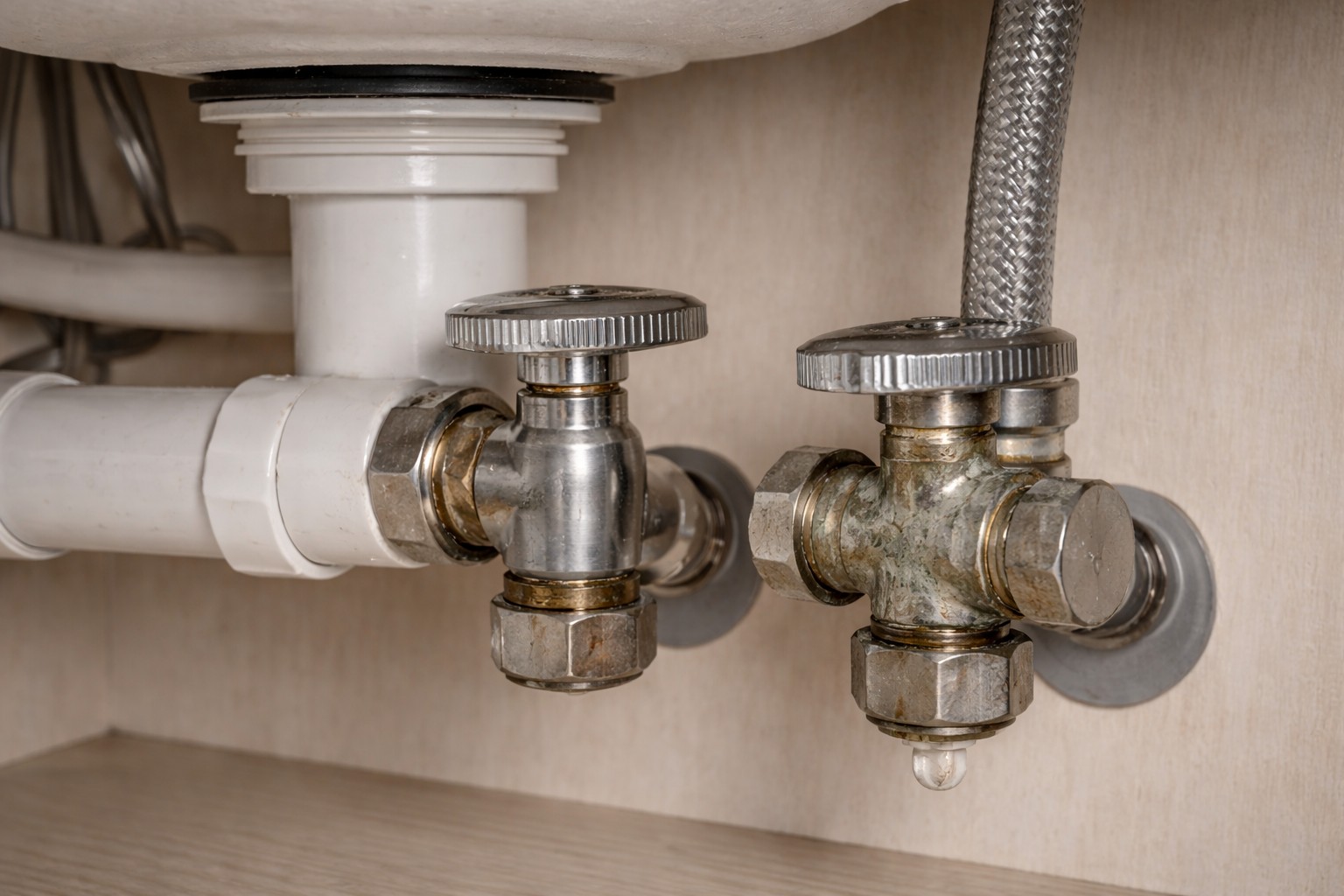
This hub covers common shutoff valve failures at fixtures—angle stops under sinks, toilet shutoffs, and older valves that haven’t been used in years. It focuses on valves that won’t fully close, won’t reopen, or leak after being turned.
You’ll also find topics for buzzing valves, stem/packing leaks, and why some newer shutoffs can still fail early.
Use the groups below to match what your valve is doing and open the most relevant article.
Won’t close or won’t stop flow
When a shutoff won’t shut off the fixture or never fully seals.
-
Angle stop won’t shut off sink
Walks through common causes when an under-sink angle stop won’t stop water, including debris, worn seats, and damaged stems, and outlines basic checks to confirm the problem.
-
Valve handle spins but won’t close
Explains why a handle that turns freely may not close the valve—stripped splines, broken stems, or internal disconnection—and what to inspect before replacement.
-
Old gate valves that won’t seal
Describes the failure modes of legacy gate valves that no longer seal, how age and corrosion affect seating, and replacement considerations.
Stuck, frozen, or breaks during use
When the valve is seized from age/corrosion or fails during an emergency.
-
Under-sink valve frozen in place
Identifies reasons an under-sink shutoff becomes immobile and offers safe approaches to free or replace a frozen valve without causing damage to fittings.
-
Valve stops working after years of no use
Looks at how inactivity leads to seized parts and mineral buildup, and suggests maintenance steps and when to opt for replacement instead of repair.
-
Shutoff valve breaks during emergency
Covers why valves may fail when stressed in an emergency shutoff and how to limit water damage and secure a temporary shutoff if the valve breaks.
-
Valve corrosion inside walls
Discusses hidden corrosion in in-wall shutoffs, signs to watch for, and the trade-offs between accessing and replacing versus leaving the line alone.
Won’t reopen or won’t open fully
When flow doesn’t return normally after using the shutoff.
-
Valve won’t reopen fully
Explains causes for reduced flow after reopening—dislodged debris, partial seating, or damaged internals—and basic troubleshooting steps.
-
How to free stuck shutoff valve
Provides cautious, homeowner-friendly techniques to free a stuck valve using penetrating lubricants, gentle heat, and correct leverage to avoid breakage.
Leaks after turning or around the stem
Drips after reopening or leaks around the stem/packing.
-
Toilet shutoff leaks after being turned
Focuses on common toilet shutoff problems that drip after operation, including seat wear and loose compression fittings, with simple inspection tips.
-
Shutoff valve dripping after reopening
Describes reasons a valve may drip once flow resumes and steps to identify whether the leak is at the packing, body, or downstream fitting.
-
Valve stem packing leaking
Explains stem packing leaks, how to tighten packing nuts or replace packing, and when stem replacement is the more reliable fix.
Noise and pressure side-effects
Buzzing or pressure loss tied to partially closed or failing valves.
-
Angle stop buzzing when partially closed
Looks at causes of vibration and noise when angle stops are partially closed, including high velocity, worn seats, and aerator interaction.
-
Shutoff valve causes pressure loss
Outlines how a partially obstructed or damaged valve can reduce supply pressure and how to distinguish valve-related loss from system-wide issues.
-
Multiple valves fail at same time
Explores scenarios where several shutoffs show problems together—water quality, system events, or age—and what to inspect first.
Modern valve failure patterns
Common ways quarter-turn valves or recent installs can still fail early.
-
Quarter-turn valve failure symptoms
Details typical failure signs for quarter-turn valves, such as stiff operation, leaks at the cartridge, and sudden loss of sealing.
-
Why new shutoff valves fail early
Discusses installation issues, defective parts, and systemic causes that lead to premature failure of recently installed shutoffs.
-
Valve failure after water heater install
Covers reasons shutoffs may fail following water heater work, including thermal stress, debris from the tank, or improper reconnection.
All Articles in This Cluster
- Angle stop won’t shut off sink
- Valve handle spins but won’t close
- Old gate valves that won’t seal
- Under-sink valve frozen in place
- Valve stops working after years of no use
- Shutoff valve breaks during emergency
- Valve corrosion inside walls
- Valve won’t reopen fully
- How to free stuck shutoff valve
- Toilet shutoff leaks after being turned
- Shutoff valve dripping after reopening
- Valve stem packing leaking
- Angle stop buzzing when partially closed
- Shutoff valve causes pressure loss
- Multiple valves fail at same time
- Quarter-turn valve failure symptoms
- Why new shutoff valves fail early
- Valve failure after water heater install
Related hub: Water Entry, Shutoffs & Flow Control Systems