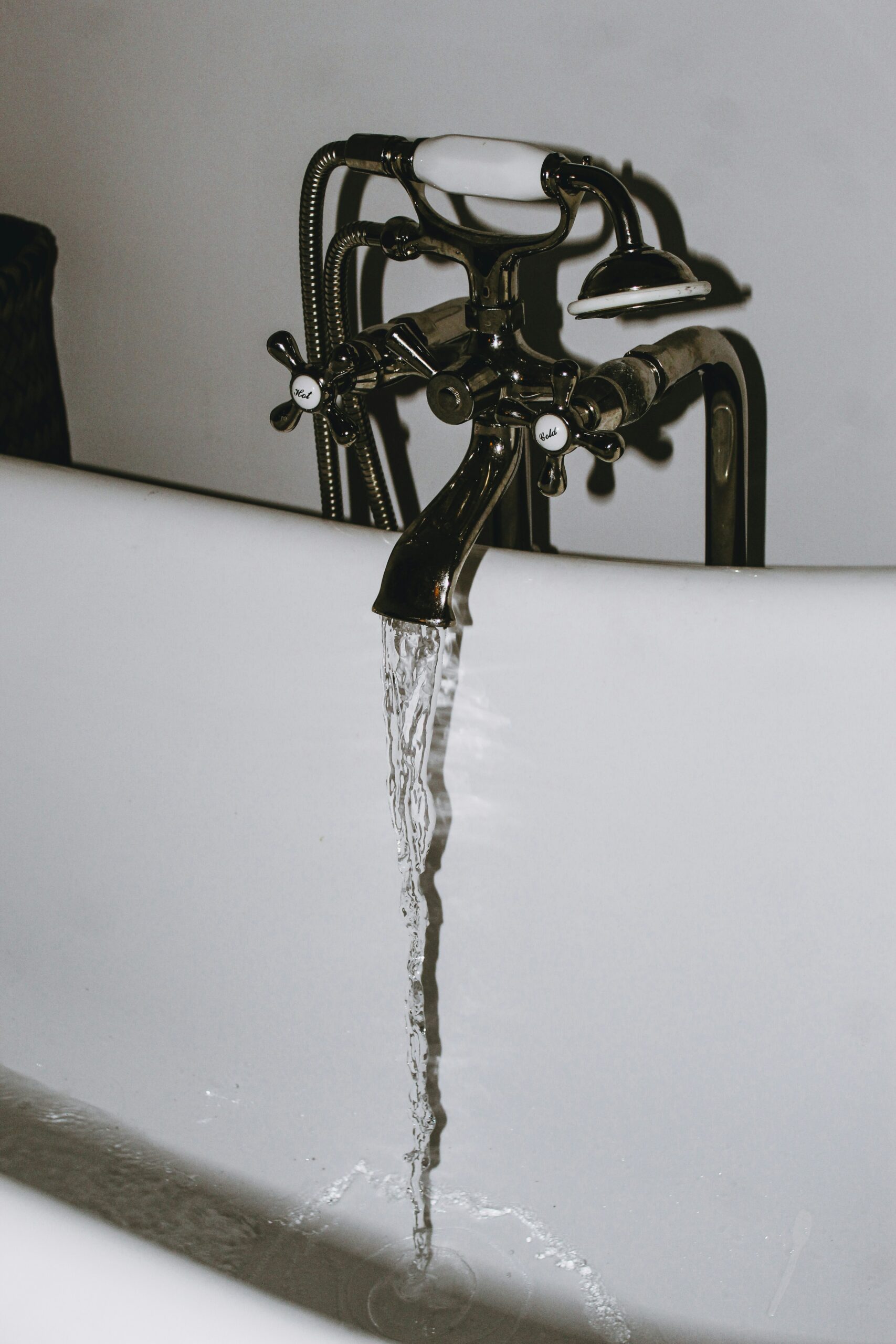
Use the original fixture, operating event and recent work to choose a guide. These 17 scenarios retain their separate routes because a shower attachment, hot-water pattern, filter installation and appliance cycle call for different evidence. Vibration alone does not establish a failed part, safe pressure or permission to keep using an unstable fixture.
Air, Noise & Vibration in Pipes
Check for a condition that needs prompt help
Stop the relevant use for active leaking, severe movement, loss of control, unsafe temperature or sudden abnormal delivery. Keep clear of spray. A known safely operable customer shutoff may limit a supply leak; do not force a stiff, corroded or unknown valve. Keep away from wet electrical equipment. Use only safely accessible dry electrical controls when safe; otherwise obtain qualified help.
Leak, severe movement or unsafe temperature?
Stop the relevant use and obtain appropriate help. Keep clear of wet electrical equipment.
One fixture during ordinary use?
Record its model, control setting and visible moving part. Do not grip the running fixture or infer a hidden fault from the loudest surface.
After repair or equipment installation?
Preserve the exact part and work record. Ask for compatibility, connection and commissioning findings before another adjustment.
Hot-only, night or combined demand?
Keep the actual layout, time and operating state. A pattern is a clue; pressure assessment needs an appropriate point, load and instrument.
Before opening any water-containing part
Use independent source isolation and control retained pressure, temperature and energy. A closed mixer handle is not necessarily service isolation.
This guide organizes observations; it does not diagnose your installed equipment.
Faucet and showerhead vibration symptoms
- Faucet vibrates when opened
A faucet that vibrates when opened needs its original opening event distinguished from steady-flow or closing noise. A vibrating spout alone does not prove that its cartridge failed.
- Showerhead shakes under pressure
If a showerhead shakes, stop using it when movement is severe, it leaks or the arm is unstable. The title’s “under pressure” describes the reported symptom; it is not a pressure measurement.
- Showerhead rattles during use
For rattling during shower use, distinguish a loose external accessory from movement of the head, arm or wall. Stop for an unstable arm, leakage or severe movement rather than attempting to silence it by tightening.
Flow-position clues
- Vibration stops when valve fully open
When vibration disappears fully open, first identify which valve is involved. A supply isolation stop and a fixture’s flow or temperature control have different intended operating roles.
- Vibrating at low flow
Vibration at a low-flow setting does not mean low water pressure. Keep the ordinary setting, actual control and recent work recorded without running a full hot/cold sweep.
Hot-only, upstairs-only, or night-only patterns
- Vibration only on hot water
Vibration reported only with hot water is a useful pattern, but it does not uniquely locate a hot-supply defect. Keep the original control setting and heater or circulation context without deliberately running full hot.
- Vibrating only in upstairs bathroom
Vibration noticed only upstairs needs the actual bathroom, fixture and ordinary operating conditions recorded. Location alone does not establish a loose upstairs run or pressure-balancing failure.
- Faucet vibrates only at night
For nighttime faucet vibration, keep the actual clock time and water-use context. Quiet surroundings or timed demand can make a pattern noticeable; night alone does not prove a pressure, pump or municipal cause.
After changes to parts or system
- Faucet vibrates after repair
When vibration begins after a faucet repair, preserve the work record and exact parts used. The timing makes the work worth reviewing; it does not establish a loose cartridge or justify tightening all fittings.
- Vibrating after replacing cartridge
After a cartridge change, preserve the actual faucet model, replacement part and work record. New vibration calls for a review of compatibility and assembly before further disassembly or stop cycling.
- Vibration after installing filter
Vibration after filter installation needs the exact system, cartridge and installation record identified. A point-of-use outlet device and a pressure housing serving a treatment function need different checks.
- Showerhead vibrates after PRV install
For a shower that begins vibrating after a pressure-reducing valve installation, preserve the installer’s record and actual settings. The timing deserves review, but noise does not prove that the PRV needs tuning.
- Vibration after installing smart shutoff
Vibration after a smart-shutoff installation needs the exact model, installation record and alerts checked first. Water monitoring, shutoff and pressure regulation are different functions; the installed device may not provide all three.
- Vibration started after pressure change
If vibration began after a reported pressure change, keep the event and work record. Handle position and hand-feel do not establish the actual pressure or identify a regulator fault.
Demand-related vibration
- Vibrating when multiple fixtures used
Vibration during combined water use needs the original demand combination recorded. More than one operating fixture can change pressure, flow and transmitted vibration without proving which component started it.
- Vibration when washing machine runs
Keep the actual washer phase, model and safe external observations. Leave enclosure and protective functions intact; do not reposition a connected hose or reach behind a running machine.
- Vibration from hose use
When hose use produces vibration, identify the actual outdoor valve, hose, nozzle and any backflow device. An ordinary cold-only hose bib has no hot-only setting to compare.
All Articles in This Cluster
- Faucet vibrates when opened
- Showerhead shakes under pressure
- Showerhead rattles during use
- Vibration stops when valve fully open
- Vibrating at low flow
- Vibration only on hot water
- Vibrating only in upstairs bathroom
- Faucet vibrates only at night
- Faucet vibrates after repair
- Vibrating after replacing cartridge
- Vibration after installing filter
- Showerhead vibrates after PRV install
- Vibration after installing smart shutoff
- Vibration started after pressure change
- Vibrating when multiple fixtures used
- Vibration when washing machine runs
- Vibration from hose use
What the vibration can and cannot establish
Record the original event, ordinary handle setting, actual model, recent work and safe visible conditions. Flow changes, one temperature setting or the loudest surface can help describe a symptom; they do not uniquely identify a cartridge, supply branch or hidden support. Excitation and a loose part can coexist. Do not grip hot, loose or moving hardware, repeatedly recreate severe vibration or open finishes to chase the sound.
For any service that opens the water path, identify and isolate the actual source independently of the part being removed, then control retained pressure, temperature and other energy. Closing a mixer handle is not necessarily service isolation. Use the exact connection, seal, retainer and support instructions, complete secure reassembly, and check for leaks during approved restoration. Do not use universal wrench turns, forced fittings or jammed shims. Concealed repairs may require planned access; no method guarantees untouched finishes.
What to ask before buying parts
Ask which actual model, work record, pressure/load evidence and component or connection finding supports the proposed repair. The filter guide covers actual installation, treatment purpose and controlled closed-path service; it does not promise a temporary bypass test. Keep protective devices effective and request a clear access and verification plan.
Sources and equipment limits
- BrassCraft: identify and operate the actual supply stop
- Moen example: shower models have different balancing and service requirements
- Portland Water: flow, pressure and demand are different observations
- Pentair FPS example: filter purpose, pressure relief and sealed reassembly
- Watts 25AUB example: measured setting and service precautions
- Moen Flo example: resolve the underlying alert before restoring water
- PPI/PPFA PEX guide, chapter 9: actual supports, movement and compatible materials
Manufacturer examples explain particular equipment; they do not identify your installed model or prescribe its settings. Use the actual instructions and applicable local requirements. Independent professional review and field testing have not been obtained.