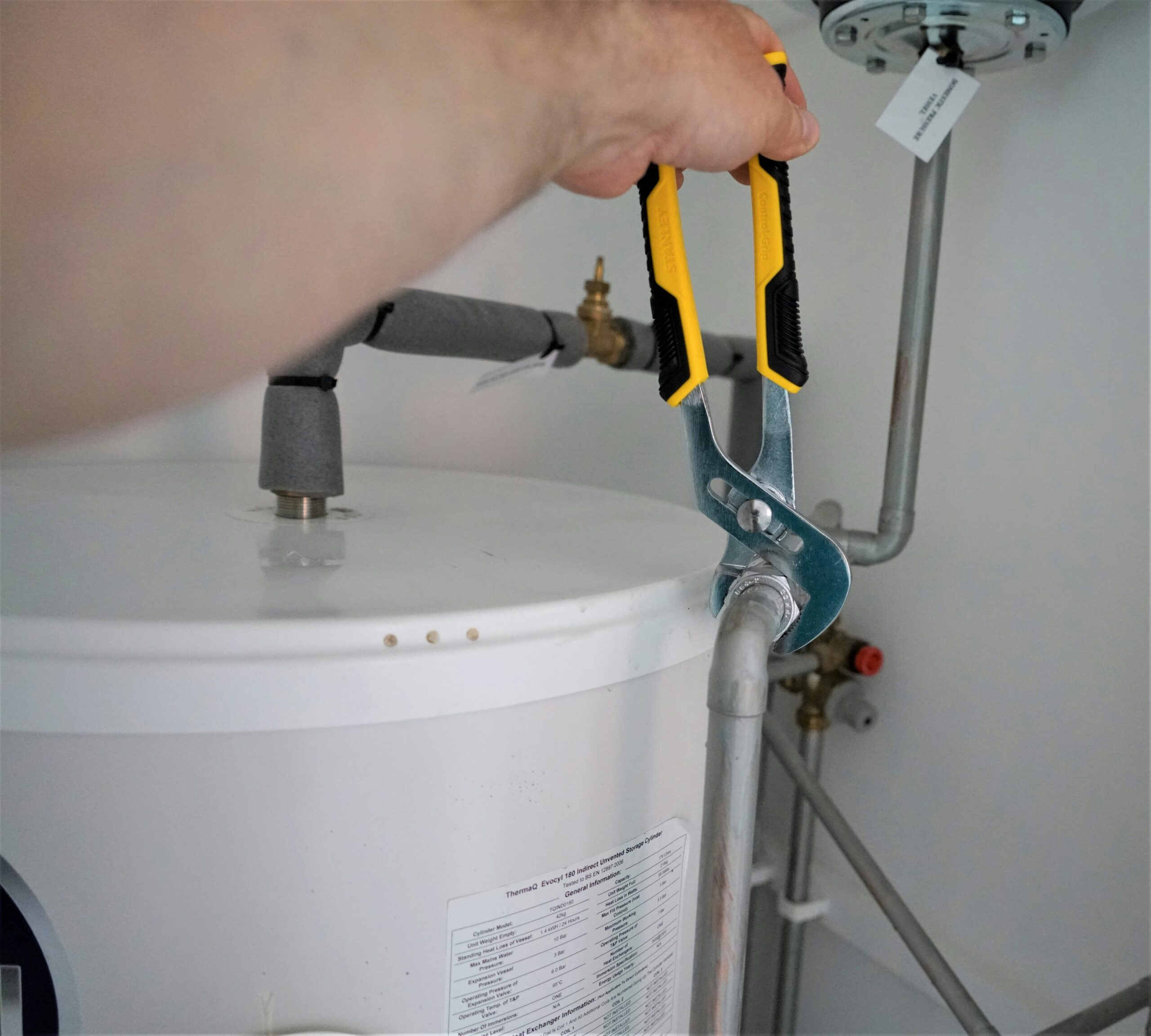
Use the original event and actual installation to choose a guide. The 17 scenarios distinguish hot flow, cooling, closure, weather, location and recent work. Thermal movement is possible, but tone, fading or the loudest surface does not prove harmlessness or identify an exact hidden fault.
Air, Noise & Vibration in Pipes
Check the condition before a sound test
Active leaking, hot spray, steam, severe movement, unsafe temperature or loss of control needs prompt appropriate help. Keep people away from wet, sagging, cracked or unstable ceilings and floors; do not press, stand beneath or puncture a suspect finish. Stay away from wet electrical equipment, smoke or a suspected electrical fault. Use only identified safely accessible dry controls when safe; otherwise obtain emergency or qualified help. Do not force a stiff or unknown water valve.
For suspected fuel gas, a carbon monoxide alarm or exposure symptoms, leave immediately and call appropriate emergency help from safety. Do not operate switches, phones, valves or appliances in the affected area or remain to investigate.
Moisture, sagging or unsafe equipment?
Keep clear and address the actual warning before listening or touching finishes.
During use, at closure or later?
Keep the original fixture and timing. Do not repeatedly heat a system to prove contraction.
Dimensional movement or heated-water pressure?
These are different questions. Actual material, layout and suitable measurements determine relevance.
After pipe, insulation or tank work?
Keep the exact product and commissioning record. Supports, compatibility and intended movement differ.
Before a correction
Verify the actual contact or component condition and safe service/access plan. Do not blindly tighten, fill or probe.
This organizes observations; it is not a diagnosis of an installed system.
Thermal expansion and hot-water ticking
- Pipes tick when hot water runs
For ticking while hot water runs, record whether it begins with water entry, continues during ordinary flow or appears afterward. Temperature-related movement is one explanation, not proof that the tick is harmless.
- Ticking noise as pipes cool down
Ticking as piping cools can reflect dimensional movement at a contact or support, but the actual temperature and operating history matter. Duration and tone alone cannot distinguish normal movement from a condition needing repair.
- Thermal expansion ticking after heater runs
Keep the actual heater and original heating/flow event. This guide separates dimensional movement, closed-system heated-water pressure and model-specific component clicking without selecting a cause from timing alone.
- Ticking in ceiling after hot water use
For ticking heard through a ceiling after hot-water use, inspect the ceiling’s visible condition from a safe position first. A wet or sagging finish needs a different response from a sound dry surface with a faint recurring noise.
- Thermal ticking after dishwasher cycle
For ticking after a dishwasher cycle, record the actual program and whether the sound followed filling, wash heating, draining, drying or completion. A nearby sink draw does not necessarily warm the dishwasher’s closed branch, internals or drain.
- Ticking after expansion tank install
After expansion-tank installation, keep the exact tank, application and commissioning record. A new tick does not establish correct sizing, precharge, support or pressure control, and it does not prove a failed tank.
Where the sound is located
- Clicking in walls after shower
After-shower wall clicking needs its original timing and location recorded without assuming the loudest wall contains the contact point. Supply piping, drainage, the shower assembly and other building movement can transmit sound.
- Clicking behind shower wall
For clicking directly behind a shower wall, preserve the shower model, ordinary setting and whether it happens during flow, at closure or afterward. The symptom does not by itself prove a loose clip, valve fault or thermal source.
- Clicking noise near water heater
For clicking near a water heater, identify the actual heater type and event before a close listening test. Pipe movement, heat traps, ignition or electrical controls can involve different mechanisms and hazards.
- Clicking under floorboards
For clicking beneath floorboards, keep the original water-use, heating and ordinary foot-traffic context. Sound transmitted through a floor does not uniquely distinguish piping, a fastener or another building source.
- Clicking that sounds like dripping
A clicking sound that resembles dripping needs a leak question kept open. Thermal movement can mimic a drip, but a fading sound or the absence of surface stains does not rule out concealed water loss.
After changes or external events
- Ticking after repiping
After repiping, keep the installer’s record and exact material and routing changes. Newness alone does not establish greater expansion or guarantee that the system will settle after several heating cycles.
- Ticking noise after insulation install
For ticking after insulation work, identify the actual product, location and application record. Pipe insulation touching a pipe can be intentional; contact alone does not prove the new insulation caused a defect.
- Ticking after city pressure change
For ticking after a reported city-pressure change, preserve the actual supplier notice or work report and the first symptom. Timing alone does not prove a municipal pressure event or assign fault responsibility.
Time and temperature patterns
- Clicking only at night
For clicking noticed only at night, keep the clock time, original water use and any heater or HVAC event already observed. Quiet surroundings can change what is noticeable; night timing does not establish the cause.
- Ticking only on cold days
For ticking limited to cold days, first keep any loss of flow, freeze history, leakage and actual exposure in view. Do not assume thermal contact noise and start a hot-water experiment when a pipe may be frozen or damaged.
After water turns off
- Ticking after water turned off
Ticking after water turns off needs the closure event separated from later cooling. An immediate click, a sharp bang and delayed scattered ticks are useful observations without being unique diagnoses.
All Articles in This Cluster
- Pipes tick when hot water runs
- Ticking noise as pipes cool down
- Thermal expansion ticking after heater runs
- Ticking in ceiling after hot water use
- Thermal ticking after dishwasher cycle
- Ticking after expansion tank install
- Clicking in walls after shower
- Clicking behind shower wall
- Clicking noise near water heater
- Clicking under floorboards
- Clicking that sounds like dripping
- Ticking after repiping
- Ticking noise after insulation install
- Ticking after city pressure change
- Clicking only at night
- Ticking only on cold days
- Ticking after water turned off
Keep movement, pressure and source evidence separate
Thermal movement is possible, but a fading tick, sharp click, warm-water timing or surface vibration does not uniquely locate a pipe, prove harmlessness or exclude a concealed leak. Sound can travel through framing. Keep the original fixture, ordinary setting, event and recent work; do not deliberately run full hot, repeatedly heat the system or grip hot lines to prove the explanation.
A visible support may be corrected through the actual approved procedure when access and conditions are safe. Identify material, load, fixed points and intended thermal movement first. Do not tighten every clip rigidly, remove an intended anchor, bend a line, wedge shims or blindly fill cavities. Compatible insulation or a specified foam/firestop system can be appropriate; it is different from adding an unknown product to silence noise. Service that opens or reworks a water joint needs actual source isolation, controlled retained pressure/temperature/energy and correct reassembly and leak checks. Power off or a nearby closed valve alone does not authorize probing unknown services. Concealed repair may require planned access; untouched finishes cannot be guaranteed.
What to ask before changing supports
Ask which actual route, material, contact, component or measurement supports the correction, which movement is intended, and how other services and finishes will be protected. The linked heater guide explains why metal movement and heated-water pressure need different evidence. Do not select a bleed point, valve adjustment or waiting period from a tick alone.
Sources and equipment limits
- PPI/PPFA: actual PEX movement, support and material compatibility
- Amtrol potable expansion-tank example: application, support and unloaded precharge
- A. O. Smith: some heat-trap designs can transmit clicking
- Portland Water: pressure, flow and demand are different evidence
- DC Water: frozen-pipe warning and inaccessible-section limits
- Whirlpool example: enclosure, power and actual supply requirements
These manufacturer and supplier examples do not identify your installed system or authorize its repair. Use the actual material, product and equipment instructions and applicable local requirements. Independent professional review and field testing have not been obtained.