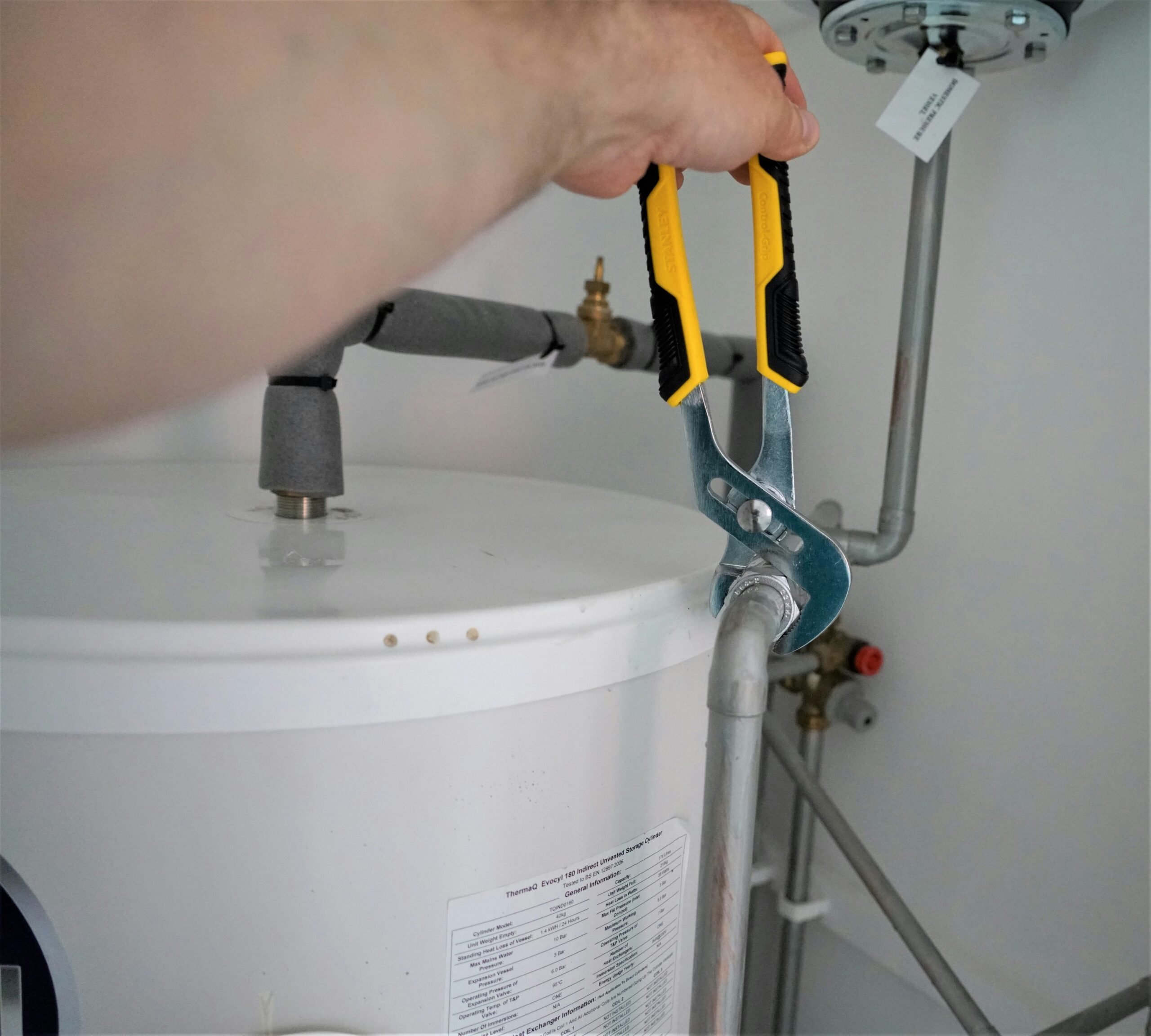
Valve trouble following a water-heater installation needs the installer’s actual work and commissioning record. The date does not prove solder, scale or sealant caused the failure, and closing the heater stop does not unload its own inlet.
If fuel gas is suspected, leave the building or affected area immediately. Do not operate valves, switches, plugs, appliances or phones there. Call the gas emergency service from a safe location well away, and wait for responders’ clearance.
Keep away from wet electrical equipment. Do not touch wet appliances, plugs or switches, or enter water to reach a breaker. When no gas leak is suspected, power may be isolated only from a safely accessible dry location; otherwise call an electrician or emergency help. Wet equipment needs qualified assessment before it is used again.
Record the original event
- Actual failed valve location and function: heater supply, service/drain, fixture stop or another control.
- Original external leak, abnormal movement or continued flow, plus parts actually changed.
- Heater model/energy, any recirculation or alternate feed and actual completion record.
What the observation establishes
A potable supply stop, heater drain and temperature/pressure relief device are not interchangeable service outlets. Brown/gritty water does not by itself locate debris inside a particular valve. A spinning handle also does not prove which internal component failed.
What to do next
- Contact the installer with the existing evidence before dismantling new work. Stop relying on the failed valve as isolation.
- Identify independent effective upstream control for every relevant feed. The heater stop being serviced cannot be its own upstream isolation, and one hot faucet alone does not prove every side is depressurized.
- Do not shoot repeated short bursts into a bucket, cycle until clear or choose a heater/supply flush from the symptom alone. Any required discharge needs a secured compatible path, accepting receiver and actual model procedure.
- Do not give an unidentified leaking new joint a generic small extra turn. Its seal, support, thread type and actual tightening method must be identified; do not add tape or heat by habit.
- Have the actual leak/control fault corrected and the installation commissioned before normal reliance. A faulty supply stop is a repair need, while immediate heater shutdown requirements depend on the actual leak, hazard and model service state.
Before any internal service
Before any internal service or fitting removal, identify and isolate every supply that can pressurize the section, release trapped pressure through the appropriate controlled outlet and verify depressurization. Account for hot water and possible alternate feeds. Lowering a PRV setting, reducing flow or wearing gloves does not make a pressurized assembly safe to open. If isolation cannot be established, leave it assembled and obtain qualified help.
A main shutoff cannot isolate its own upstream side. Closing its handle, a downstream fixture or another downstream stop does not unload its inlet or every retained cavity. Separate effective upstream isolation must be arranged with the appropriate supplier or qualified provider when necessary. Knowing the curb-stop location or being ready to reseal packing is not proof the valve is depressurized.
Keep independent isolation effective while any pressure-retaining part or connection is open. Do not reopen an upstream supply into an exposed valve or pipe while aiming at a bucket. Any required construction flushing needs the actual securely connected arrangement and procedure. Fully reassemble rated compatible parts before restoring pressure under the product instructions; verify leaks and the required shutoff function before relying on the valve.
Keep the heater in its required service state
The installer must identify the actual heater model, energy source, water connections and safe shutdown, cooling and draining procedure. Do not enter a wet area to reach a disconnect. Do not loosen an energized/hot pressurized assembly, plug a relief outlet or operate its relief valve as a general pressure test. After work, refill, purge and check the actual installation as directed before restoring energy; an electric tank must not heat empty. A tankless unit or recirculation arrangement needs its own commissioning procedure.
Does clear water after a burst prove the new installation is sound?
No. Appearance does not verify the valve seat, joint sealing, shutoff performance, protective devices or full heater commissioning. Ask the installer what actual checks were completed and what defect was corrected.
Have damaged, leaking, seized, inaccessible or unidentified equipment assessed promptly. Do not use a wrench extension, hammer, flame, penetrating oil on unknown potable-water parts or repeated cycling to force a repair. An ordinary permitted operating or maintenance procedure for a sound identified model differs from experimenting on a failed valve.
Related guides
- Valve handle spins but won’t close
- Angle stop won’t shut off sink
- Shutoff Valves That Will Not Fully Close
Safety sources
- Con Edison: suspected gas leaks
- CDC: electrical hazards near water
- BrassCraft: water supply stop instructions
- NIBCO bronze-gate example: operation, packing and model-specific service limits
- Example electric-heater manual: filling and maintenance requirements
- A. O. Smith: water-heater maintenance and refill before restart