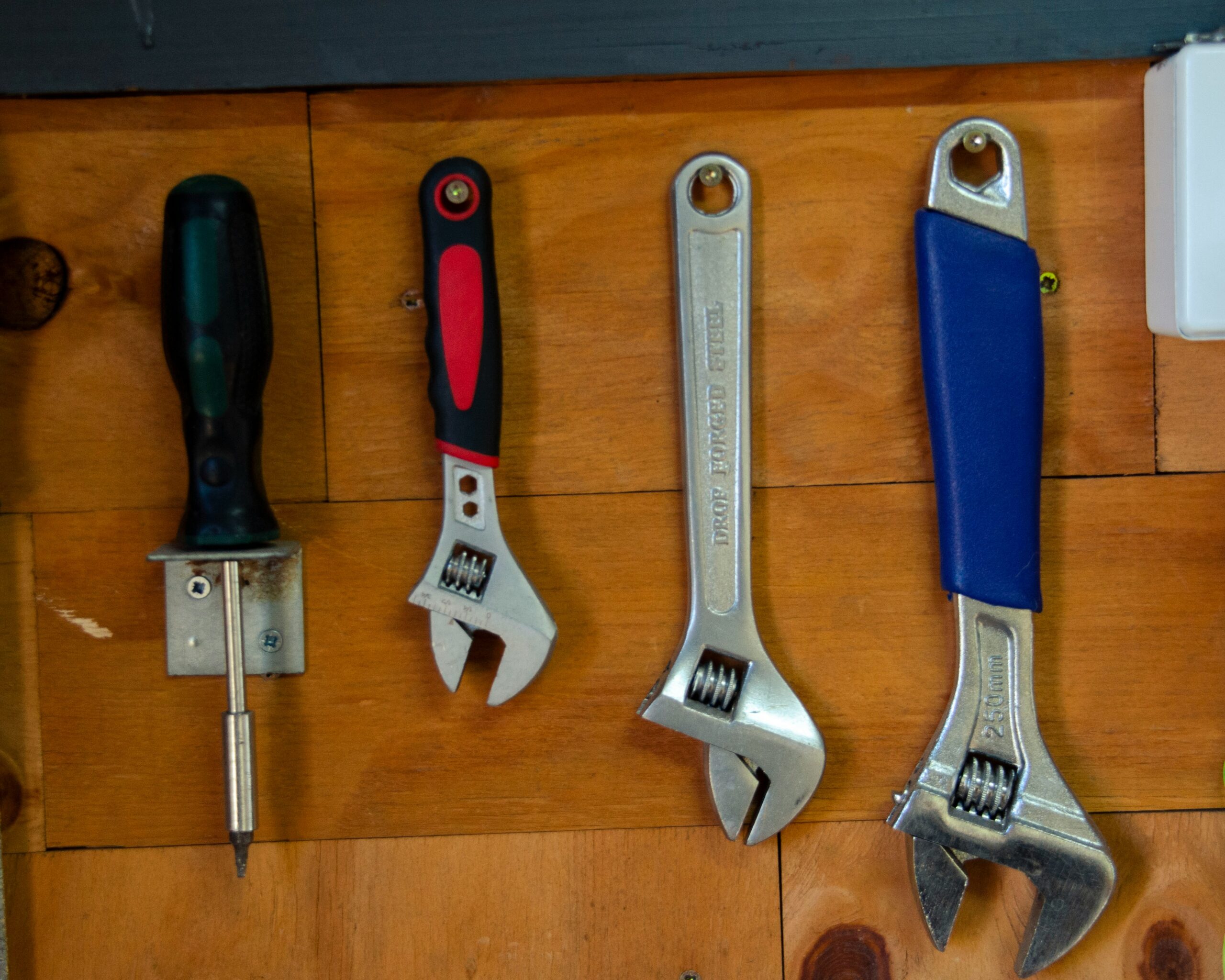
Check for an emergency first
Keep away from wet electrical equipment. Do not touch wet appliances, plugs or switches, or enter water to reach a breaker. When no gas leak is suspected, power may be isolated only from a safely accessible dry location; otherwise call an electrician or emergency help. Wet equipment needs qualified assessment before it is used again.
A freely spinning water-valve handle means operation cannot be trusted, but does not identify the exact failed part. A loose external handle and an internal stem/mechanism failure are different cases. Do not remove a bonnet, add penetrating oil or reopen supply into exposed parts to investigate.
Useful details to record
- Valve use and model, whether it is a main or fixture stop, and the original handle behavior.
- Whether flow actually stopped during the original event, plus leakage or visible damage.
- Any recent work and safely available independent isolation.
What the pattern can tell you
- The external handle is loose. Only the actual product instructions can establish a handle-fastener repair; do not assume the packing nut is its retaining screw.
- The stem turns without flow control. Internal function needs assessment; a packing adjustment does not repair a stripped mechanism.
- It is the main shutoff. Its own closed position cannot provide upstream isolation for its bonnet or internals.
What to do next
- Stop forcing or cycling the handle. Limit an active leak with an identified safe upstream household isolation or request prompt provider assistance; use management for shared systems.
- Before any internal service or fitting removal, identify and isolate every supply that can pressurize the section, release trapped pressure through the appropriate controlled outlet and verify depressurization. Account for hot water and possible alternate feeds. Lowering a PRV setting, reducing flow or wearing gloves does not make a pressurized assembly safe to open. If isolation cannot be established, leave it assembled and obtain qualified help.
- Closing the main valve being serviced does not isolate its upstream side. Closing downstream fixtures or another downstream valve does not do that either. A main-valve repair needs a separate effective upstream isolation, controlled pressure release and verification, arranged with the supplier or qualified provider as necessary. Do not remove its packing nut, bonnet or retained parts to expose a stem while the supply can still pressurize it.
- Keep the supply isolated while the valve, bonnet, filter cover or supply connection is open. Fully reassemble the actual rated components before restoring pressure under the product instructions. Do not briefly reopen upstream water into an exposed pipe, removed valve or unretained assembly while aiming at a bucket; towels and eye protection do not establish discharge control. Any required construction flushing needs an appropriate secured arrangement and the actual procedure.
- Have the exact product and connection assessed. Do not use heat, a wrench on the body, penetrating lubricant on unknown potable-water parts or a generic nut-turn recipe.
- Repair a permitted external part or replace/service the actual assembly as appropriate, then fully reconnect and verify leak and shutoff performance before restoring reliance on the valve.
Will tightening the packing nut make the handle engage again?
Do not use it as a generic fix. A packing seal and a handle drive perform different jobs, and the actual design matters. Identify the part and establish safe isolation before service. Do not remove a pressure-retaining nut merely to inspect the handle.
Related situations
- Shutoff valve dripping after reopening
- Valve won’t reopen fully
- Shutoff Valves That Will Not Fully Close