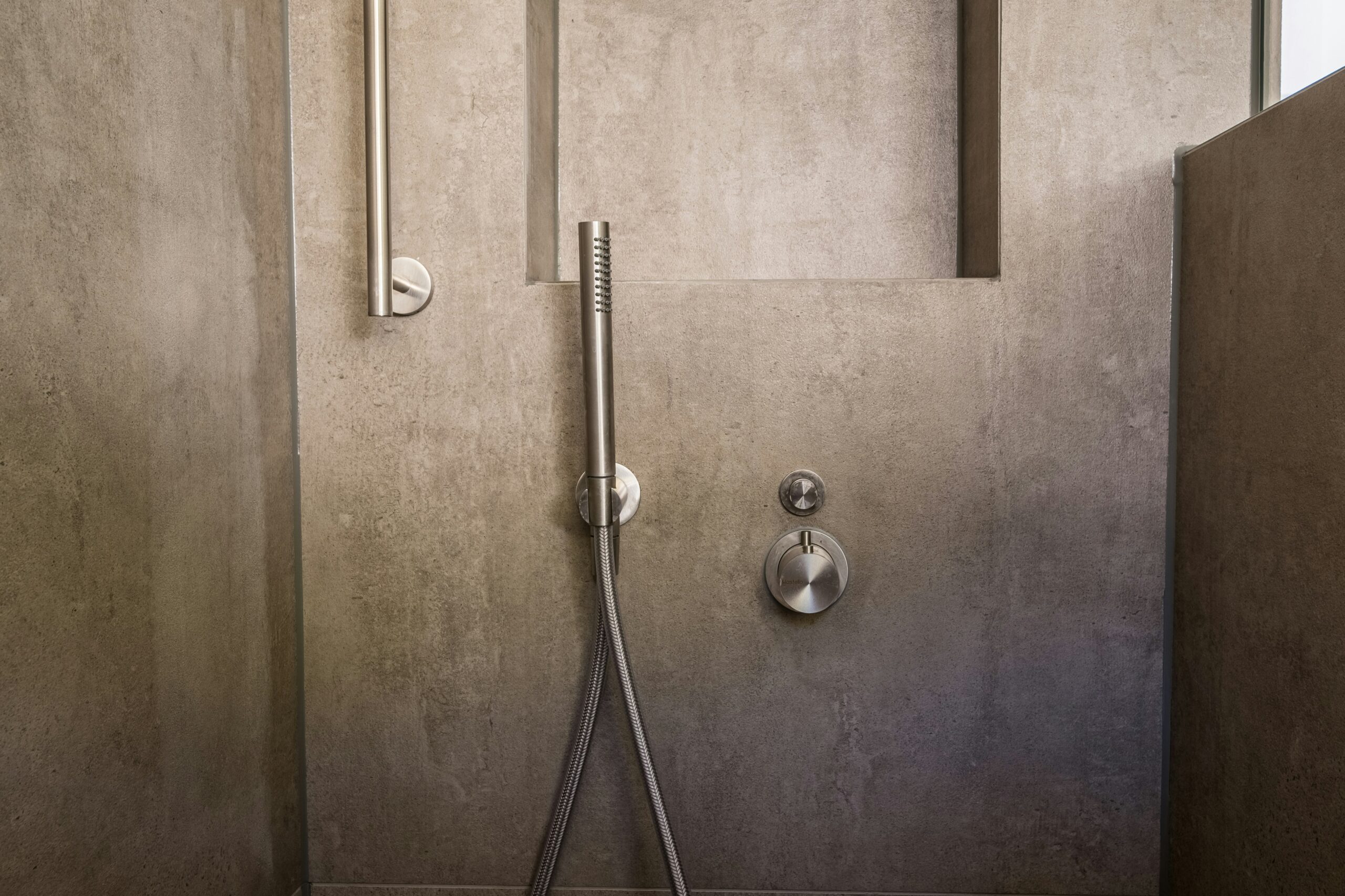
After-shower wall clicking needs its original timing and location recorded without assuming the loudest wall contains the contact point. Supply piping, drainage, the shower assembly and other building movement can transmit sound.
Check the condition before a sound test
Active leaking, hot spray, steam, severe movement, unsafe temperature or loss of control needs prompt appropriate help. Keep people away from wet, sagging, cracked or unstable ceilings and floors; do not press, stand beneath or puncture a suspect finish. Stay away from wet electrical equipment, smoke or a suspected electrical fault. Use only identified safely accessible dry controls when safe; otherwise obtain emergency or qualified help. Do not force a stiff or unknown water valve.
For suspected fuel gas, a carbon monoxide alarm or exposure symptoms, leave immediately and call appropriate emergency help from safety. Do not operate switches, phones, valves or appliances in the affected area or remain to investigate.
Separate shower use from the sound heard afterward
- Timing: Keep whether clicks began during showering, as flow stopped or later. An ordinary permitted observation can be useful in safe conditions, but do not run a hot shower for a fixed minute merely to prove contraction.
- Wall condition: Look from safe access for existing staining, wetness, loose tile or visible movement. Light contact with a sound dry finish is not itself a diagnosis; do not press an unstable surface or use palm vibration to confirm a hidden pipe’s location.
- Support review: Use existing drawings or a safe existing access point to discuss the actual route and materials with the installer or plumber. Do not assume every plastic clip needs loosening or every strap needs tightening. Preserve waterproofing, required firestopping and the specified movement scheme.
Can a shower-wall tick be checked without opening the wall?
Sometimes useful evidence is available from normal history and existing access, but that is not a guarantee of a complete concealed inspection. Ask for a planned access and restoration approach if the cause remains uncertain; do not inject filler or drill at the loudest spot.
Keep movement, pressure and source evidence separate
Thermal movement is possible, but a fading tick, sharp click, warm-water timing or surface vibration does not uniquely locate a pipe, prove harmlessness or exclude a concealed leak. Sound can travel through framing. Keep the original fixture, ordinary setting, event and recent work; do not deliberately run full hot, repeatedly heat the system or grip hot lines to prove the explanation.
A visible support may be corrected through the actual approved procedure when access and conditions are safe. Identify material, load, fixed points and intended thermal movement first. Do not tighten every clip rigidly, remove an intended anchor, bend a line, wedge shims or blindly fill cavities. Compatible insulation or a specified foam/firestop system can be appropriate; it is different from adding an unknown product to silence noise. Service that opens or reworks a water joint needs actual source isolation, controlled retained pressure/temperature/energy and correct reassembly and leak checks. Power off or a nearby closed valve alone does not authorize probing unknown services. Concealed repair may require planned access; untouched finishes cannot be guaranteed.
Related guides
- Ticking noise as pipes cool down
- Ticking in ceiling after hot water use
- Ticking or Clicking Sounds During Water Use
Sources and equipment limits
These manufacturer and supplier examples do not identify your installed system or authorize its repair. Use the actual material, product and equipment instructions and applicable local requirements. Independent professional review and field testing have not been obtained.