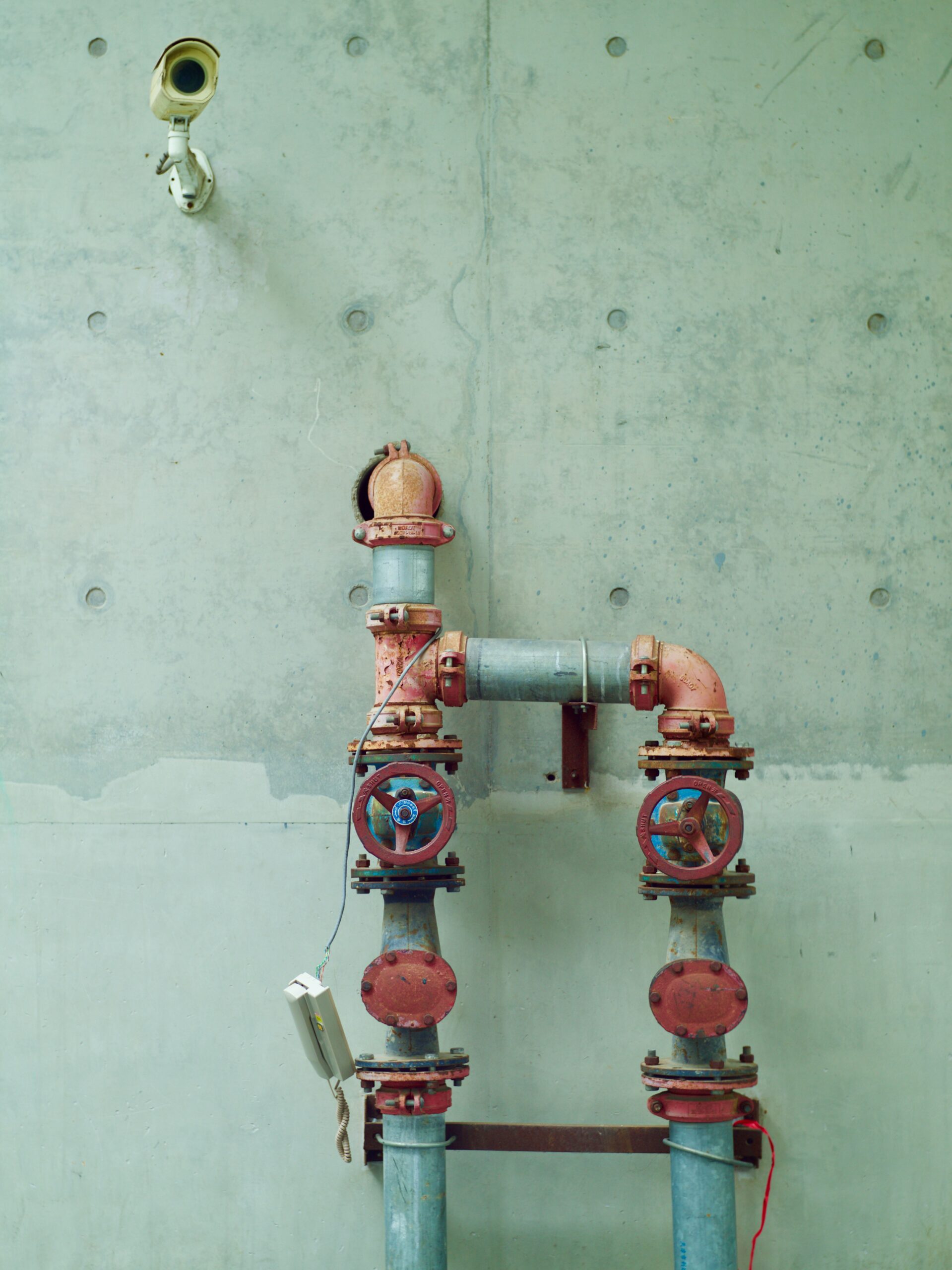
New noise after plumbing work needs the original trigger and affected circuit recorded. Stopping a sound by closing a fixture valve does not prove the fault lies downstream of that valve.
Safety before another test
If fuel gas is suspected, leave the building or affected area immediately. Do not operate valves, switches, plugs, appliances or phones there. Call the gas emergency service from a safe location well away, and wait for responders’ clearance.
Keep away from wet electrical equipment. Do not touch wet appliances, plugs or switches, or enter water to reach a breaker. When no gas leak is suspected, power may be isolated only from a safely accessible dry location; otherwise call an electrician or emergency help. Wet equipment needs qualified assessment before it is used again.
For uncontrolled water, use only a separate known safely accessible permitted owner control under its actual method without force, or obtain prompt supplier/plumber help. Do not approach wet electrical equipment or operate unknown shared, fire-system, meter or curb controls. Urgent containment comes before documenting the fault.
For strong, widespread or unexplained gas-like fumes, exposure symptoms, or suspected high sewer-gas concentrations in an enclosed space, leave the building immediately and call the fire department or emergency services from outside. Avoid flames, switches and other ignition sources; do not remain to ventilate, sniff drains or investigate. Smell intensity does not measure the concentration. A faint localized drain odor without those warning signs calls for a different plumbing investigation; it does not automatically establish a fuel-gas leak.
Keep the original work and event record
- Actual repaired section and whether the sound followed ordinary supply use, drainage, heater phase or a particular closing event.
- Original noise duration/location, visible movement and any leakage.
- Actual valve/pipe/support models and work record without touching or moving suspect parts.
What the observation establishes
Removing a branch’s flow demand can silence an upstream restriction or transmitted vibration. A sound felt/heard near a part does not uniquely locate its source. Potable-supply sputter, drain gurgle, transient hammer and continuous vibration call for different assessment.
What to do next
- Do not close branches sequentially, cycle a valve to reseat it or run fixtures while someone traces a hazardous sound.
- Keep clear of severe movement, wet finishes and electrical equipment; arrange prompt service or urgent response for active danger.
- Ask the installer to compare actual changed work, operating conditions, support and relevant flow/loss path without assuming every new noise is air or loose straps.
- Do not tighten a moving fitting, add makeshift weights/clamps or use generic support or valve fixes. Appropriate support and permitted owner maintenance depend on the actual installation and instructions.
- For a drain-related sound, use actual drain/vent/trap and receiving-capacity assessment; do not treat a supply PRV as its cause without separate evidence. Required trade/permit rules depend on the actual jurisdiction and activity.
Before any retained parts are opened
Before any internal service or fitting removal, identify and isolate every supply that can pressurize the section, release trapped pressure through the appropriate controlled outlet and verify depressurization. Account for hot water and possible alternate feeds. Lowering a PRV setting, reducing flow or wearing gloves does not make a pressurized assembly safe to open. If isolation cannot be established, leave it assembled and obtain qualified help.
A main valve cannot isolate its own supply side. Its closed handle or an open downstream tap does not unload its inlet, body or upstream connection. Intrusive work on it needs separate effective upstream isolation and verification. A fixture cartridge can have both hot and cold feeds; one closed stop does not establish safe isolation.
Keep every relevant supply isolated while a retained component or connection is open. Fully secure compatible rated parts before actual controlled restoration and leak/function checks. A required service flush needs its relevant securely connected path, accepting discharge and source-off refitting; do not reopen upstream supply into exposed pipe or a removed part aimed at a bucket.
If closing one fixture silences it, is the fault certainly after that stop?
No. That closure removes the flow trigger and can quiet a part elsewhere. Preserve the original event and locate the source with independent evidence.
Related guides
- Pressure loss after replacing main valve
- Random dripping after repair
- Whole house gurgles after drain work
- Air trapped in system after repair
- Post-Repair Water Entry Behavior