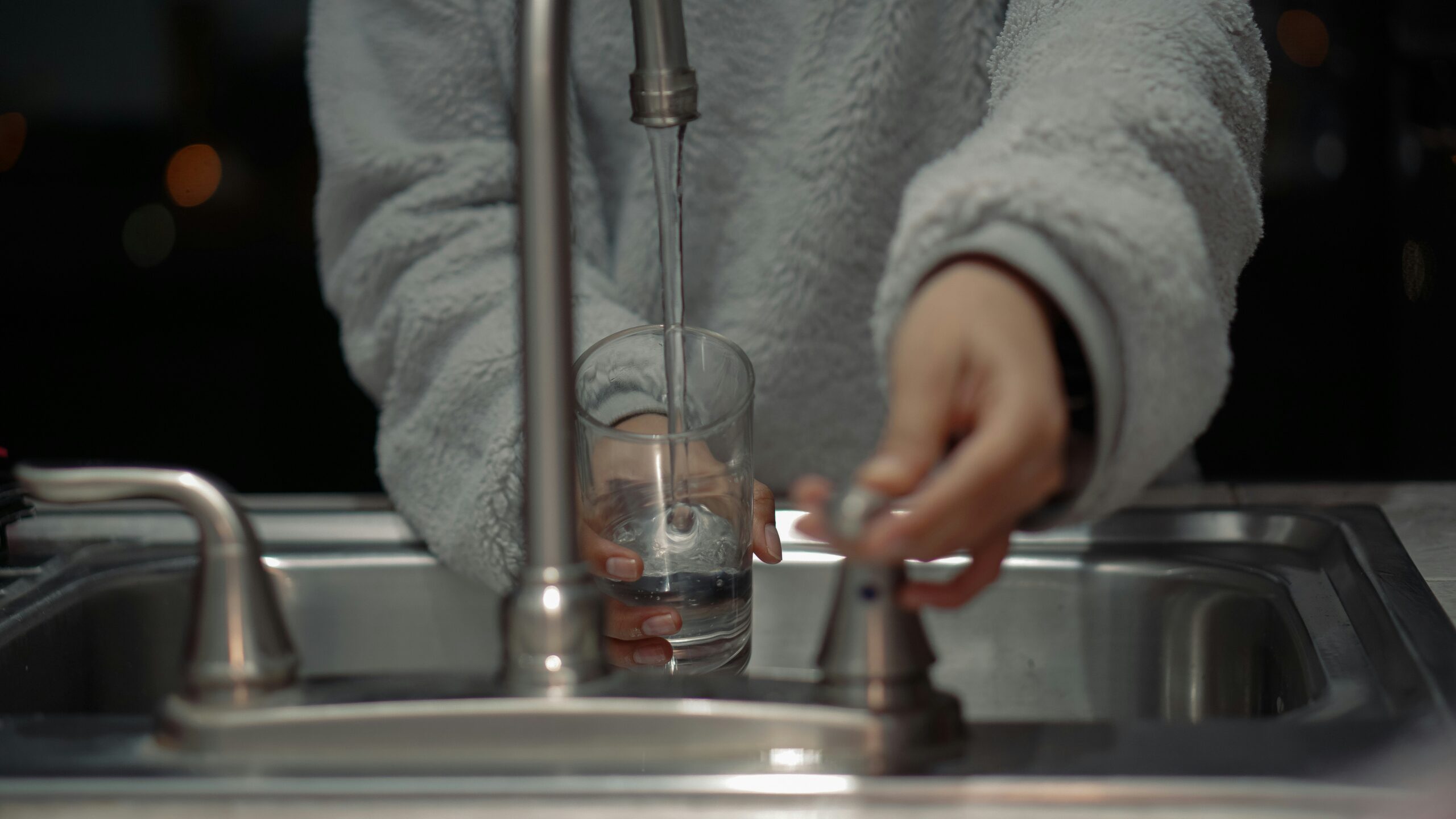
Brief sputtering can follow an opened supply line, but a top-to-bottom whole-house purge is not a universal repair or proof that every branch is ready.
Safety before another test
If fuel gas is suspected, leave the building or affected area immediately. Do not operate valves, switches, plugs, appliances or phones there. Call the gas emergency service from a safe location well away, and wait for responders’ clearance.
Keep away from wet electrical equipment. Do not touch wet appliances, plugs or switches, or enter water to reach a breaker. When no gas leak is suspected, power may be isolated only from a safely accessible dry location; otherwise call an electrician or emergency help. Wet equipment needs qualified assessment before it is used again.
For uncontrolled water, use only a separate known safely accessible permitted owner control under its actual method without force, or obtain prompt supplier/plumber help. Do not approach wet electrical equipment or operate unknown shared, fire-system, meter or curb controls. Urgent containment comes before documenting the fault.
For a new, unexplained water-quality change: do not deliberately taste the water. Use bottled water or another known-safe supply for drinking, food preparation, teeth brushing and ice while you contact the supplier. Follow the actual local notice for other uses. Boiling does not make chemically contaminated water safe, and clear appearance or a fading odor does not certify safety.
Do not treat clear appearance, a stopped odor or a specified flushing time as water-use clearance. Check the actual supplier/repairer notice and permitted uses before flushing or sampling. Do not bypass required treatment or backflow protection, draw suspect water into a heater or test it by taste. Obtain the actual collection/clearance directions when contamination is a concern.
Keep the original work and event record
- Actual work, opened/drained sections and the repairer’s restoration directions.
- Original outlet/supply side and whether sputtering was brief, persistent or accompanied by quality change or leakage.
- Heater/appliance service state and known affected paths.
What the observation establishes
Opening a low outlet does not generally push water up toward a higher open tap. Air can leave only through the actual connected path under its flow conditions. Continued air-like symptoms can need a supply or equipment investigation rather than a longer purge.
What to do next
- Check the actual notice and work completion before ordinary use. For routine identified restart air, follow the relevant supplier/product outlet and discharge directions.
- Do not remove all showerheads/aerators or leave the highest tap open while working through the house.
- Keep any prescribed discharge attended and accepting; stop for backup, leakage, severe noise or unexplained water-quality change.
- Do not use compressed air, hot/cold full-flow challenges or a fixed minutes-to-an-hour promise to prove all air cleared.
- Report persistent symptoms with the actual path and work record. If equipment was drained, complete its actual commissioning before more tests.
Before any retained parts are opened
Before any internal service or fitting removal, identify and isolate every supply that can pressurize the section, release trapped pressure through the appropriate controlled outlet and verify depressurization. Account for hot water and possible alternate feeds. Lowering a PRV setting, reducing flow or wearing gloves does not make a pressurized assembly safe to open. If isolation cannot be established, leave it assembled and obtain qualified help.
A main valve cannot isolate its own supply side. Its closed handle or an open downstream tap does not unload its inlet, body or upstream connection. Intrusive work on it needs separate effective upstream isolation and verification. A fixture cartridge can have both hot and cold feeds; one closed stop does not establish safe isolation.
Keep every relevant supply isolated while a retained component or connection is open. Fully secure compatible rated parts before actual controlled restoration and leak/function checks. A required service flush needs its relevant securely connected path, accepting discharge and source-off refitting; do not reopen upstream supply into exposed pipe or a removed part aimed at a bucket.
Equipment restart needs its actual procedure
Heater service requires the actual model, safe energy isolation, cooling, every relevant water feed and controlled pressure/discharge method. Do not use a generic gas-to-pilot instruction or a relief valve as a handy bleed/test outlet. If an electric storage tank was drained/opened, verify complete fill and the required air purge before restoring energy. Tankless, pump and recirculation equipment have their own commissioning methods.
Will opening the lowest faucet force air out upstairs?
Not as a general plumbing rule. The real connections, pressure and open path determine where water and air move. Use actual restoration instructions rather than floor order.
Related guides
- Pressure problems after valve replacement
- Noise began after plumbing work
- System won’t repressurize after shutoff
- Sediment clogging fixtures post repair
- Post-Repair Water Entry Behavior