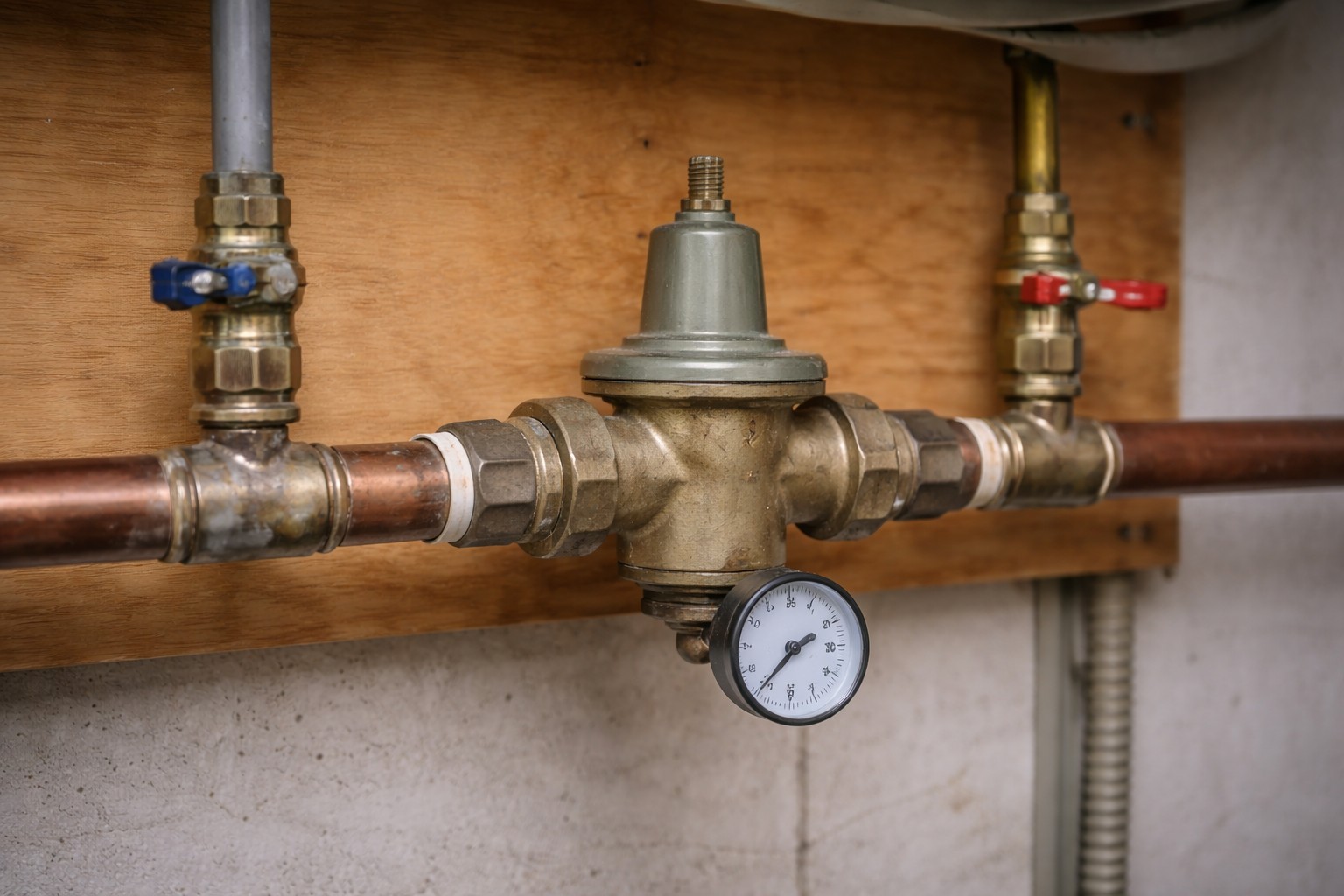
Quick Answer:
Short bursts of high pressure only on the hot side usually mean something is holding back hot water flow or the water heater is creating brief pressure spikes (thermal expansion or a one-way device). Start by comparing hot and cold pressure at the same fixture and watch the water heater during a fluctuation to narrow the cause.
Why This Happens
- Thermal expansion: when the heater heats water it expands. If the system can’t relieve that expansion (check valve, PRV or closed isolation), pressure can spike briefly.
- One-way devices or backflow preventers on the hot line can trap pressure on the hot side while the cold stays normal.
- A failing pressure-reducing valve (PRV) or pressure relief valve that sticks can let pressure build then release suddenly.
- Clogged mixing valves, thermostatic cartridges or partially blocked hot piping can amplify transients on the hot side only.
- Pulsing from the heater: some tankless units or a cycling tank heater burner/pump can create short surges that show only on hot outlets.
Step-by-Step What to Do
1. Reproduce and document the problem
- Note which fixtures show the bursts, what time of day, and whether it follows heater use (shower, dishwasher).
- Try to make the surge happen while someone watches the heater and the fixture at the same time.
2. Compare hot vs cold pressure at the same fixture
- Run full cold then full hot separately and note differences in flow strength and any pulsing. If cold is steady and hot pulses, the issue is on the hot side.
- Use a simple pressure gauge or the feel of flow if you don’t have tools. Record whether the surge appears only with hot water.
3. Observe heater behavior during fluctuation
- Watch the heater while the surge occurs. Listen for cycling, hissing, relief valve discharge, or pump activation. If the relief valve sparks open briefly, that is a clear sign of pressure spikes at the heater.
- For tankless heaters, note whether the unit starts and stops rapidly at the same time as the surges.
4. Check common hot-side components
- Inspect the expansion tank (if installed) for proper precharge and that it’s not waterlogged—tap test or check the valve precharge with a gauge.
- Check any check valves, backflow preventers, mixing valves, and thermostatic cartridges on the hot line for blockage or sticking.
- Look at the heater’s pressure relief valve for signs of recent discharge or mineral build-up that could make it stick.
5. Test isolation and upstream devices
- Temporarily isolate the hot water heater from the rest of the house (close the cold inlet and open a hot faucet to relieve pressure) to see if surges stop. This helps confirm the heater/connected devices as the source.
- Check the PRV at the main supply—if it’s failing it can cause odd pressure behavior, though it usually affects both hot and cold.
6. Try simple fixes and monitor
- Flush the heater if sediment could be affecting valves or sensors. After flushing, compare pressures again.
- Replace or service a sticking mixing valve, check valve, or a faulty pressure relief valve if you can safely do so. If unsure, skip to calling a pro.
- If the problem appeared after a recent service, consult the service history. Related issues can look like the situations described in Hot water pressure low after tank refill and Hot side pressure lost after expansion tank install.
What Not to Do
- Do not replace cold-side plumbing for a hot-side-only problem. Replacing cold piping will not fix an issue confined to the hot line and wastes time and money.
- Do not disable or tape the temperature-pressure relief valve or other safety devices to stop a leak or reduce noise.
- Do not work on the water heater without shutting off power/gas and relieving pressure unless you’re trained—scalding and burns are real risks.
When to Call a Professional
- If the pressure relief valve discharges water, especially repeatedly.
- If you cannot isolate the surges to a single valve or the heater, or the expansion tank appears failed.
- If the heater shows signs of dangerous failure (strange smells, gas odor, continuous leaks) or if the fix requires working on the gas/electrical connections.
- If you’re uncomfortable performing diagnostic isolation or replacing pressure-related components.
Safety Notes
- Hot water can cause severe burns. When testing, start with low flow and keep skin away from direct streams.
- Turn off electrical power or gas to the heater before doing any internal work. Drain water before opening lines.
- Never block or bypass safety devices (PRV, T&P valve). If a safety device is faulty, have it replaced by a qualified technician.
Common Homeowner Questions
- Why does only the hot side pulse while the cold is steady? Most often a device on the hot side (check valve, mixing valve, expansion problem) or the heater itself is causing the transient.
- Can thermal expansion create dangerous pressure? Yes—if the system is closed and no expansion tank or relief path exists, pressure spikes can open the relief valve or stress fittings.
- Is this something I can fix myself? Basic checks and isolations are okay for confident DIYers, but replacement of pressure devices, work on the heater, or gas/electrical tasks should be done by a professional.
Related Articles
If you’re troubleshooting a similar symptom, these guides may help:
For the full directory, see Pressure Fluctuates Only on Hot Water.