Quick Answer:
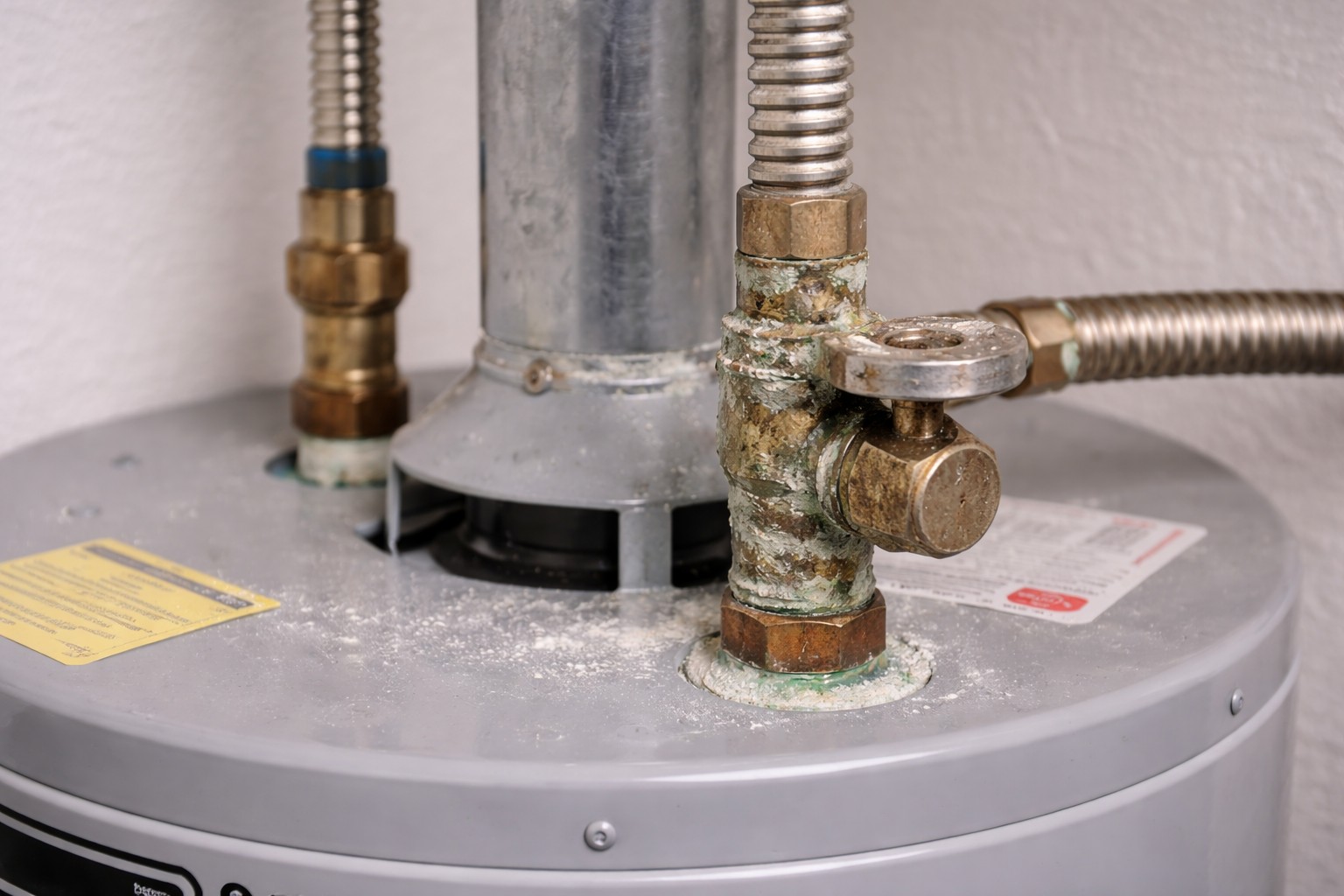
If your hot water pressure falls partway through a shower as more hot water is used, the problem is usually on the hot side: the heater can’t supply enough hot flow, a mixing valve or pressure-balancing cartridge is failing, or a valve is partially closed or clogged. Before calling a pro, compare hot and cold pressure at the same fixture and watch how the heater behaves when the drop happens.
Why This Happens
- Water heater capacity or output limit: A small tank or a tankless unit that is undersized or has scale buildup can’t keep up as demand increases, so flow drops.
- Mixing valve or pressure-balancing cartridge failure: These devices reduce flow when they detect pressure change and can fail partway through a shower.
- Partially closed or clogged hot shutoff valve, inlet screen, or showerhead: Sediment or a blocked aerator can reduce hot flow more than cold.
- Dip tube or heater internal problems (tanks): A damaged dip tube or heavy sediment reduces effective hot volume and causes pressure collapse when demand rises.
- On tankless units: scale on the heat exchanger, venting problems, or sensor errors can cause the burner to throttle or shut off under sustained demand.
For related issues that look similar, see Hot water pressure weak but cold fine and Hot water pressure low after tank refill.
Step-by-Step What to Do
1. Confirm it’s the hot side
- At the shower, run cold-only and note pressure. Then run hot-only and compare. This direct comparison at the same fixture isolates hot-side issues quickly.
- If cold stays strong while hot drops, the problem is on the hot side (heater, valve, or hot piping). If both fall, the supply or municipal pressure is more likely the cause.
2. Observe the heater during the fluctuation
- Have someone run the shower and watch the heater. For tank heaters: listen for cycling, watch the pilot or use the control panel if present. For tankless: watch for error codes, burner light, or audible cycling.
- Note whether the heater’s burner or element turns off, drops in intensity, or shows error lights when the pressure collapses. That indicates the heater can’t keep up or is shutting down under load.
3. Check the showerhead and cartridge
- Remove the showerhead and test hot flow from the arm. If hot flow is good at the arm but poor through the head, clean or replace the showerhead.
- If the flow drops even at the arm, the mixing cartridge or pressure-balancing device inside the valve may be failing and should be inspected or replaced.
4. Inspect shutoff valves and inlet screens
- Locate the hot shutoff valve to the heater and any service valves near the shower. Make sure they are fully open.
- Turn off the water and check inlet screens on the heater and on fixture supplies for debris or sediment if you are comfortable doing so.
5. Check other fixtures and times
- Run hot water at a sink or tub while the shower is running. If multiple hot fixtures drop, the heater or its supply is the likely culprit.
- Note whether problems occur only during peak times (many appliances running) — that suggests supply limits rather than a single fixture problem.
6. Look for heater-specific signs
- Tank: frequent short cycling, muddy or rusty water, or heat loss suggest sediment or element problems. Flushing the tank can help if you’re comfortable doing it.
- Tankless: scale buildup or blocked venting commonly causes throttle and shutdown. A service or descaling is often required.
7. Try a simple temporary fix
- Partially opening a cold supply to the shower can balance temperature while you investigate, but this is only a stopgap and wastes energy.
- If cleaning the showerhead or opening a stuck valve restores flow, schedule a more complete repair or part replacement to prevent recurrence.
What Not to Do
- Do not replace cold-side plumbing for a hot-side-only problem.
- Do not attempt gas valve or burner adjustments on a gas heater if you are not qualified. These actions can be dangerous.
- Don’t raise the water heater thermostat above recommended limits to “force” more hot flow; that increases scald risk and can damage the heater.
When to Call a Professional
- If the heater shows error codes, unusual smells, gas leaks, or you can’t find a visible cause after the checks above.
- When you suspect internal heater problems (sediment, failing elements, burner issues, or damaged dip tube) or if the unit needs descaling or vent repair.
- If the mixing valve or shower cartridge needs replacement and you’re uncomfortable removing and reinstalling trim and valve components.
Safety Notes
- If you smell gas, leave the house immediately and call your gas company or emergency services. Do not operate electrical switches or the heater.
- Turn off power or gas to the heater before inspecting internal parts. If unsure how, stop and call a professional.
- Be cautious of scalding. When testing hot-only flow, keep temperatures moderate and warn anyone in the home you’re testing.
Common Homeowner Questions
- Why does the heater sound different when the pressure drops? — The heater may be cycling, throttling, or failing to ignite under higher demand; sounds indicate it’s struggling to supply required hot flow.
- Can I fix a pressure-balancing cartridge myself? — If you’re comfortable with basic plumbing and shutoff procedures, you can replace a cartridge; otherwise call a plumber to avoid valve damage.
- Will flushing the tank help if pressure drops mid-shower? — Flushing can remove sediment and restore capacity in many tank units, but it won’t fix mechanical failures or scale in tankless units.