Quick Answer:
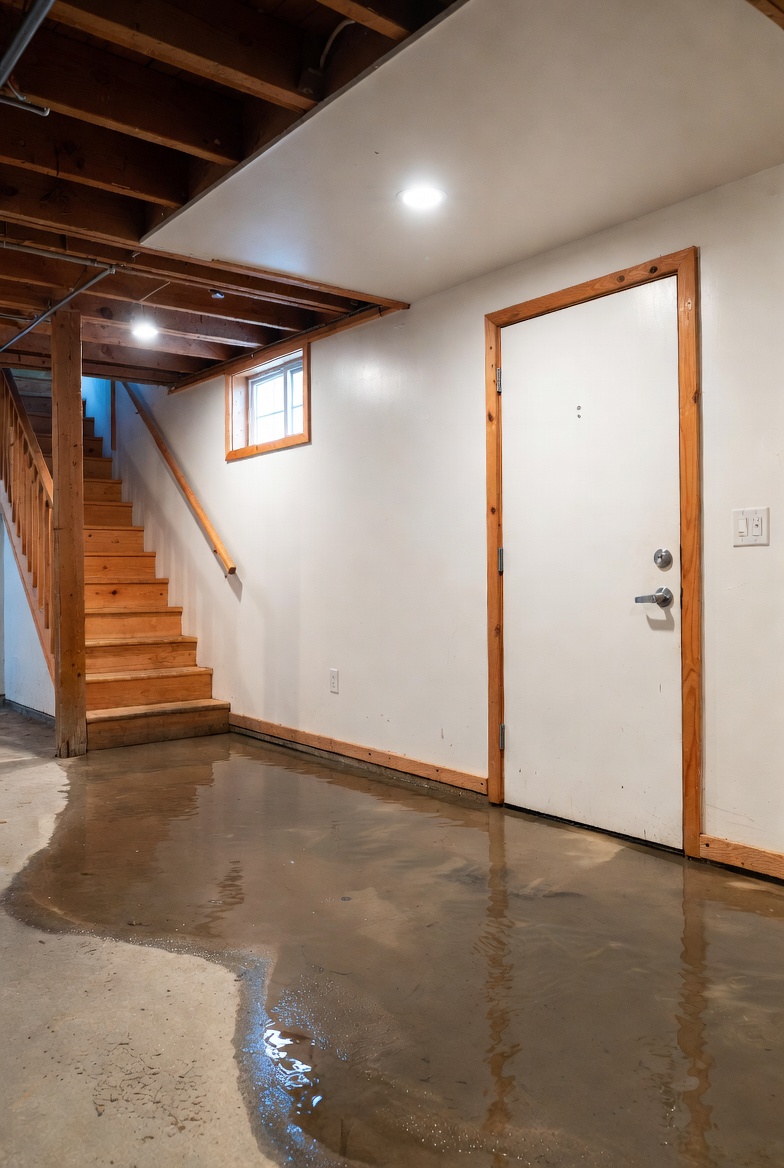
Spring thaw can push water toward and into basements even if your home stays dry other times of year. Start by clearing gutters and downspouts, check perimeter and footing drains for blockages, look for ice-dammed flow paths against the foundation, and test the sump pump with a controlled melt simulation. These checks usually reveal whether the problem is surface melt, a clogged exterior drain, or a failing sump system.
Why This Happens
Several seasonal factors combine to make basements vulnerable during thawing weeks:
- Saturated soil: Snowmelt soaks frozen or cold ground that drains poorly, sending water toward the foundation.
- Blocked surface channels: Gutters and downspouts loaded with winter debris or ice can dump meltwater at the foundation instead of directing it away.
- Ice dams or packed snow near the foundation create new flow paths that bypass normal drainage.
- Perimeter or footing drains that are clogged or frozen can’t move meltwater away; water then finds the weakest point—cracks, joints, or a sump pit.
- Sometimes the issue is seasonal and not related to heavy rain—compare this problem to other timing patterns like **flooding only in summer** or **intermittent flooding after storms** to narrow the cause.
Step-by-Step What to Do
1. Clear gutters and downspouts of winter debris
- Remove leaves, ice shards, and grit from gutters. If ice is present, chip carefully or wait for warmer weather to avoid gutter damage.
- Ensure downspouts discharge at least several feet from the foundation; add temporary extensions if needed during melt.
2. Inspect perimeter, crawlspace and footing drains for blockages
- Look for ponding near the foundation or soggy spots in the crawlspace.
- If you can access footing drains, check for obvious clogging from roots, silt, or collapsed pipe. Use a flashlight and a camera if helpful.
- Note: full excavation or pipe repair is a pro job; your inspection is to identify likely blockage locations.
3. Check for ice-dammed flow paths near the foundation
- Walk the perimeter (carefully—ice and wet ground are slippery) and look for packed snow or ice that channels meltwater downhill toward the wall.
- Break small ice dams away from the foundation edge when safe, and shovel away piled snow that sits against the wall.
4. Test sump pump performance during a controlled melt simulation
- Simulate melt by pouring water slowly into areas that direct to the sump (use a hose on low setting or buckets). Monitor how quickly the sump removes it and whether the pump cycles normally.
- Confirm the pump discharges to a clear outlet away from the foundation and that check valves are working to prevent backflow.
- Have a backup plan: battery backup or secondary pump if the primary pump ages or overheats during the test.
5. Take short-term interior precautions
- Move valuables and electronics off the floor before expected thaws.
- Use temporary barriers (sandbags or plastic dams) at entry points if water is tracking in a specific spot.
- Record water levels and timing during thaw cycles to help a professional diagnose persistent problems.
What Not to Do
- Don’t assume spring flooding is only cosmetic or that interior sealing will fix exterior drainage issues; call a pro when flooding happens every thaw cycle or when water appears at foundation wall joints despite clear gutters.
- Don’t bury a sump pump discharge too close to the foundation—redirect water well away from the house.
- Don’t ignore repeated small leaks; they become larger and more expensive over time.
When to Call a Professional
Contact a licensed contractor or drainage specialist when:
- Flooding repeats every thaw cycle despite your checks.
- Water appears at foundation wall joints or through cracks even after gutters and downspouts are clear.
- Your sump pump fails during testing or you suspect damaged perimeter drains or collapsed pipework.
- You see structural movement, large cracks, or persistent mold and musty odors.
Safety Notes
- Avoid wading in basement water that may be electrically live. Shut off power to affected areas at the main breaker if safe to do so.
- Use GFCI protection for pumps and temporary heaters. Never run a generator indoors.
- Watch for slippery surfaces and falling ice when working near eaves and the foundation.
- If mold or contaminated water is present, wear waterproof gloves, eye protection, and a respirator if disturbed.
Common Homeowner Questions
- Why does it only flood during the thaw? Rapid snowmelt and frozen or saturated soil prevent normal infiltration, so meltwater follows surface routes to the foundation.
- Can I safely test the sump pump myself? Yes—perform a controlled test by pouring water slowly into the pit and watching pump cycling, but avoid touching electricals if water is nearby.
- Is interior waterproofing enough to stop spring flooding? Not usually; exterior drainage and removing flow paths to the foundation are often required for a lasting fix.
More in this topic
For more related fixes and similar symptoms, see Intermittent Basement Flooding Events.